What is Deflation? Understanding the Economic Phenomenon
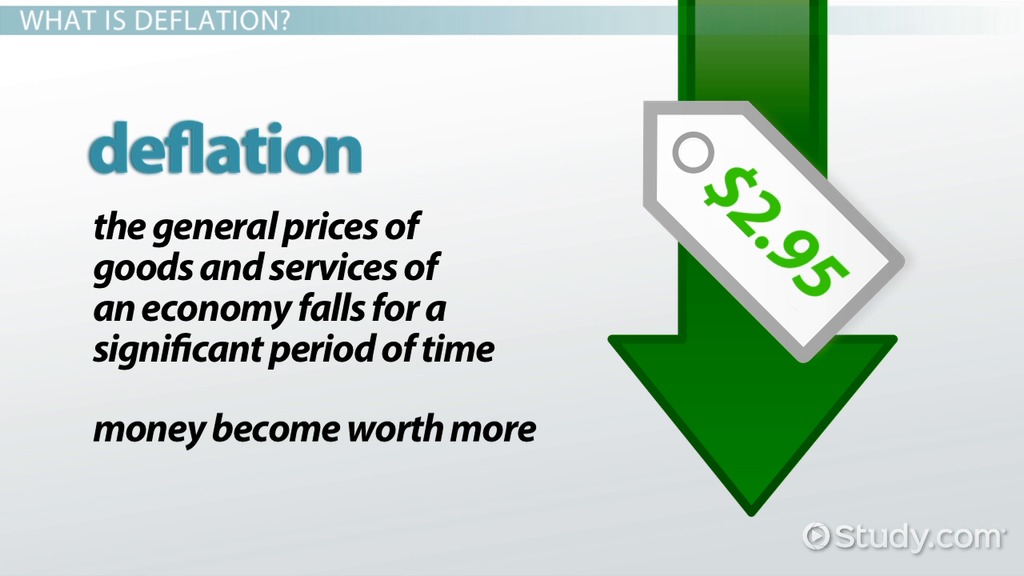
Deflation, the opposite of inflation, is a sustained decrease in the general price level of goods and services in an economy. While it might seem appealing at first glance – things getting cheaper! – deflation can actually signal deeper economic problems and have significant consequences for individuals, businesses, and the overall economy. Understanding what is deflation, its causes, and its potential effects is crucial for navigating the complexities of economic cycles.
Defining Deflation: More Than Just Lower Prices
Deflation isn’t simply about occasional sales or price drops in specific sectors. It’s a broad-based decline across the entire economy, impacting a wide range of products and services. Economists generally consider a period to be one of deflation only if the decline is sustained over several months or even years.
How Deflation Differs from Disinflation
It’s important to distinguish deflation from disinflation. Disinflation refers to a slowing down in the rate of inflation. Prices are still rising, but at a slower pace. Deflation, on the other hand, means prices are actually falling.
The Causes of Deflation: Understanding the Drivers
Several factors can contribute to deflation, often working in combination. Understanding these causes is essential for policymakers to effectively address deflationary pressures.
- Decreased Aggregate Demand: This is perhaps the most common cause. If overall demand for goods and services falls – perhaps due to a recession, a decline in consumer confidence, or reduced government spending – businesses may be forced to lower prices to attract customers.
- Increased Aggregate Supply: Conversely, a significant increase in the supply of goods and services without a corresponding increase in demand can also lead to deflation. This might happen due to technological advancements that boost production efficiency.
- Debt: High levels of debt can exacerbate deflation. As prices fall, the real value of debt increases, making it more difficult for individuals and businesses to repay their loans. This can lead to defaults and further economic contraction.
- Technological Innovation: While generally positive, rapid technological advancements can sometimes lead to deflation in specific sectors. For example, the cost of electronics has consistently fallen due to technological improvements.
- Changes in Monetary Policy: In some cases, contractionary monetary policy (e.g., raising interest rates) can contribute to deflation by reducing the money supply and dampening economic activity.
The Effects of Deflation: A Vicious Cycle
While lower prices might seem beneficial, deflation can trigger a range of negative consequences, creating a vicious cycle that’s difficult to break.
- Decreased Consumer Spending: When consumers expect prices to fall further, they may delay purchases, hoping to get a better deal later. This reduced spending further weakens demand and exacerbates deflation.
- Increased Real Debt Burden: As mentioned earlier, deflation increases the real value of debt. This can lead to defaults, bankruptcies, and financial instability.
- Reduced Business Investment: Businesses may postpone investments in new equipment or expansion if they anticipate lower prices and reduced profits in the future.
- Rising Unemployment: As demand falls and businesses struggle to maintain profitability, they may be forced to lay off workers, leading to higher unemployment.
- Wage Cuts: In some cases, employers may try to cut wages to reduce costs. However, this can further depress consumer spending and exacerbate the deflationary spiral.
The Debt-Deflation Spiral
Economist Irving Fisher identified a particularly dangerous phenomenon known as the debt-deflation spiral. This occurs when deflation increases the real value of debt, leading to defaults, bank failures, and a contraction of credit. This, in turn, further reduces demand and exacerbates deflation. [See also: Understanding Economic Indicators]
Examples of Deflation in History
Deflation has occurred in various countries and periods throughout history. Studying these historical examples can provide valuable insights into the causes and consequences of deflation.
- The Great Depression (1930s): The Great Depression was characterized by severe deflation, high unemployment, and widespread economic hardship. The decline in aggregate demand and a contraction of the money supply contributed to the deflationary pressures.
- Japan in the 1990s and 2000s: Japan experienced a prolonged period of deflation following the collapse of its asset bubble in the early 1990s. This “Lost Decade” was marked by weak economic growth and persistent deflationary pressures.
Combating Deflation: Policy Responses
Policymakers can employ various tools to combat deflation and stimulate economic growth.
- Monetary Policy: Central banks can lower interest rates to encourage borrowing and spending. They can also engage in quantitative easing (QE), which involves injecting liquidity into the financial system by purchasing assets.
- Fiscal Policy: Governments can increase spending or cut taxes to boost aggregate demand. Infrastructure projects and direct payments to individuals are examples of fiscal stimulus measures.
- Inflation Targeting: Some central banks adopt inflation targets to manage expectations and prevent deflation from becoming entrenched. By communicating a clear inflation target, they aim to anchor inflation expectations and encourage spending and investment.
The Challenges of Fighting Deflation
Combating deflation can be challenging, particularly if it becomes deeply entrenched. Lowering interest rates may not be effective if consumers and businesses are reluctant to borrow and spend. Similarly, fiscal stimulus may be less effective if consumers save the extra money rather than spending it. A credible commitment to sustained policy action is crucial to overcoming deflation. [See also: How Central Banks Influence the Economy]
Is Deflation Always Bad?
While generally viewed as a negative economic phenomenon, some economists argue that deflation can be beneficial under certain circumstances. For example, if deflation is driven by significant technological advancements that lead to lower production costs, it could result in higher real incomes and improved living standards. However, this type of “good deflation” is relatively rare. Most instances of deflation are associated with weak economic growth and financial instability.
The Bottom Line: Understanding the Risks of Deflation
Deflation is a complex economic phenomenon with potentially serious consequences. While lower prices might seem appealing, the negative effects on debt, investment, and employment can outweigh any short-term benefits. Understanding what is deflation, its causes, and its potential effects is crucial for individuals, businesses, and policymakers alike. By recognizing the risks of deflation and implementing appropriate policy responses, we can mitigate its negative impacts and promote sustainable economic growth. The key takeaway is that sustained deflation creates uncertainty, and uncertainty is the enemy of investment and growth. Therefore, managing expectations and actively working to avoid a deflationary environment is of paramount importance for economic stability. [See also: Investing During Economic Downturns]
