What is Marginal Analysis: A Comprehensive Guide
In the world of economics and business decision-making, understanding the nuances of cost and benefit is paramount. One powerful tool that helps individuals and organizations make informed choices is marginal analysis. This analytical technique focuses on the incremental impact of decisions, helping to determine whether the benefits of a particular action outweigh its costs. This guide will delve into the depths of marginal analysis, exploring its principles, applications, and limitations.
Understanding the Basics of Marginal Analysis
At its core, marginal analysis is about evaluating the additional (or marginal) benefits and costs associated with a small change in activity. It’s not about looking at the total cost or total benefit, but rather the change that results from one more unit of something. This “something” could be anything from producing one more widget to hiring one more employee.
Key Concepts in Marginal Analysis
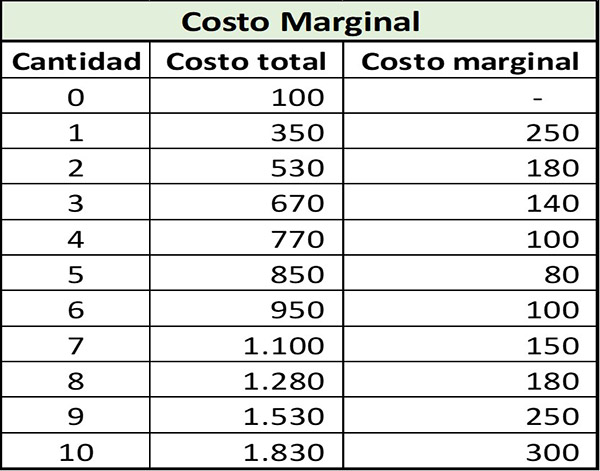
- Marginal Cost (MC): The additional cost incurred by producing one more unit of a good or service.
- Marginal Revenue (MR): The additional revenue generated by selling one more unit of a good or service.
- Marginal Benefit (MB): The additional satisfaction or utility gained from consuming one more unit of a good or service.
- Marginal Product (MP): The additional output produced by using one more unit of input (e.g., labor or capital).
The fundamental principle of marginal analysis is that a decision is optimal when the marginal benefit equals the marginal cost (MB = MC). If the marginal benefit exceeds the marginal cost (MB > MC), then the activity should be increased. Conversely, if the marginal cost exceeds the marginal benefit (MC > MB), the activity should be decreased.
How Marginal Analysis Works
The process of performing a marginal analysis typically involves the following steps:
- Identify the Decision: Clearly define the decision being evaluated. What action is being considered, and what is the potential change being analyzed?
- Determine Relevant Costs: Identify all costs that will change as a result of the decision. These are the marginal costs. Fixed costs, which do not change with the level of activity, are typically irrelevant in marginal analysis.
- Determine Relevant Benefits: Identify all benefits that will change as a result of the decision. These are the marginal benefits. Benefits can be financial (e.g., increased revenue) or non-financial (e.g., improved customer satisfaction).
- Compare Marginal Costs and Benefits: Compare the marginal costs and marginal benefits. If the marginal benefits exceed the marginal costs, the decision is likely beneficial. If the marginal costs exceed the marginal benefits, the decision is likely detrimental.
- Make a Decision: Based on the comparison of marginal costs and benefits, make an informed decision.
Example of Marginal Analysis in Production
Imagine a bakery that produces cakes. The bakery is considering increasing its production from 100 cakes per day to 101 cakes per day. To perform a marginal analysis, the bakery needs to determine the following:
- Marginal Cost: The additional cost of producing the 101st cake, including the cost of ingredients, labor, and energy.
- Marginal Revenue: The additional revenue generated by selling the 101st cake.
If the marginal revenue from selling the 101st cake exceeds the marginal cost of producing it, then the bakery should increase its production. However, if the marginal cost exceeds the marginal revenue, then the bakery should not increase its production.
Applications of Marginal Analysis
Marginal analysis has a wide range of applications in various fields, including:
Business Decision-Making
Businesses use marginal analysis to make decisions about pricing, production levels, marketing strategies, and investment opportunities. For example, a company might use marginal analysis to determine the optimal price for a product by considering the relationship between price, demand, and cost.
Investment Decisions
Investors use marginal analysis to evaluate potential investments. By comparing the expected marginal return of an investment with the marginal cost of capital, investors can determine whether the investment is likely to be profitable. [See also: Investment Analysis Techniques]
Personal Finance
Individuals can use marginal analysis to make decisions about spending, saving, and borrowing. For example, someone might use marginal analysis to decide whether to purchase an extended warranty on a product by comparing the marginal cost of the warranty with the marginal benefit of having it.
Public Policy
Governments use marginal analysis to evaluate the effectiveness of public policies. By comparing the marginal benefits of a policy with the marginal costs, policymakers can determine whether the policy is likely to improve social welfare. For example, a government might use marginal analysis to decide whether to invest in a new highway by comparing the marginal benefits of reduced traffic congestion with the marginal costs of construction.
Advantages of Marginal Analysis
Marginal analysis offers several advantages over other decision-making techniques:
- Focus on Relevant Information: It focuses on the changes in costs and benefits that are directly relevant to the decision being made, ignoring irrelevant fixed costs.
- Simplicity: It is a relatively simple and straightforward technique that can be easily understood and applied.
- Flexibility: It can be applied to a wide range of decisions in various fields.
- Improved Decision-Making: By providing a clear framework for evaluating the incremental impact of decisions, it can lead to better informed and more rational choices.
Limitations of Marginal Analysis
Despite its advantages, marginal analysis also has some limitations:
- Difficulty in Quantifying Costs and Benefits: Accurately quantifying all costs and benefits, especially non-financial ones, can be challenging. Subjective estimations may be required, which can introduce bias.
- Assumptions of Linearity: It often assumes that costs and benefits change linearly with the level of activity. However, this may not always be the case. In reality, costs and benefits can exhibit non-linear relationships.
- Ignoring Externalities: It typically does not consider externalities, which are costs or benefits that affect parties who are not directly involved in the decision. For example, a company might use marginal analysis to decide whether to build a new factory, but it might not consider the environmental impact of the factory on the surrounding community.
- Short-Term Focus: It often focuses on the short-term impact of decisions, neglecting long-term consequences. A decision that appears optimal in the short term may not be optimal in the long term.
The Importance of Accurate Data
The accuracy of marginal analysis heavily relies on the accuracy of the data used. If the cost and benefit estimations are inaccurate, the resulting decision may be flawed. Therefore, it is crucial to use reliable data sources and to carefully consider all relevant factors when performing a marginal analysis. [See also: Data Analysis Techniques]
Marginal Analysis vs. Other Decision-Making Tools
While marginal analysis is a valuable tool, it’s important to understand how it differs from other decision-making approaches:
Cost-Benefit Analysis
Cost-benefit analysis is a broader approach that considers the total costs and total benefits of a project or decision. Unlike marginal analysis, which focuses on incremental changes, cost-benefit analysis evaluates the overall impact. While cost-benefit analysis is useful for evaluating large-scale projects, marginal analysis is more suitable for making decisions about small changes in activity.
Break-Even Analysis
Break-even analysis determines the point at which total revenue equals total costs. It helps businesses understand the level of sales needed to cover all expenses. While break-even analysis provides valuable insights into profitability, it does not explicitly consider the incremental impact of decisions in the same way as marginal analysis.
Sensitivity Analysis
Sensitivity analysis examines how changes in input variables affect the outcome of a decision. It helps identify the most critical variables and assess the potential risks and uncertainties. While sensitivity analysis complements marginal analysis, it does not directly focus on the comparison of marginal costs and marginal benefits.
Conclusion: Mastering Marginal Analysis
Marginal analysis is a powerful tool that can help individuals and organizations make better informed decisions by focusing on the incremental impact of changes. By carefully comparing marginal costs and marginal benefits, decision-makers can optimize their choices and improve their outcomes. While it has certain limitations, its simplicity and flexibility make it a valuable technique for a wide range of applications. Mastering marginal analysis is essential for anyone seeking to make rational and effective decisions in the complex world of economics and business. When faced with a decision, always consider the marginal impact – the additional cost versus the additional benefit – to make the most advantageous choice. This approach to marginal analysis can significantly improve outcomes across various aspects of life and business. Understanding marginal analysis is a crucial skill for anyone involved in decision-making processes. The application of marginal analysis ensures that resources are allocated efficiently and effectively. Therefore, taking the time to learn and apply marginal analysis is a worthwhile investment for anyone seeking to enhance their decision-making abilities.
