Revolutionizing Finance: A Deep Dive into Leading Finance AI Companies
Artificial intelligence (AI) is no longer a futuristic concept; it’s actively reshaping industries worldwide, and the financial sector is no exception. From automating mundane tasks to predicting market trends, finance AI companies are at the forefront of this transformation. This article delves into the landscape of these innovative firms, exploring their contributions, technologies, and the overall impact they’re having on the world of finance.
The Rise of AI in Finance
The financial industry has always been data-rich, making it a prime candidate for AI applications. The ability of AI algorithms to process vast amounts of information, identify patterns, and make predictions with speed and accuracy surpasses human capabilities in many areas. This has led to increased efficiency, reduced costs, and improved decision-making across various financial functions.
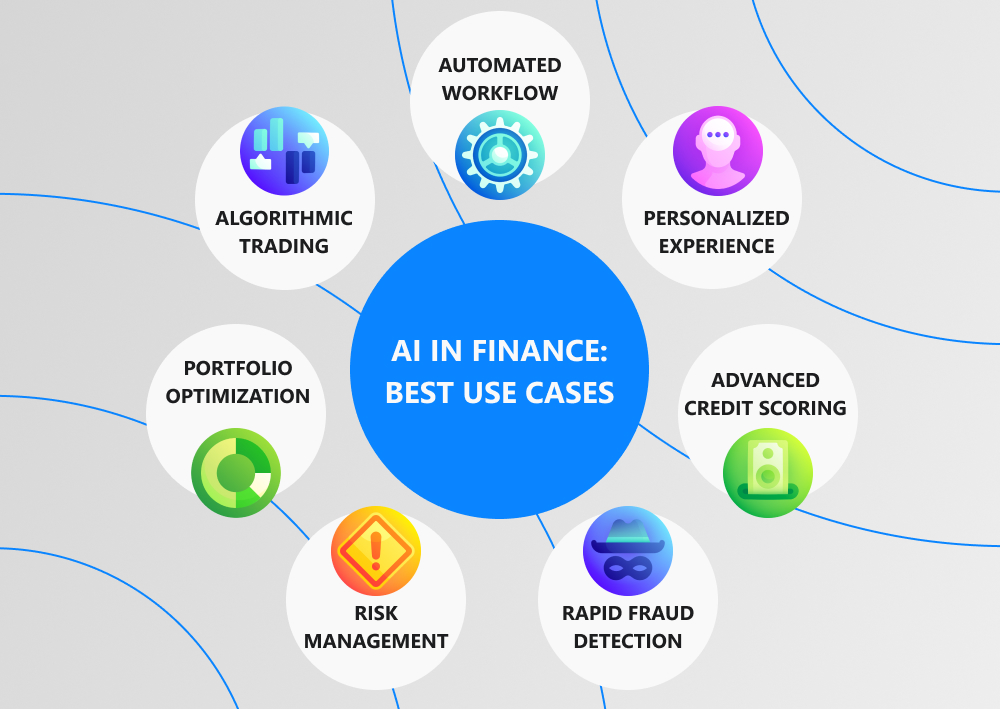
Finance AI companies are leveraging machine learning, natural language processing (NLP), and other AI techniques to address specific challenges within the industry. These include fraud detection, risk management, algorithmic trading, customer service, and personalized financial advice. The adoption of AI is not just a trend; it’s becoming a necessity for financial institutions to remain competitive in today’s rapidly evolving market.
Key Areas Where Finance AI Companies are Making an Impact
Fraud Detection and Prevention
One of the most significant applications of AI in finance is in fraud detection. Traditional fraud detection methods often rely on rule-based systems, which are easily circumvented by sophisticated fraudsters. Finance AI companies are developing AI-powered systems that can analyze transactions in real-time, identify anomalies, and flag suspicious activities with greater accuracy. These systems learn from historical data and adapt to new fraud patterns, providing a more robust defense against financial crimes.
Risk Management
Managing risk is crucial for financial institutions. AI algorithms can analyze various risk factors, such as credit risk, market risk, and operational risk, to provide a more comprehensive assessment of potential threats. By using machine learning models, finance AI companies help financial institutions make better-informed decisions about lending, investments, and other financial activities. This leads to more stable and resilient financial systems.
Algorithmic Trading
Algorithmic trading, also known as automated trading, involves using computer programs to execute trades based on predefined rules and algorithms. Finance AI companies are enhancing algorithmic trading strategies by incorporating machine learning techniques. These AI-powered algorithms can analyze market data, identify patterns, and execute trades at optimal times, potentially generating higher returns and reducing transaction costs. However, it’s important to note that algorithmic trading also comes with its own set of risks, such as flash crashes and unintended consequences.
Customer Service and Chatbots
AI-powered chatbots are transforming customer service in the financial industry. These chatbots can handle a wide range of customer inquiries, from basic account information to more complex financial advice. By providing instant and personalized support, finance AI companies are helping financial institutions improve customer satisfaction and reduce operational costs. NLP enables chatbots to understand and respond to natural language, making interactions more human-like and efficient. [See also: The Future of Banking with AI Chatbots]
Personalized Financial Advice
AI is enabling financial institutions to offer personalized financial advice to their customers. By analyzing individual financial data, such as income, expenses, and investment goals, AI algorithms can provide tailored recommendations on budgeting, saving, and investing. This makes financial planning more accessible and affordable for a wider range of people. Several finance AI companies are developing robo-advisors that automate the process of providing financial advice, making it easier for individuals to achieve their financial goals.
Spotlight on Leading Finance AI Companies
Here are some of the leading finance AI companies that are making significant contributions to the industry:
- DataRobot: Provides an AI platform for building and deploying machine learning models for various financial applications.
- Kensho: Develops AI-powered analytics and data visualization tools for financial professionals.
- Zest AI: Focuses on using AI to improve credit scoring and lending decisions, making credit more accessible to underserved populations.
- Sigmoidal: Offers AI solutions for fraud detection, risk management, and customer analytics in the financial sector.
- Kasisto: Specializes in conversational AI for financial services, powering chatbots and virtual assistants for banks and credit unions.
These are just a few examples of the many innovative finance AI companies that are driving change in the industry. Each company brings its unique expertise and technology to address specific challenges and opportunities in the financial sector.
Challenges and Considerations
While AI offers numerous benefits to the financial industry, there are also challenges and considerations that need to be addressed. These include:
- Data privacy and security: Financial data is highly sensitive, and protecting it from unauthorized access is paramount. Finance AI companies must implement robust security measures to ensure data privacy and comply with regulations such as GDPR and CCPA.
- Bias and fairness: AI algorithms can perpetuate and amplify existing biases in data, leading to unfair or discriminatory outcomes. It’s crucial to develop AI systems that are fair and unbiased, and to regularly audit them for potential biases.
- Transparency and explainability: The decision-making processes of AI algorithms can be opaque, making it difficult to understand why they make certain predictions or recommendations. Finance AI companies need to improve the transparency and explainability of their AI systems to build trust and accountability.
- Regulatory compliance: The financial industry is heavily regulated, and finance AI companies must comply with a complex web of regulations. It’s important to work closely with regulators to ensure that AI systems are used responsibly and ethically.
- Job displacement: The automation of tasks by AI could lead to job displacement in the financial industry. It’s important to invest in retraining and upskilling programs to help workers adapt to the changing job market.
The Future of Finance with AI
The future of finance is inextricably linked to AI. As AI technology continues to evolve, we can expect to see even more innovative applications in the financial sector. Finance AI companies will play a crucial role in shaping this future, developing new solutions that improve efficiency, reduce costs, and enhance customer experiences. [See also: How AI Will Transform Investment Banking]
The ongoing developments in machine learning, deep learning, and NLP will enable AI systems to perform more complex tasks, such as predicting market crashes, detecting sophisticated fraud schemes, and providing personalized financial advice with even greater accuracy. The integration of AI with other emerging technologies, such as blockchain and cloud computing, will further accelerate the transformation of the financial industry.
However, it’s important to approach the adoption of AI in finance with caution and responsibility. Addressing the challenges and considerations outlined above is crucial to ensure that AI is used ethically and for the benefit of society. By working together, finance AI companies, financial institutions, regulators, and policymakers can create a future where AI empowers individuals and businesses to achieve their financial goals.
Conclusion
Finance AI companies are revolutionizing the financial industry by leveraging the power of artificial intelligence. From fraud detection and risk management to algorithmic trading and personalized financial advice, AI is transforming the way financial institutions operate and interact with their customers. While challenges remain, the potential benefits of AI in finance are enormous. As AI technology continues to advance, we can expect to see even more innovative applications that will shape the future of the financial industry. The key is to embrace AI responsibly and ethically, ensuring that it is used to create a more efficient, equitable, and sustainable financial system for all.
