Unlocking Profit Potential: Mastering the Bollinger Squeeze in Trading
In the dynamic world of financial markets, identifying potential breakout opportunities is crucial for successful trading. One popular technical analysis tool that helps traders pinpoint these moments is the Bollinger Squeeze. This article delves into the intricacies of the Bollinger Squeeze, exploring its definition, calculation, interpretation, and practical application in various trading strategies. Understanding the Bollinger Squeeze can provide traders with a significant edge in navigating market volatility and capitalizing on emerging trends. This guide aims to equip you with the knowledge to effectively use this powerful indicator.
What is the Bollinger Squeeze?
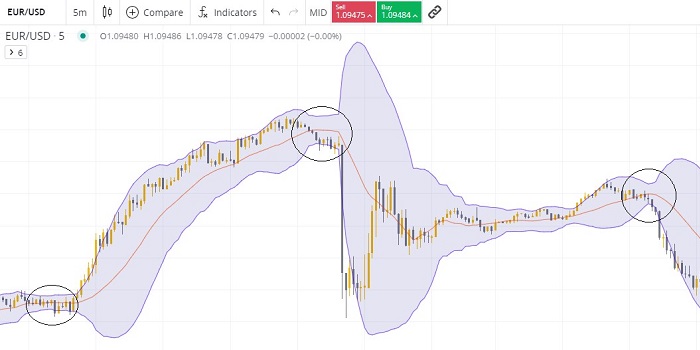
The Bollinger Squeeze is a technical analysis indicator derived from Bollinger Bands, developed by John Bollinger in the 1980s. Bollinger Bands consist of three lines: a simple moving average (SMA), an upper band calculated by adding a certain number of standard deviations to the SMA, and a lower band calculated by subtracting the same number of standard deviations from the SMA. The Bollinger Squeeze occurs when the upper and lower bands contract, indicating a period of low volatility. This contraction suggests that volatility is about to increase, often leading to a significant price movement.
The underlying principle of the Bollinger Squeeze is based on the observation that markets alternate between periods of high and low volatility. When volatility is low, the bands narrow, signaling a potential breakout. Traders use this signal to anticipate a future price surge or decline, positioning themselves to profit from the anticipated move.
Calculating the Bollinger Squeeze
The calculation of the Bollinger Squeeze involves several steps:
- Calculate the Simple Moving Average (SMA): Typically, a 20-period SMA is used. The SMA is calculated by summing the closing prices over the chosen period (e.g., 20 days) and dividing by the number of periods.
- Calculate the Standard Deviation: Standard deviation measures the dispersion of a set of data points around its mean. In the context of Bollinger Bands, it quantifies the price volatility.
- Calculate the Upper Band: The upper band is calculated by adding a multiple of the standard deviation (usually 2) to the SMA. Formula: Upper Band = SMA + (2 * Standard Deviation).
- Calculate the Lower Band: The lower band is calculated by subtracting the same multiple of the standard deviation from the SMA. Formula: Lower Band = SMA – (2 * Standard Deviation).
- Identify the Squeeze: A Bollinger Squeeze is identified when the difference between the upper and lower bands is at its narrowest over a specified lookback period. Various tools and platforms offer built-in indicators that automatically calculate and highlight Bollinger Squeeze formations.
Interpreting the Bollinger Squeeze
The Bollinger Squeeze is not a directional indicator; it does not predict whether the price will break upward or downward. Instead, it signals that a significant price movement is likely to occur. Therefore, traders need to combine the Bollinger Squeeze with other technical indicators and chart patterns to determine the potential direction of the breakout.
Here’s how to interpret the Bollinger Squeeze:
- Narrow Bands: When the Bollinger Bands narrow significantly, it indicates a period of low volatility and a potential Bollinger Squeeze. This suggests that a breakout is imminent.
- Breakout Direction: To determine the potential direction of the breakout, traders often look for confirmation signals. For example, a break above the upper band suggests a potential upward breakout, while a break below the lower band suggests a potential downward breakout.
- Volume Confirmation: Increased trading volume during the breakout can confirm the strength of the move. Higher volume indicates greater participation and conviction among traders.
- Additional Indicators: Combining the Bollinger Squeeze with other indicators, such as Relative Strength Index (RSI), Moving Average Convergence Divergence (MACD), and Fibonacci retracement levels, can provide additional confirmation and improve the accuracy of trading signals.
Trading Strategies Using the Bollinger Squeeze
The Bollinger Squeeze can be incorporated into various trading strategies. Here are a few examples:
Breakout Trading
This is the most common strategy associated with the Bollinger Squeeze. Traders wait for the bands to narrow, indicating a potential squeeze. They then look for a breakout above the upper band or below the lower band. A buy order is placed when the price breaks above the upper band, and a sell order is placed when the price breaks below the lower band. Stop-loss orders are typically placed just below the breakout point to limit potential losses.
Mean Reversion Trading
While the Bollinger Squeeze is often associated with breakout trading, it can also be used for mean reversion strategies. In this approach, traders look for the price to move outside the bands during a squeeze. They then anticipate that the price will revert back towards the mean (the SMA). For example, if the price moves above the upper band during a squeeze, traders might consider selling, expecting the price to fall back towards the SMA. Conversely, if the price moves below the lower band, traders might consider buying, expecting the price to rise back towards the SMA.
Volatility Trading
The Bollinger Squeeze is inherently a volatility indicator. Traders can use it to anticipate periods of increased volatility and adjust their position sizes accordingly. During a squeeze, when volatility is low, traders might increase their position sizes in anticipation of a breakout. Conversely, after a breakout, when volatility is high, traders might reduce their position sizes to manage risk.
Advantages and Limitations of the Bollinger Squeeze
Like any technical analysis tool, the Bollinger Squeeze has its advantages and limitations.
Advantages
- Identifies Potential Breakouts: The Bollinger Squeeze helps traders identify periods of low volatility that often precede significant price movements.
- Objective Indicator: The calculation of Bollinger Bands and the identification of squeezes are based on mathematical formulas, making it an objective indicator.
- Versatile: The Bollinger Squeeze can be used in various trading strategies, including breakout trading, mean reversion trading, and volatility trading.
- Widely Available: Bollinger Bands and the Bollinger Squeeze are available on most trading platforms and charting software.
Limitations
- False Signals: The Bollinger Squeeze can generate false signals. A squeeze does not always lead to a breakout, and even when a breakout occurs, it may not be sustained.
- Non-Directional: The Bollinger Squeeze does not predict the direction of the breakout. Traders need to use other indicators and chart patterns to determine the potential direction.
- Lagging Indicator: The Bollinger Squeeze is a lagging indicator, meaning that it is based on past price data. By the time a squeeze is identified, the price movement may have already begun.
- Parameter Sensitivity: The performance of the Bollinger Squeeze can be sensitive to the parameters used in the calculation, such as the period of the SMA and the number of standard deviations.
Tips for Using the Bollinger Squeeze Effectively
To use the Bollinger Squeeze effectively, consider the following tips:
- Combine with Other Indicators: Do not rely solely on the Bollinger Squeeze. Combine it with other indicators, such as RSI, MACD, and volume analysis, to confirm trading signals.
- Use Multiple Timeframes: Analyze the Bollinger Squeeze on multiple timeframes to get a broader perspective of the market.
- Adjust Parameters: Experiment with different parameters for the SMA and standard deviation to find the settings that work best for your trading style and the specific market you are trading.
- Manage Risk: Always use stop-loss orders to limit potential losses. The Bollinger Squeeze can generate false signals, so it is important to protect your capital.
- Practice: Practice using the Bollinger Squeeze in a demo account before trading with real money. This will allow you to become familiar with its nuances and develop a trading strategy that suits your needs.
Real-World Examples of Bollinger Squeeze in Action
Let’s look at some hypothetical examples of how the Bollinger Squeeze might be used in real-world trading scenarios.
Example 1: Stock Breakout
Imagine you are tracking a stock that has been trading in a narrow range for several weeks. The Bollinger Bands have been steadily narrowing, indicating a Bollinger Squeeze. You notice that the stock price breaks above the upper band on increasing volume. This could be a signal to buy the stock, anticipating a further upward move. You place a stop-loss order just below the breakout point to manage your risk.
Example 2: Cryptocurrency Mean Reversion
Consider a cryptocurrency that experiences a sudden price spike, pushing it above the upper Bollinger Band during a Bollinger Squeeze. You believe that the price is overextended and likely to revert back towards the mean. You decide to sell the cryptocurrency, expecting the price to fall back towards the SMA. You set a profit target near the SMA and a stop-loss order just above the recent high.
Example 3: Forex Volatility Trade
Suppose you are trading a forex pair and observe a prolonged period of low volatility, resulting in a significant Bollinger Squeeze. You anticipate that volatility is about to increase. You decide to reduce your position size to protect your capital in case of a sudden price swing. You wait for a breakout signal and then adjust your position size accordingly.
The Future of Bollinger Squeeze in Technical Analysis
The Bollinger Squeeze remains a valuable tool in technical analysis, and its relevance is likely to continue in the future. With the increasing sophistication of trading platforms and the availability of real-time data, traders have access to more advanced tools for analyzing and interpreting the Bollinger Squeeze. Furthermore, the integration of artificial intelligence and machine learning into trading systems may enhance the accuracy and effectiveness of Bollinger Squeeze-based strategies. [See also: Understanding Moving Averages] [See also: RSI Trading Strategies]
Conclusion
The Bollinger Squeeze is a powerful technical analysis tool that can help traders identify potential breakout opportunities and manage risk. By understanding its definition, calculation, interpretation, and practical application, traders can incorporate the Bollinger Squeeze into their trading strategies and improve their overall performance. However, it is important to remember that the Bollinger Squeeze is not a perfect indicator and should be used in conjunction with other tools and techniques. With careful analysis and risk management, the Bollinger Squeeze can be a valuable asset in navigating the complexities of the financial markets. Mastering the Bollinger Squeeze requires dedication and continuous learning. By staying informed about market trends and refining your trading strategies, you can unlock the profit potential that this indicator offers. Always remember that the Bollinger Squeeze is a tool to be used in conjunction with other forms of analysis and sound risk management practices.
