Unveiling Trading Liquidity Sweeps: A Comprehensive Guide
In the dynamic world of financial markets, understanding the nuances of order execution and market manipulation is crucial for traders and investors alike. One such phenomenon that often sparks debate and scrutiny is the trading liquidity sweep. A trading liquidity sweep refers to a rapid execution of large orders that consume available liquidity at multiple price levels, resulting in a swift and significant price movement. This article delves into the intricacies of trading liquidity sweeps, exploring their mechanics, motivations, and potential impact on market participants.
What is a Trading Liquidity Sweep?
A trading liquidity sweep, also known as a “market sweep” or “iceberg order sweep,” occurs when a large order is executed aggressively, quickly consuming all available buy or sell orders at successive price points. This aggressive order execution results in a sudden and often substantial price change, as the market price adjusts to reflect the new supply and demand dynamics. The primary characteristic of a trading liquidity sweep is its speed and impact, as it rapidly depletes available liquidity and forces the price to move significantly.
Imagine a scenario where a large institutional investor wants to buy a substantial amount of a particular stock. Instead of placing a single large order that could move the price significantly, they might employ a trading liquidity sweep strategy. They would systematically buy up all available shares at the current price, then move to the next higher price level, and so on, until their entire order is filled. This process can create a sudden surge in buying pressure, driving the price upward.
Mechanics of a Liquidity Sweep
Understanding the mechanics of a trading liquidity sweep requires familiarity with order book dynamics. The order book is a real-time electronic list of buy and sell orders for a particular asset, organized by price. Buy orders (bids) represent the prices at which buyers are willing to purchase the asset, while sell orders (asks) represent the prices at which sellers are willing to sell. The difference between the highest bid and the lowest ask is known as the bid-ask spread.
A trading liquidity sweep involves the aggressive execution of orders that target and consume the liquidity available in the order book. When a large buy order is executed as a trading liquidity sweep, it systematically removes all available sell orders (asks) at the current price level. As the available liquidity at that price is exhausted, the order moves to the next higher price level, continuing to consume available asks until the entire order is filled. This process creates a rapid upward price movement.
Conversely, a trading liquidity sweep on the sell side involves the aggressive execution of sell orders that target and consume available buy orders (bids). This results in a rapid downward price movement. The speed and intensity of the trading liquidity sweep are crucial factors in determining its impact on the market.
Motivations Behind Trading Liquidity Sweeps
Several factors can motivate traders and institutions to engage in trading liquidity sweeps. These motivations can range from legitimate trading strategies to potentially manipulative practices.
- Order Execution Efficiency: Large institutional investors often need to execute substantial orders without significantly impacting the market price. A trading liquidity sweep allows them to fill their orders quickly and efficiently, minimizing the risk of adverse price movements. By systematically consuming available liquidity, they can gradually accumulate or liquidate their positions without signaling their intentions to other market participants.
- Price Discovery: A trading liquidity sweep can be used to gauge market sentiment and identify potential price levels. By aggressively buying or selling, traders can observe how the market reacts and determine the strength of demand or supply at different price points. This information can be valuable for making informed trading decisions.
- Stop-Loss Hunting: In some cases, trading liquidity sweeps can be used to trigger stop-loss orders placed by other traders. By driving the price to a level where stop-loss orders are clustered, a trader can trigger those orders and profit from the resulting price movement. This practice is often considered manipulative and is subject to regulatory scrutiny.
- Market Manipulation: While less common, trading liquidity sweeps can be used as a tool for market manipulation. By creating artificial price movements, manipulators can induce other traders to buy or sell, allowing them to profit from the resulting price fluctuations. Such practices are illegal and can result in severe penalties.
Impact on Market Participants
Trading liquidity sweeps can have a significant impact on various market participants, including:
- Retail Traders: Retail traders, who often have limited capital and access to information, can be particularly vulnerable to trading liquidity sweeps. Sudden price movements can trigger stop-loss orders, resulting in unexpected losses. Furthermore, retail traders may be caught off guard by the rapid price changes and make impulsive decisions that further exacerbate their losses.
- Institutional Investors: While institutional investors may use trading liquidity sweeps as a legitimate trading strategy, they can also be negatively impacted by them. If an institution is on the wrong side of a trading liquidity sweep, it can experience significant losses. Therefore, it is crucial for institutional investors to carefully monitor market activity and manage their risk exposure.
- Market Makers: Market makers play a crucial role in providing liquidity to the market. They profit from the bid-ask spread and are responsible for maintaining orderly markets. Trading liquidity sweeps can disrupt their operations by creating sudden and unpredictable price movements. Market makers may be forced to widen the bid-ask spread or reduce their inventory to mitigate the risk of losses.
Regulatory Considerations
Given the potential for market manipulation, regulators closely monitor trading liquidity sweeps. While not all trading liquidity sweeps are illegal, those that are used to manipulate prices or deceive other market participants are subject to strict enforcement. Regulators may impose fines, trading bans, and other penalties on individuals and institutions found guilty of engaging in manipulative trading liquidity sweeps.
The definition of what constitutes a manipulative trading liquidity sweep can be complex and depends on various factors, including the intent of the trader, the size of the order, and the impact on the market. Regulators often use sophisticated surveillance tools to detect suspicious trading activity and investigate potential cases of market manipulation. [See also: Algorithmic Trading Strategies]
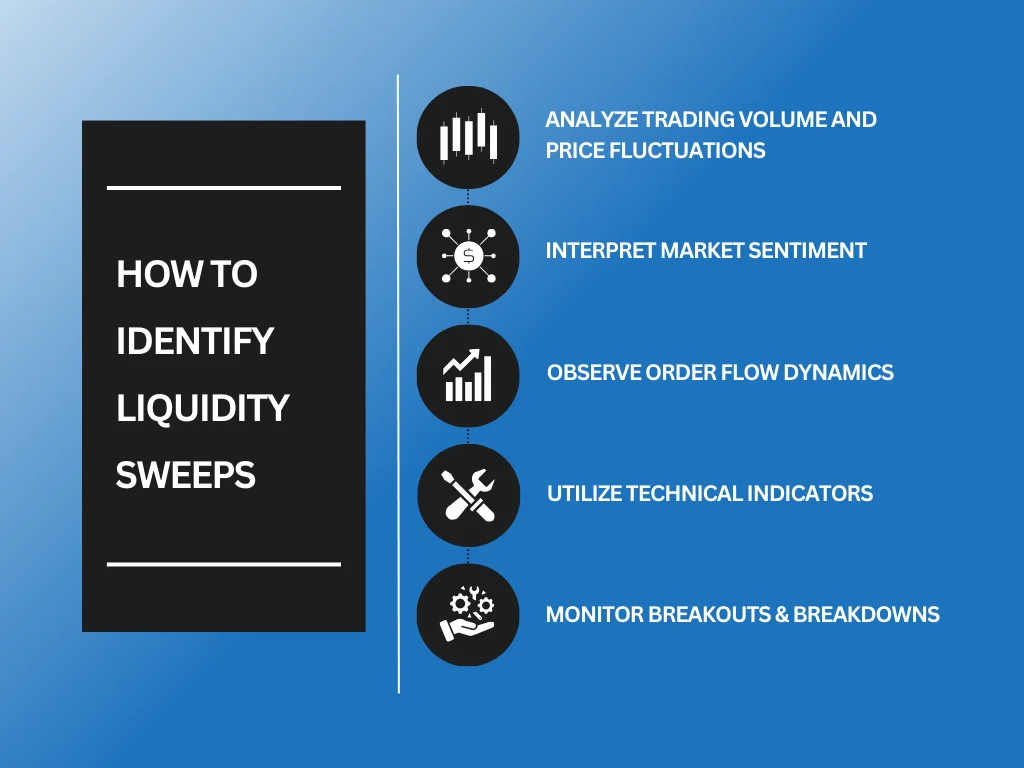
Identifying Trading Liquidity Sweeps
Identifying a trading liquidity sweep in real-time can be challenging, but there are certain indicators that traders can look for:
- Sudden Price Spikes or Drops: A rapid and significant price movement, especially when accompanied by high trading volume, can be a sign of a trading liquidity sweep.
- Depletion of Order Book Liquidity: Observing the order book for a sudden disappearance of buy or sell orders at multiple price levels can indicate a trading liquidity sweep.
- Unusual Trading Volume: A surge in trading volume that is significantly higher than the average volume can be a sign of aggressive order execution.
- News and Events: Sometimes, trading liquidity sweeps can be triggered by unexpected news events or economic data releases. Traders should be aware of upcoming events and be prepared for potential market volatility.
Strategies for Navigating Liquidity Sweeps
While it is impossible to completely avoid the impact of trading liquidity sweeps, there are certain strategies that traders can employ to mitigate their risk:
- Use Stop-Loss Orders Wisely: Stop-loss orders can help limit potential losses, but they can also be triggered by trading liquidity sweeps. Consider placing stop-loss orders at levels that are less likely to be targeted by manipulators.
- Monitor Order Book Activity: Pay close attention to the order book and be aware of potential liquidity imbalances. This can help you anticipate potential trading liquidity sweeps and adjust your trading strategy accordingly.
- Manage Risk Exposure: Avoid overleveraging your positions and diversify your portfolio to reduce your overall risk exposure.
- Stay Informed: Keep up-to-date with market news and events that could potentially trigger trading liquidity sweeps.
- Consider Algorithmic Trading: Algorithmic trading systems can be programmed to detect and react to trading liquidity sweeps more quickly than human traders. [See also: High-Frequency Trading and Market Microstructure]
Conclusion
Trading liquidity sweeps are a complex and often misunderstood aspect of financial markets. While they can be used as a legitimate order execution strategy, they can also be employed for manipulative purposes. Understanding the mechanics, motivations, and potential impact of trading liquidity sweeps is crucial for all market participants. By staying informed, managing risk exposure, and employing appropriate trading strategies, traders can navigate the challenges posed by trading liquidity sweeps and protect their capital.
The key takeaway is that trading liquidity sweeps represent a powerful force in the market, capable of triggering significant price volatility. Staying vigilant and adapting to these market dynamics are essential for success in today’s fast-paced trading environment. Being aware of how trading liquidity sweeps operate and their potential impact can help traders make more informed decisions and navigate the market with greater confidence. Ultimately, a deeper understanding of trading liquidity sweeps contributes to a more informed and resilient trading strategy.
