The 3 Legged Retirement Stool: Is Your Retirement Plan Stable?
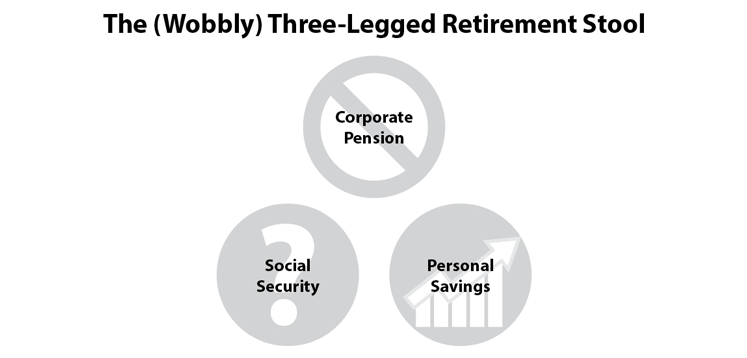
For decades, the concept of the 3 legged retirement stool has been a cornerstone of financial planning. This analogy simplifies the complex world of retirement income by representing it as a three-legged stool. Each leg represents a primary source of income: Social Security, employer-sponsored retirement plans (like 401(k)s or pensions), and personal savings/investments. The stability of your retirement depends on the strength of each leg. If one leg is weak or missing, the entire stool – your retirement plan – becomes unstable and could potentially collapse.
This article delves into the intricacies of the 3 legged retirement stool, examining the strengths and weaknesses of each leg and providing strategies to fortify your retirement plan. We’ll explore how changing economic landscapes, evolving workforce dynamics, and individual circumstances necessitate a re-evaluation of this traditional model. The goal is to provide you with the knowledge and tools to ensure a secure and fulfilling retirement.
Understanding the Three Legs
Social Security: The Foundation
Social Security is often considered the foundational leg of the 3 legged retirement stool. It’s a government-sponsored program designed to provide a safety net for retirees, disabled individuals, and survivors of deceased workers. Contributions are made throughout your working years through payroll taxes, and benefits are calculated based on your earnings history. While Social Security provides a guaranteed income stream, it’s essential to understand its limitations.
The future of Social Security is a topic of ongoing debate. Demographic shifts, such as increasing life expectancies and declining birth rates, are putting pressure on the system. Potential changes to Social Security, such as raising the retirement age or reducing benefits, could significantly impact future retirees. Therefore, relying solely on Social Security for retirement income is generally not advisable. Understanding your estimated Social Security benefits and considering potential future changes is crucial for effective retirement planning. [See also: Social Security Strategies for Retirement]
Employer-Sponsored Retirement Plans: The Growth Engine
Employer-sponsored retirement plans, such as 401(k)s, 403(b)s, and pensions, represent the second leg of the 3 legged retirement stool. These plans offer opportunities for tax-advantaged savings and investment. Many employers also offer matching contributions, effectively providing “free money” to employees who participate. However, the responsibility for managing these accounts often falls on the employee, requiring a certain level of financial literacy and investment knowledge.
The shift from traditional pensions to 401(k)s has placed greater responsibility on individuals to manage their retirement savings. Understanding investment options, asset allocation, and risk tolerance is essential for maximizing returns and mitigating potential losses. Furthermore, factors such as vesting schedules, early withdrawal penalties, and plan fees can significantly impact the long-term performance of these accounts. Diversification is key. Consider a mix of stocks, bonds, and other assets to manage risk effectively. Review your investment strategy regularly and adjust it as needed based on your age, risk tolerance, and financial goals. [See also: Maximizing Your 401(k) Contributions]
Personal Savings and Investments: The Flexibility Factor
The third leg of the 3 legged retirement stool consists of personal savings and investments. This includes a wide range of assets, such as savings accounts, brokerage accounts, real estate, and other investments. Personal savings provide flexibility and control over your retirement income, allowing you to supplement Social Security and employer-sponsored retirement plans.
Building a robust portfolio of personal savings and investments requires discipline, planning, and a clear understanding of your financial goals. Start by setting realistic savings targets and automating your savings contributions. Consider diversifying your investments across different asset classes to manage risk and maximize potential returns. Work with a financial advisor to develop a personalized investment strategy that aligns with your risk tolerance and retirement goals. Tax-advantaged accounts, such as Roth IRAs and traditional IRAs, can also provide significant benefits. [See also: Building a Diversified Investment Portfolio]
The Weaknesses of the Traditional 3 Legged Retirement Stool
While the 3 legged retirement stool provides a useful framework for understanding retirement income sources, it’s important to acknowledge its limitations. In today’s rapidly changing world, relying solely on these three legs may not be sufficient to ensure a comfortable and secure retirement. Several factors can weaken the traditional 3 legged retirement stool:
- Longevity Risk: People are living longer than ever before, which means they need to save more to cover their retirement expenses.
- Inflation: The rising cost of goods and services can erode the purchasing power of retirement savings.
- Healthcare Costs: Healthcare expenses tend to increase significantly as people age, potentially draining retirement savings.
- Market Volatility: Economic downturns and market fluctuations can negatively impact investment returns, reducing retirement income.
- Job Insecurity: Job losses or career disruptions can impact both Social Security benefits and employer-sponsored retirement plan contributions.
Strengthening Your Retirement Stool: Adding More Legs
To address the weaknesses of the traditional 3 legged retirement stool, many financial advisors recommend adding additional legs to the stool. These additional legs can provide alternative sources of income and enhance the overall stability of your retirement plan.
Part-Time Work or Consulting
Working part-time or consulting during retirement can provide a supplemental income stream and keep you engaged and active. This can be a fulfilling way to utilize your skills and experience while earning extra money.
Rental Income
If you own rental properties, the rental income can provide a steady stream of cash flow during retirement. However, it’s important to consider the responsibilities and potential costs associated with property management.
Annuities
Annuities are insurance contracts that provide a guaranteed income stream for a specified period or for life. They can offer protection against longevity risk and provide a predictable source of income.
Home Equity
Consider a reverse mortgage. While controversial, tapping into home equity through a reverse mortgage can provide access to funds during retirement. However, it’s important to understand the terms and conditions carefully.
Health Savings Account (HSA)
If you have a high-deductible health insurance plan, you can contribute to a health savings account (HSA). HSAs offer tax advantages and can be used to pay for qualified medical expenses during retirement.
Building a Secure Retirement: A Holistic Approach
Securing your retirement requires a holistic approach that considers all aspects of your financial life. It’s not just about saving money; it’s about planning for your future expenses, managing your investments wisely, and understanding the various income sources available to you. The 3 legged retirement stool is a good starting point, but it’s essential to customize your retirement plan to meet your individual needs and circumstances.
Here are some key steps to take:
- Assess Your Current Financial Situation: Evaluate your assets, liabilities, income, and expenses.
- Set Retirement Goals: Determine how much income you’ll need to maintain your desired lifestyle during retirement.
- Estimate Your Social Security Benefits: Use the Social Security Administration’s website to estimate your future benefits.
- Review Your Employer-Sponsored Retirement Plan: Understand your investment options, contribution limits, and vesting schedule.
- Develop a Savings and Investment Plan: Create a plan to save regularly and invest wisely.
- Consider Additional Income Sources: Explore options such as part-time work, rental income, or annuities.
- Plan for Healthcare Costs: Factor in potential healthcare expenses and explore options such as Medicare and supplemental insurance.
- Seek Professional Advice: Consult with a financial advisor to develop a personalized retirement plan.
The Future of Retirement Planning
The traditional 3 legged retirement stool is evolving. As economic landscapes change and workforce dynamics shift, individuals need to adapt their retirement planning strategies. The future of retirement planning will likely involve a more personalized and flexible approach that considers a wider range of income sources and investment options.
Staying informed about financial trends, seeking professional advice, and proactively managing your retirement plan are essential for ensuring a secure and fulfilling retirement. Don’t rely solely on the traditional model; build a retirement plan that is tailored to your unique needs and circumstances. The stability of your 3 legged retirement stool, or perhaps your five or six legged one, depends on it.
The concept of the 3 legged retirement stool serves as a valuable starting point, but it’s crucial to remember that retirement planning is an ongoing process. Regularly review and adjust your plan as needed to ensure that you’re on track to achieve your retirement goals. A solid understanding of the 3 legged retirement stool, coupled with proactive planning and informed decision-making, will significantly increase your chances of a comfortable and secure retirement. The key is to create a resilient and adaptable plan that can withstand the inevitable challenges that life may bring. Ensure each leg of your 3 legged retirement stool is strong, and perhaps add a few more for good measure!
