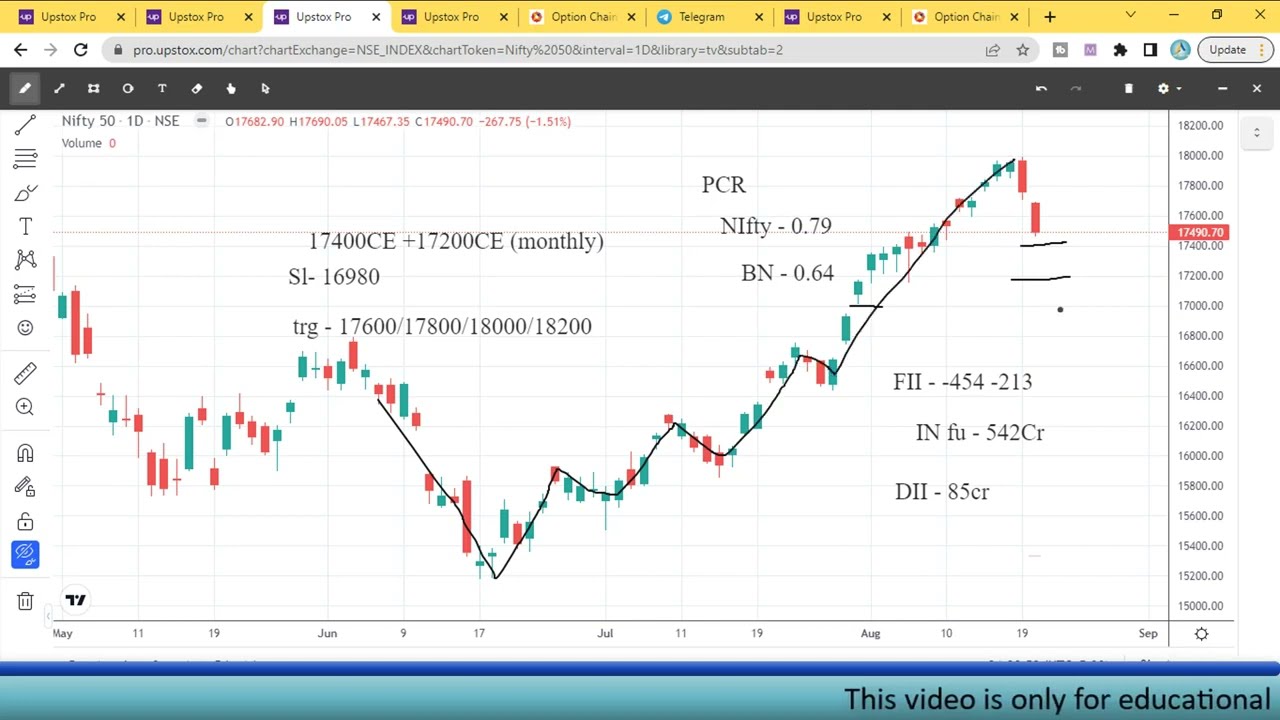
Share Market Prediction Today: Navigating Volatility and Identifying Opportunities
The share market, a dynamic and often unpredictable arena, captures the attention of investors worldwide. Today, understanding the nuances of share market prediction today is more critical than ever. With global economic shifts, geopolitical tensions, and technological advancements reshaping industries, accurately anticipating market movements can be the key to successful investment strategies. This article delves into the complexities of share market prediction today, exploring the factors influencing market behavior, the tools and techniques used for forecasting, and the inherent risks involved.
Understanding the Fundamentals of Share Market Prediction
Share market prediction today is not merely about guessing which stocks will rise or fall. It involves a comprehensive analysis of various elements that contribute to market sentiment and stock performance. These elements can be broadly categorized into:
- Economic Indicators: GDP growth, inflation rates, unemployment figures, and interest rate policies all significantly impact the share market.
- Company Performance: Earnings reports, revenue growth, and management decisions play a crucial role in individual stock valuations.
- Geopolitical Events: Political instability, trade wars, and international relations can create volatility and uncertainty in the market.
- Market Sentiment: Investor psychology, news cycles, and social media trends can drive short-term market fluctuations.
The Role of Economic Indicators
Economic indicators provide a macro-level view of the financial health of a country or region. For instance, a strong GDP growth rate typically signals a robust economy, which can lead to increased corporate profits and higher stock prices. Conversely, high inflation rates can erode purchasing power and negatively impact corporate earnings, potentially leading to a market downturn. Central banks’ monetary policies, particularly interest rate adjustments, can also have a profound effect on the share market. Lower interest rates can stimulate borrowing and investment, while higher rates can dampen economic activity.
Company Performance and Stock Valuation
At the micro-level, the performance of individual companies is a key determinant of their stock prices. Earnings reports, which provide a snapshot of a company’s financial performance over a specific period, are closely watched by investors. Companies that consistently exceed earnings expectations often see their stock prices rise, while those that fall short may experience a decline. Revenue growth, profit margins, and debt levels are also important metrics to consider. Furthermore, management decisions, such as strategic investments, mergers and acquisitions, and dividend policies, can influence investor sentiment and stock valuations.
Geopolitical Influences on the Share Market
Geopolitical events can introduce significant uncertainty and volatility into the share market. Political instability in key regions, trade disputes between major economies, and international conflicts can all disrupt global supply chains and investor confidence. For example, a trade war between two major economic powers can lead to tariffs on goods, reduced trade volumes, and slower economic growth, which can negatively impact stock prices. Similarly, political unrest or military conflicts can create uncertainty and drive investors to seek safer assets, such as government bonds or gold.
The Impact of Market Sentiment
Market sentiment, or the overall attitude of investors towards the market, can have a significant impact on short-term price movements. Positive sentiment, often fueled by good news or optimistic forecasts, can drive stock prices higher, while negative sentiment, triggered by bad news or pessimistic outlooks, can lead to sell-offs. Social media, news outlets, and online forums can all influence market sentiment. Understanding and gauging market sentiment is crucial for short-term traders and investors looking to capitalize on market fluctuations. Analyzing share market prediction today requires understanding these sentiments.
Tools and Techniques for Share Market Prediction
Various tools and techniques are employed to forecast share market movements. These methods range from fundamental analysis, which focuses on evaluating the intrinsic value of a company, to technical analysis, which uses historical price and volume data to identify patterns and trends.
- Fundamental Analysis: Involves evaluating a company’s financial statements, industry trends, and competitive landscape to determine its intrinsic value.
- Technical Analysis: Uses historical price and volume data to identify patterns and trends that can be used to predict future price movements.
- Quantitative Analysis: Employs mathematical and statistical models to analyze large datasets and identify investment opportunities.
- Algorithmic Trading: Uses computer programs to execute trades based on pre-defined rules and algorithms.
Fundamental Analysis in Detail
Fundamental analysis is a bottom-up approach that focuses on evaluating the financial health and prospects of individual companies. Analysts examine a company’s balance sheet, income statement, and cash flow statement to assess its profitability, solvency, and efficiency. They also consider industry trends, competitive pressures, and management quality. The goal of fundamental analysis is to determine whether a stock is undervalued or overvalued relative to its intrinsic value. If a stock is trading below its intrinsic value, analysts may recommend buying it, while if it is trading above its intrinsic value, they may recommend selling it.
Technical Analysis and Chart Patterns
Technical analysis is a top-down approach that focuses on analyzing historical price and volume data to identify patterns and trends. Technical analysts use various charts and indicators to identify potential buy and sell signals. Common chart patterns include head and shoulders, double tops and bottoms, and triangles. Technical indicators include moving averages, relative strength index (RSI), and moving average convergence divergence (MACD). Technical analysis is often used by short-term traders and investors to time their entry and exit points in the market. The accuracy of share market prediction today depends on the effectiveness of these patterns.
The Power of Quantitative Analysis
Quantitative analysis involves the use of mathematical and statistical models to analyze large datasets and identify investment opportunities. Quantitative analysts use sophisticated algorithms to identify patterns and correlations that may not be apparent through traditional fundamental or technical analysis. Quantitative models can be used to predict stock prices, assess risk, and optimize portfolio allocations. Quantitative analysis is often used by hedge funds and institutional investors to manage large portfolios and generate alpha.
Algorithmic Trading and Automation
Algorithmic trading, also known as automated trading, involves the use of computer programs to execute trades based on pre-defined rules and algorithms. Algorithmic trading can be used to automate various trading strategies, such as arbitrage, trend following, and mean reversion. Algorithmic trading offers several advantages over manual trading, including faster execution speeds, reduced emotional bias, and the ability to process large amounts of data quickly. However, algorithmic trading also carries risks, such as programming errors, system failures, and the potential for flash crashes. Understanding the role of algorithms is crucial for share market prediction today.
The Inherent Risks of Share Market Prediction
Despite the use of sophisticated tools and techniques, share market prediction today remains inherently risky. The market is influenced by a multitude of factors, many of which are unpredictable. Economic shocks, political events, and unexpected news can all trigger sudden and significant market movements. Furthermore, market sentiment can be irrational and driven by emotions, making it difficult to predict short-term price fluctuations.
- Market Volatility: Sudden and significant price swings can occur due to unexpected events or changes in market sentiment.
- Information Asymmetry: Some investors may have access to information that is not available to the general public, giving them an unfair advantage.
- Behavioral Biases: Investors are prone to various cognitive biases that can lead to irrational decision-making.
- Black Swan Events: Unforeseeable events with significant and often negative consequences can disrupt the market.
Understanding Market Volatility
Market volatility refers to the degree of price fluctuations in the share market. High volatility indicates that prices are moving up and down rapidly, while low volatility indicates that prices are relatively stable. Volatility can be influenced by various factors, including economic uncertainty, political instability, and changes in investor sentiment. High volatility can create both opportunities and risks for investors. While it can lead to higher potential returns, it also increases the risk of losses. Investors should carefully consider their risk tolerance and investment objectives before investing in volatile markets.
The Challenge of Information Asymmetry
Information asymmetry refers to the situation where some investors have access to information that is not available to the general public. This can give them an unfair advantage in the market. Insider trading, which involves trading on non-public information, is illegal and can result in severe penalties. However, even without engaging in illegal activities, some investors may have access to better information through their network of contacts or through specialized research services. This information advantage can allow them to make more informed investment decisions and potentially generate higher returns. Ensuring fairness and transparency in information dissemination is crucial for maintaining a level playing field in the share market. Accurately forecasting share market prediction today requires access to timely and accurate information.
The Impact of Behavioral Biases
Behavioral biases are cognitive biases that can influence investors’ decision-making. These biases can lead to irrational behavior and suboptimal investment outcomes. Common behavioral biases include confirmation bias, which is the tendency to seek out information that confirms one’s existing beliefs, and loss aversion, which is the tendency to feel the pain of a loss more strongly than the pleasure of a gain. Understanding and mitigating these biases is crucial for making rational investment decisions. Investors should be aware of their own biases and seek out diverse perspectives to avoid falling prey to these cognitive traps.
Navigating Black Swan Events
Black swan events are unpredictable events with significant and often negative consequences. These events are rare, unexpected, and have a major impact on the market. Examples of black swan events include the 2008 financial crisis, the COVID-19 pandemic, and major geopolitical shocks. Black swan events can disrupt the market and lead to significant losses for investors. While it is impossible to predict these events, investors can take steps to mitigate their impact by diversifying their portfolios, maintaining a long-term investment horizon, and avoiding excessive leverage. These events greatly impact any share market prediction today.
Conclusion: A Balanced Approach to Share Market Prediction
Share market prediction today is a complex and challenging endeavor. While various tools and techniques can be used to forecast market movements, it is important to recognize the inherent risks involved. A balanced approach that combines fundamental analysis, technical analysis, and quantitative analysis, along with a healthy dose of skepticism and risk management, is essential for successful investing. Investors should also be aware of their own behavioral biases and seek out diverse perspectives to avoid making irrational decisions. Ultimately, the key to long-term success in the share market is to focus on building a diversified portfolio of high-quality assets and maintaining a disciplined investment strategy.
[See also: Understanding Stock Market Volatility]
[See also: The Impact of Economic Indicators on Stock Prices]
[See also: Risk Management Strategies for Share Market Investing]
