Understanding Order Blocks in Forex Trading: A Comprehensive Guide
In the fast-paced world of Forex trading, identifying potential turning points in price action is crucial for success. One concept that has gained significant traction among technical analysts is the order block. This guide provides a comprehensive overview of order blocks, explaining what they are, how to identify them, and how to incorporate them into your Forex trading strategy. Mastering the identification and application of order blocks can provide traders with a significant edge, enabling them to anticipate market movements and execute trades with greater precision. This article will give you a clear and concise understanding of how to use order blocks for informed trading decisions.
What are Order Blocks?
An order block is essentially a defined area on a price chart where large institutional traders (like banks or hedge funds) have placed significant buy or sell orders. These institutions often can’t execute their entire order at once without significantly moving the market price. Therefore, they break up their orders into smaller chunks, leaving behind a ‘block’ of orders that can influence future price action. These order blocks represent areas of high liquidity and institutional interest, making them valuable for traders looking to identify potential support and resistance levels.
Key Characteristics of Order Blocks
- Origin of a Significant Move: Order blocks are typically found at the beginning of a strong bullish or bearish move.
- Institutional Footprint: They represent the area where large institutions placed their orders.
- Area of Liquidity: Order blocks attract price, acting as support or resistance.
- Defined by Candlesticks: Identified by specific candlestick patterns.
Identifying Order Blocks on a Forex Chart
Identifying order blocks requires a keen eye and understanding of price action. Here’s a step-by-step guide:
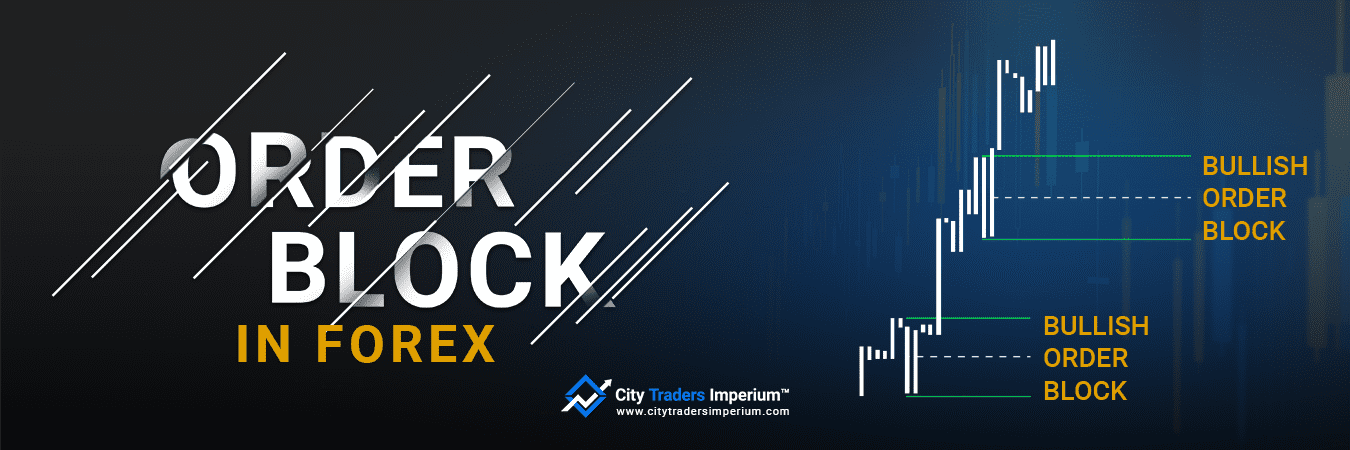
Bullish Order Blocks
A bullish order block is typically the last down-closed candlestick before a significant upward price movement. Look for the following:
- Identify a Strong Bullish Move: Find a clear, impulsive move to the upside.
- Locate the Last Down Candle: Before the move, there will be a final bearish (down-closed) candlestick. This is your potential bullish order block.
- Confirm with Volume: Ideally, the down candle should have relatively high volume compared to surrounding candles.
- Mark the Zone: Draw a zone encompassing the high and low of the bearish candlestick.
Bearish Order Blocks
A bearish order block is the last up-closed candlestick before a significant downward price movement. Look for the following:
- Identify a Strong Bearish Move: Find a clear, impulsive move to the downside.
- Locate the Last Up Candle: Before the move, there will be a final bullish (up-closed) candlestick. This is your potential bearish order block.
- Confirm with Volume: Ideally, the up candle should have relatively high volume compared to surrounding candles.
- Mark the Zone: Draw a zone encompassing the high and low of the bullish candlestick.
Refinement and Validation
Not all potential order blocks are created equal. To increase the probability of success, refine and validate your identified order blocks:
- Fibonacci Confluence: Check if the order block aligns with Fibonacci retracement levels. A confluence of factors increases the strength of the order block.
- Higher Timeframe Analysis: Confirm the order block on higher timeframes (e.g., daily, weekly) for added validation.
- Market Structure: Analyze the overall market structure. Is the market trending up or down? Trade order blocks that align with the prevailing trend.
- Imbalance (Fair Value Gap): Look for imbalances or fair value gaps that often form after the creation of an order block. Price tends to retrace to fill these gaps, potentially revisiting the order block.
Trading Strategies Using Order Blocks
Once you’ve identified and validated order blocks, you can incorporate them into your trading strategy. Here are a few approaches:
Entry Points
Order blocks can serve as excellent entry points. For a bullish order block, wait for the price to retrace to the order block zone and look for bullish price action (e.g., a bullish engulfing pattern) before entering a long position. For a bearish order block, wait for the price to retrace to the order block zone and look for bearish price action (e.g., a bearish engulfing pattern) before entering a short position.
Stop Loss Placement
Order blocks provide a logical place to put your stop loss. For a bullish order block, place your stop loss slightly below the low of the order block. For a bearish order block, place your stop loss slightly above the high of the order block. This minimizes your risk while allowing the trade to play out.
Take Profit Targets
Set your take profit targets based on technical analysis, such as Fibonacci extensions, previous swing highs/lows, or other significant levels. Aim for a reward-to-risk ratio that is favorable (e.g., 2:1 or 3:1).
Combining with Other Indicators
Order blocks are most effective when used in conjunction with other technical indicators. Consider using:
- Moving Averages: To identify the overall trend.
- Relative Strength Index (RSI): To identify overbought or oversold conditions.
- MACD: To confirm momentum.
- Volume Analysis: To confirm the strength of the price move.
Examples of Order Blocks in Action
Let’s look at a couple of hypothetical examples to illustrate how order blocks work:
Example 1: Bullish Order Block
Imagine the EUR/USD pair is in a downtrend. Suddenly, there’s a sharp reversal, and the price begins to climb rapidly. Before this upward move, there was a final bearish candlestick. This candlestick is identified as a bullish order block. Traders wait for the price to retrace back to the order block zone, where they see a bullish engulfing pattern. They enter a long position with a stop loss below the low of the order block and a take profit target based on a Fibonacci extension level. The price subsequently bounces off the order block and hits the take profit target.
Example 2: Bearish Order Block
Suppose the GBP/JPY pair is in an uptrend. The price then starts to fall sharply. Prior to this downward move, there was a final bullish candlestick. This candlestick is identified as a bearish order block. Traders wait for the price to retrace back to the order block zone, where they see a bearish pin bar. They enter a short position with a stop loss above the high of the order block and a take profit target based on a previous swing low. The price subsequently falls from the order block and reaches the take profit target.
Common Mistakes to Avoid
While order blocks can be a powerful tool, it’s essential to avoid common mistakes:
- Trading Every Order Block: Not all order blocks are valid. Refine and validate them using the techniques described above.
- Ignoring Market Context: Always consider the overall market structure and trend. Trade order blocks that align with the prevailing trend.
- Using Too Tight Stop Losses: Give the trade room to breathe. Place your stop loss slightly below or above the order block to avoid being stopped out prematurely.
- Over-Leveraging: Manage your risk properly. Don’t risk more than you can afford to lose on any single trade.
- Ignoring News Events: Major news events can invalidate order blocks. Be aware of upcoming news releases and adjust your trading accordingly.
The Psychology Behind Order Blocks
Understanding the psychology behind order blocks can further enhance your trading. These blocks represent areas where institutional traders have established significant positions. When price revisits these areas, it triggers a psychological response. Other traders recognize the potential for support or resistance and join the trade, reinforcing the order block’s influence. This creates a self-fulfilling prophecy, where the order block acts as a magnet for price action.
Advanced Order Block Concepts
Beyond the basics, there are more advanced concepts related to order blocks:
- Mitigation Blocks: These are order blocks that have already been tested and mitigated. They can still provide support or resistance, but their effectiveness may be diminished.
- Breaker Blocks: These are order blocks that have been broken through. They can act as areas of future resistance (in the case of a broken bullish order block) or support (in the case of a broken bearish order block).
- Rejection Blocks: These are order blocks where price quickly rejects the zone, indicating strong buying or selling pressure.
Conclusion
Order blocks are a valuable tool for Forex traders looking to identify potential turning points in price action. By understanding what order blocks are, how to identify them, and how to incorporate them into your trading strategy, you can gain a significant edge in the market. Remember to refine and validate your order blocks, consider the overall market context, and manage your risk properly. With practice and experience, you can master the art of trading order blocks and improve your overall trading performance. [See also: Forex Trading Strategies for Beginners] and [See also: Risk Management in Forex Trading]. Understanding order blocks is key to successful Forex trading. By identifying order blocks, you can improve your trading strategy and make more informed decisions. This guide has provided a comprehensive overview of order blocks and how to use them. Remember that order blocks should be used in conjunction with other technical indicators and risk management techniques. Using order blocks can help you identify potential support and resistance levels, leading to more profitable trades. The concept of order blocks is a powerful tool in Forex trading, enabling traders to anticipate market movements. Always practice sound risk management when trading order blocks to protect your capital. Identifying and understanding order blocks can significantly enhance your Forex trading strategy. Remember to continuously refine your skills and adapt to changing market conditions. By mastering order blocks, you can gain a competitive edge and achieve greater success in the Forex market.
