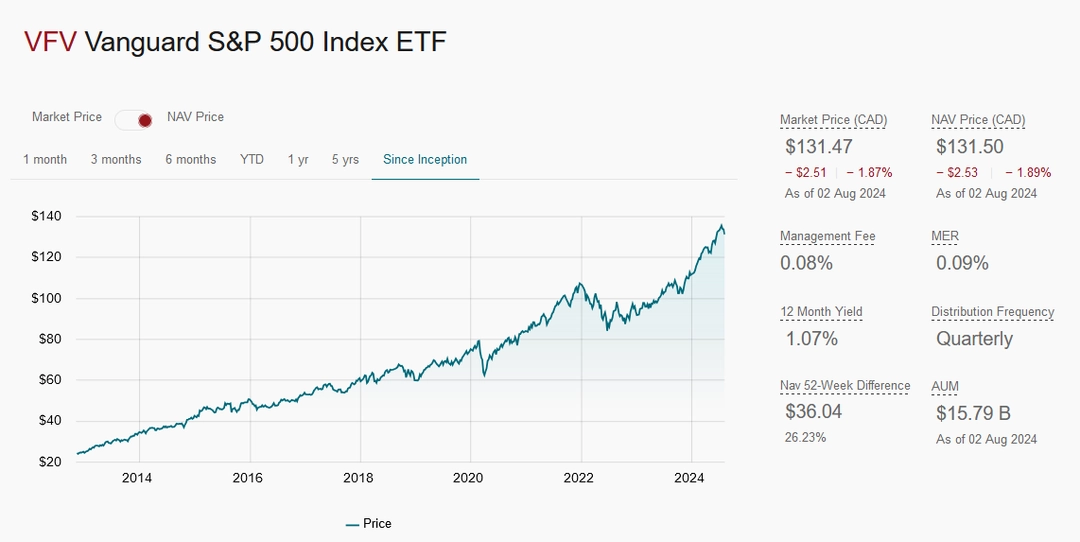
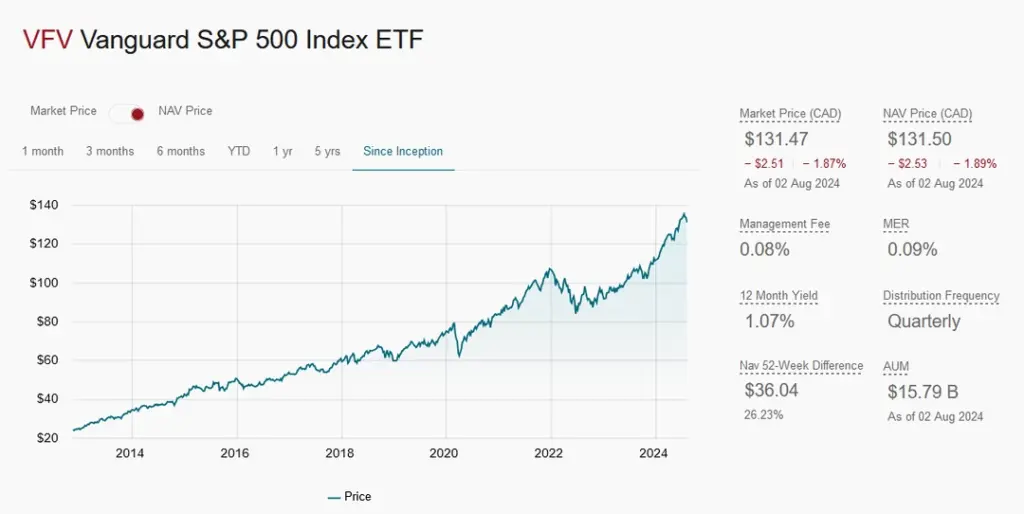
Vanguard S&P 500 ETF: A Comprehensive Guide for Investors
The Vanguard S&P 500 ETF (VOO) is one of the most popular and widely held exchange-traded funds (ETFs) available to investors. Tracking the performance of the Standard & Poor’s 500 Index (S&P 500), it offers a diversified and low-cost way to gain exposure to the largest 500 companies in the United States. This article provides a comprehensive guide to the Vanguard S&P 500 ETF, covering its key features, benefits, risks, and how it can fit into your investment strategy. Understanding the nuances of the Vanguard S&P 500 is crucial for making informed investment decisions.
What is the S&P 500 Index?
Before diving into the specifics of the Vanguard S&P 500 ETF, it’s important to understand the underlying index it tracks. The S&P 500 is a market-capitalization-weighted index of 500 of the largest publicly traded companies in the United States. These companies span across various sectors, including technology, healthcare, finance, and consumer discretionary. The index is widely regarded as a benchmark for the overall health and performance of the U.S. stock market.
To be included in the S&P 500, a company must meet specific criteria, such as having a market capitalization of at least $14.6 billion, being highly liquid, and having a public float of at least 10% of its shares. The S&P 500 is rebalanced periodically to ensure it accurately reflects the composition of the U.S. stock market. Because the Vanguard S&P 500 ETF tracks this index, it provides exposure to a diversified range of leading U.S. companies.
Key Features of the Vanguard S&P 500 ETF (VOO)
The Vanguard S&P 500 ETF (VOO) boasts several attractive features for investors:
- Low Expense Ratio: VOO is renowned for its exceptionally low expense ratio, which is currently around 0.03%. This means that for every $10,000 invested, you’ll pay only $3 in annual fees. This low cost makes VOO one of the most cost-effective ways to invest in the S&P 500.
- Diversification: By tracking the S&P 500, VOO provides instant diversification across 500 of the largest U.S. companies. This diversification helps to mitigate risk compared to investing in individual stocks.
- Liquidity: As a highly popular ETF, VOO is extremely liquid, meaning it can be easily bought and sold on major stock exchanges. This liquidity ensures that investors can enter and exit their positions quickly and efficiently.
- Transparency: VOO’s holdings are publicly available, allowing investors to see exactly which companies they are invested in. This transparency provides investors with a clear understanding of the ETF’s composition.
- Tax Efficiency: ETFs are generally more tax-efficient than mutual funds due to their structure and trading mechanisms. This can result in lower capital gains taxes for investors.
Benefits of Investing in the Vanguard S&P 500 ETF
Investing in the Vanguard S&P 500 ETF offers several key benefits:
- Broad Market Exposure: VOO provides exposure to a significant portion of the U.S. stock market, allowing investors to participate in the overall growth of the economy.
- Cost-Effectiveness: The low expense ratio of VOO makes it an attractive option for cost-conscious investors. Over the long term, even small differences in expense ratios can have a significant impact on investment returns.
- Simplicity: Investing in VOO is a simple and straightforward way to gain exposure to the S&P 500. It eliminates the need to research and select individual stocks, making it an ideal choice for passive investors.
- Potential for Long-Term Growth: Historically, the S&P 500 has delivered strong long-term returns. By investing in VOO, investors can potentially benefit from the long-term growth of the U.S. stock market.
- Dividend Income: The companies within the S&P 500 pay dividends, which are passed on to VOO shareholders. This provides investors with a stream of income in addition to potential capital appreciation.
Risks Associated with Investing in the Vanguard S&P 500 ETF
While the Vanguard S&P 500 ETF offers numerous benefits, it’s important to be aware of the potential risks:
- Market Risk: VOO is subject to market risk, meaning its value can fluctuate based on overall market conditions. Economic downturns, geopolitical events, and other factors can negatively impact the performance of the S&P 500.
- Concentration Risk: Although VOO is diversified across 500 companies, it is still concentrated in the U.S. stock market. Investors should consider diversifying their portfolios across different asset classes and geographic regions to reduce risk.
- Tracking Error: While VOO aims to track the S&P 500 as closely as possible, there may be slight deviations in performance due to factors such as transaction costs and fund management fees. This is known as tracking error.
- Sector Risk: The S&P 500 is heavily weighted towards certain sectors, such as technology. If these sectors underperform, it can negatively impact the performance of VOO.
- Inflation Risk: Inflation can erode the real value of investment returns. Investors should consider the impact of inflation when evaluating the potential returns of VOO.
How to Incorporate the Vanguard S&P 500 ETF into Your Portfolio
The Vanguard S&P 500 ETF can be a valuable addition to a well-diversified investment portfolio. Here are some strategies for incorporating VOO into your portfolio:
- Core Holding: VOO can serve as a core holding in a portfolio, providing broad market exposure and diversification. It can be complemented with other asset classes, such as bonds, international stocks, and real estate.
- Dollar-Cost Averaging: Consider using dollar-cost averaging to invest in VOO. This involves investing a fixed amount of money at regular intervals, regardless of the ETF’s price. This strategy can help to reduce the impact of market volatility.
- Long-Term Investing: VOO is best suited for long-term investors who are looking to build wealth over time. Avoid trying to time the market and focus on staying invested for the long haul.
- Rebalancing: Periodically rebalance your portfolio to maintain your desired asset allocation. This involves selling some assets that have performed well and buying assets that have underperformed.
- Tax-Advantaged Accounts: Consider holding VOO in tax-advantaged accounts, such as 401(k)s or IRAs, to minimize taxes on investment gains.
Comparing VOO to Other S&P 500 ETFs
While VOO is a popular choice, there are other ETFs that track the S&P 500. Some of the most notable alternatives include the SPDR S&P 500 ETF Trust (SPY) and the iShares Core S&P 500 ETF (IVV). All three ETFs offer similar exposure to the S&P 500, but they differ slightly in terms of expense ratios, trading volume, and assets under management.
VOO generally has a slightly lower expense ratio than SPY and IVV, making it a more cost-effective option for long-term investors. However, SPY is the most actively traded S&P 500 ETF, which can be beneficial for investors who trade frequently. IVV offers a balance between low cost and high liquidity. Investors should carefully consider their individual needs and preferences when choosing between these ETFs. [See also: SPY vs VOO vs IVV: Which S&P 500 ETF is Right for You?]
The Vanguard Advantage
Vanguard is a well-respected investment management company known for its low-cost, investor-owned structure. This structure allows Vanguard to prioritize the interests of its clients over profits. Vanguard’s commitment to low costs and investor satisfaction has made it a popular choice among both individual and institutional investors. The Vanguard S&P 500 ETF benefits from this reputation and offers investors a reliable and cost-effective way to access the S&P 500.
The Future of the Vanguard S&P 500 ETF
The Vanguard S&P 500 ETF is likely to remain a popular investment choice for the foreseeable future. Its low cost, broad diversification, and liquidity make it an attractive option for investors of all types. As the U.S. stock market continues to evolve, VOO will adapt to reflect changes in the composition of the S&P 500. Investors can expect VOO to continue providing a reliable and cost-effective way to track the performance of the U.S. stock market.
Conclusion
The Vanguard S&P 500 ETF (VOO) is a valuable tool for investors seeking broad exposure to the U.S. stock market. Its low expense ratio, diversification, and liquidity make it an attractive option for both novice and experienced investors. By understanding the key features, benefits, and risks of VOO, investors can make informed decisions about how to incorporate it into their investment portfolios. Whether you’re saving for retirement, building wealth, or simply looking to diversify your investments, the Vanguard S&P 500 ETF is worth considering. Remember to consult with a financial advisor to determine the best investment strategy for your individual needs and goals. The Vanguard S&P 500 offers a solid foundation for a well-diversified portfolio, and is a convenient way to gain exposure to the performance of top US companies. With its low cost structure, the Vanguard S&P 500 ETF is a great option for long-term investing.
