From $100K to $1 Million: Strategies for Exponential Growth
The journey from $100,000 to $1 million is a significant milestone for any business or individual. It represents a ten-fold increase, requiring not just incremental improvements but a fundamental shift in strategy and execution. This article explores proven methodologies, investment opportunities, and mindset adjustments necessary to achieve this exponential growth, transforming your initial $100k into a coveted $1 million. We will examine diverse approaches, from scaling a business to strategically investing in assets, providing a comprehensive roadmap for aspiring millionaires. Understanding the nuances of financial planning, risk management, and market trends is crucial in this endeavor. Successfully navigating this path necessitates a blend of ambition, discipline, and informed decision-making. The goal is to provide actionable insights that empower readers to confidently pursue their financial objectives and achieve the ambitious target of growing their initial capital from $100,000 to $1 million.
Understanding the Landscape: Setting the Stage for Growth
Before diving into specific strategies, it’s crucial to understand the current economic climate and your personal financial situation. This involves assessing your risk tolerance, defining your investment timeline, and identifying potential opportunities and challenges. Are you starting a business, investing in real estate, or focusing on the stock market? Each path requires a different set of skills and knowledge. For example, a business venture might necessitate intensive market research and development of a robust business plan, while real estate investment calls for understanding local market dynamics and property management. A clear understanding of your starting point is essential for developing a tailored strategy to reach the $1 million goal.
Assessing Your Risk Tolerance
Your risk tolerance plays a significant role in determining the types of investments you should consider. Are you comfortable with high-risk, high-reward opportunities, or do you prefer a more conservative approach? Younger individuals with a longer investment horizon may be more inclined to take on more risk, while those closer to retirement may opt for safer, lower-yielding investments. Understanding your comfort level with risk is crucial for making sound investment decisions and avoiding emotional reactions to market fluctuations.
Defining Your Investment Timeline
The amount of time you have to reach your goal will also influence your investment strategy. A longer timeline allows for more aggressive investments and the potential to weather market downturns. A shorter timeline may require a more conservative approach and a focus on generating consistent returns. Carefully consider your time horizon and adjust your strategy accordingly.
Scaling a Business: A Path to Rapid Growth
For entrepreneurs, scaling a business can be a direct route from $100k to $1 million. This involves identifying scalable business models, optimizing operations, and expanding into new markets. Key strategies include:
- Developing a Scalable Product or Service: Focus on offerings that can be easily replicated and distributed without significant additional costs.
- Streamlining Operations: Implement systems and processes that improve efficiency and reduce waste.
- Building a Strong Team: Surround yourself with talented individuals who can contribute to your company’s growth.
- Effective Marketing and Sales: Invest in strategies that generate leads and convert them into paying customers.
Consider the case of a software startup. With an initial investment of $100k, the company could develop a minimum viable product (MVP) and focus on acquiring early adopters. By reinvesting profits into marketing and development, the company could rapidly scale its user base and revenue, potentially reaching $1 million in annual recurring revenue (ARR) within a few years. [See also: Startup Funding Strategies]
The Power of Recurring Revenue
Recurring revenue models, such as subscription services, offer a predictable and sustainable income stream. This allows businesses to forecast future revenue and make informed decisions about investments and growth strategies. Focus on building customer loyalty and reducing churn to maximize the value of recurring revenue streams.
Strategic Investing: Growing Your Wealth Through Assets
Investing in assets, such as stocks, bonds, real estate, and cryptocurrencies, can also be a viable path to achieving the $1 million goal. Diversification is key to managing risk and maximizing potential returns. Here’s a closer look at some popular investment options:
- Stocks: Investing in the stock market offers the potential for high returns, but also carries a higher level of risk. Consider investing in a diversified portfolio of stocks, either through individual stock purchases or through exchange-traded funds (ETFs).
- Bonds: Bonds are generally considered a more conservative investment option than stocks. They offer a fixed income stream and can provide stability to your portfolio.
- Real Estate: Real estate can be a valuable asset for generating both income and capital appreciation. Consider investing in rental properties or real estate investment trusts (REITs).
- Cryptocurrencies: Cryptocurrencies are a relatively new asset class with the potential for high returns, but also carries a significant amount of risk. Invest cautiously and only allocate a small portion of your portfolio to cryptocurrencies.
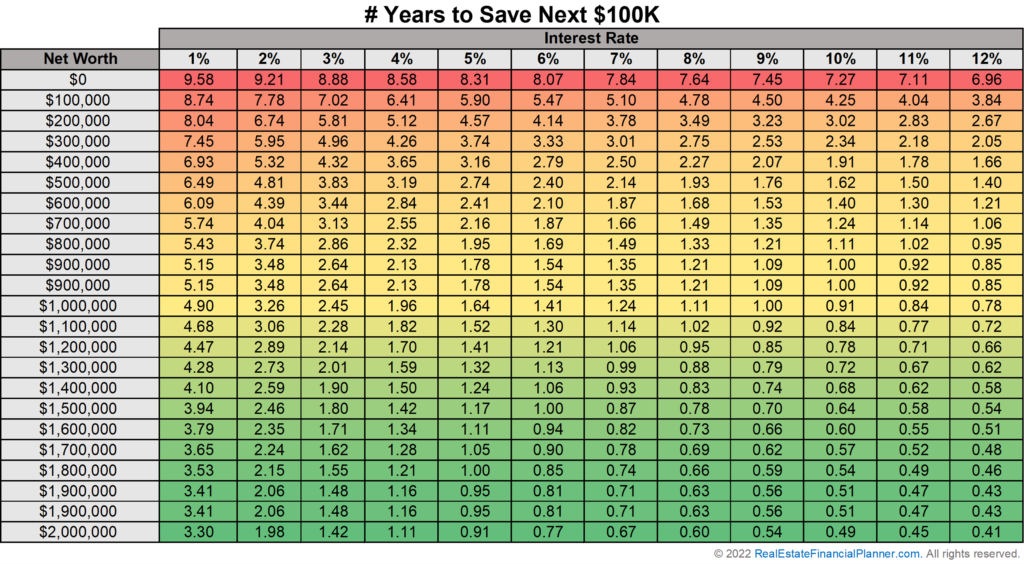
Imagine investing $100k in a diversified portfolio of stocks and bonds. With an average annual return of 7%, your portfolio could potentially reach $1 million in approximately 35 years. By increasing your investment amount and optimizing your asset allocation, you could potentially reach your goal even faster. Reaching the goal of $1 million from $100k requires patience and discipline. [See also: Diversification Strategies for Investors]
The Importance of Diversification
Diversification is a crucial element of any successful investment strategy. By spreading your investments across different asset classes, you can reduce your overall risk and increase your chances of achieving your financial goals. Don’t put all your eggs in one basket.
Financial Planning and Management: The Foundation for Success
Effective financial planning and management are essential for reaching the $1 million goal. This includes creating a budget, tracking your expenses, and setting financial goals. Key strategies include:
- Creating a Budget: Develop a detailed budget that outlines your income and expenses. This will help you identify areas where you can save money and increase your investment contributions.
- Tracking Your Expenses: Monitor your spending habits to identify areas where you can cut back. Consider using a budgeting app or spreadsheet to track your expenses.
- Setting Financial Goals: Define specific, measurable, achievable, relevant, and time-bound (SMART) financial goals. This will help you stay motivated and focused on your long-term objectives.
- Automating Your Savings: Set up automatic transfers from your checking account to your savings or investment accounts. This will ensure that you consistently save and invest, even when you’re busy.
Proper financial planning acts as the cornerstone of any successful wealth-building strategy. Without a clear understanding of your income, expenses, and financial goals, it becomes significantly more challenging to navigate the path from $100k to $1 million.
The Power of Compound Interest
Compound interest is the eighth wonder of the world. It’s the ability of your investments to generate earnings, which then generate further earnings, creating a snowball effect over time. The earlier you start investing, the more time your money has to compound, and the faster you’ll reach your financial goals.
Mindset and Habits: Cultivating a Success-Oriented Approach
Achieving the $1 million goal requires more than just financial knowledge and investment strategies. It also requires a positive mindset and disciplined habits. Key strategies include:
- Developing a Growth Mindset: Believe in your ability to learn and grow. Embrace challenges and view setbacks as opportunities for improvement.
- Cultivating Discipline: Stick to your budget and investment plan, even when you’re tempted to deviate.
- Staying Informed: Continuously educate yourself about financial markets and investment strategies.
- Surrounding Yourself with Positive Influences: Seek out mentors and advisors who can provide guidance and support.
Maintaining a positive and proactive mindset is crucial for overcoming challenges and staying focused on your long-term goals. Believe in your ability to achieve financial success, and don’t let setbacks discourage you.
The Importance of Continuous Learning
The financial landscape is constantly evolving, so it’s important to stay informed about new trends and investment opportunities. Read books, attend seminars, and follow reputable financial news sources to stay up-to-date. The journey from $100k to $1 million is a marathon, not a sprint. It requires patience, discipline, and a commitment to continuous learning.
Conclusion: A Journey of Growth and Opportunity
The journey from $100k to $1 million is a challenging but achievable goal. By understanding the landscape, implementing strategic investments, practicing sound financial planning, and cultivating a success-oriented mindset, you can significantly increase your chances of reaching your financial objectives. Remember, the path to wealth is a marathon, not a sprint. Stay focused, stay disciplined, and never stop learning. With dedication and perseverance, you can transform your initial $100k into a substantial $1 million and achieve financial freedom. The strategies outlined in this article provide a roadmap, but the ultimate success depends on your commitment and execution. Embrace the challenge, learn from your experiences, and celebrate your milestones along the way. The journey from $100,000 to $1 million is not just about the money; it’s about the personal growth and opportunities that come with it.
