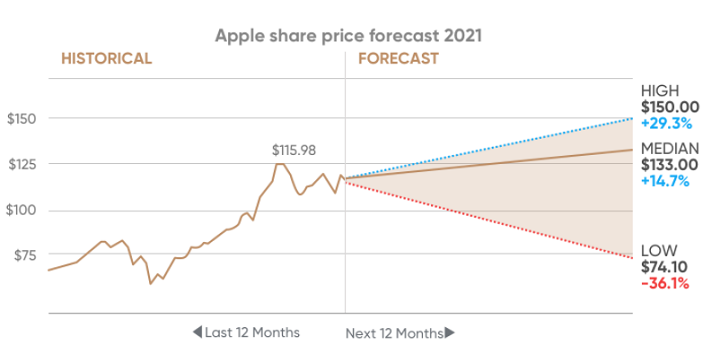
Navigating the Volatility: Understanding Stock Price Predictions in Today’s Market
In the fast-paced world of finance, stock price predictions are a constant topic of discussion, anxiety, and hope for investors of all levels. From seasoned professionals managing multi-billion dollar portfolios to novice retail traders just starting, everyone seeks an edge in understanding where the market might be heading. But what exactly goes into these stock price predictions? Are they reliable? And how should investors use them responsibly?
This article delves into the multifaceted nature of stock price predictions, exploring the methodologies employed, the inherent limitations, and the crucial role of critical thinking in navigating the volatile landscape of the stock market. We aim to provide a balanced perspective, separating hype from reality and offering practical insights for making informed investment decisions.
The Science and Art of Stock Price Forecasting
Stock price predictions aren’t just guesswork. They often involve sophisticated analyses and models designed to identify patterns and trends. Here are some common approaches:
Fundamental Analysis
This method involves evaluating a company’s intrinsic value by examining its financial statements, industry trends, and overall economic outlook. Key metrics include revenue growth, profitability, debt levels, and competitive positioning. Analysts using fundamental analysis might project future earnings and then discount them back to the present to arrive at a fair value for the stock. [See also: Understanding Financial Statements for Investment Decisions]
Technical Analysis
Technical analysts, on the other hand, focus on historical price and volume data to identify patterns and predict future price movements. They use charts, indicators, and oscillators to spot trends and potential entry or exit points. Common technical indicators include moving averages, relative strength index (RSI), and MACD (Moving Average Convergence Divergence). The underlying assumption is that history tends to repeat itself, and that price patterns can provide clues about future direction. While fundamental analysis looks at the ‘why’, technical analysis looks at the ‘what’ of price movements.
Quantitative Analysis
Quantitative analysis takes a more data-driven approach, using statistical models and algorithms to identify correlations and predict stock price predictions. These models can incorporate a wide range of factors, including economic data, market sentiment, and even social media trends. Quantitative analysts often use sophisticated software and programming languages to develop and test their models. [See also: The Role of AI in Stock Market Analysis]
Sentiment Analysis
This relatively newer method attempts to gauge market sentiment by analyzing news articles, social media posts, and other sources of textual data. The idea is that positive sentiment can drive prices up, while negative sentiment can push them down. Sentiment analysis tools use natural language processing (NLP) to identify and quantify emotions expressed in text. This can provide a valuable leading indicator for stock price predictions, particularly in the short term.
The Inherent Limitations of Predictions
Despite the sophistication of these methods, it’s crucial to recognize that stock price predictions are inherently uncertain. The stock market is influenced by a complex interplay of factors, many of which are unpredictable. Here are some key limitations to consider:
- Unforeseen Events: Geopolitical events, natural disasters, and unexpected economic shocks can all have a significant impact on stock prices, often defying even the most sophisticated models. A sudden change in interest rates, a major regulatory announcement, or a global pandemic can all send shockwaves through the market.
- Irrational Behavior: Market participants don’t always act rationally. Emotions like fear and greed can drive prices far beyond what fundamental analysis would suggest. This is often referred to as “market sentiment” and can be difficult to predict or quantify.
- Data Limitations: Even the most comprehensive datasets have limitations. Historical data may not be representative of future conditions, and new factors can emerge that are not captured in existing models. The accuracy of stock price predictions depends heavily on the quality and completeness of the data used.
- Model Risk: All models are simplifications of reality, and they are only as good as the assumptions upon which they are based. Overfitting, where a model is too closely tailored to historical data and fails to generalize to new data, is a common problem.
How to Use Stock Price Predictions Responsibly
While stock price predictions should not be treated as gospel, they can still be a valuable tool for investors when used responsibly. Here are some guidelines:
- Diversify Your Sources: Don’t rely on a single source of information or a single prediction. Consult multiple analysts, use different models, and consider a range of perspectives.
- Understand the Assumptions: Be aware of the underlying assumptions behind any prediction. What factors are being considered? What are the potential risks and uncertainties?
- Focus on the Long Term: Short-term stock price predictions are notoriously unreliable. Focus on long-term trends and fundamental value when making investment decisions.
- Manage Your Risk: Don’t invest more than you can afford to lose. Use stop-loss orders to limit your potential losses. Diversify your portfolio across different asset classes.
- Do Your Own Research: Don’t blindly follow the advice of others. Take the time to understand the companies you are investing in and the risks involved.
- Recognize the Possibility of Error: No prediction is perfect. Be prepared to adjust your strategy if the market moves against you. Stay informed and be adaptable.
The Role of Artificial Intelligence in Stock Prediction
Artificial intelligence (AI) and machine learning (ML) are increasingly being used in stock price predictions. These technologies can analyze vast amounts of data and identify patterns that would be impossible for humans to detect. AI-powered models can also adapt to changing market conditions and improve their accuracy over time. However, even AI-based predictions are not foolproof. They are still subject to the limitations of the data they are trained on and the inherent uncertainties of the market. [See also: Ethical Considerations in AI-Driven Finance]
The Importance of Critical Thinking
In the age of readily available information, critical thinking is more important than ever. Don’t simply accept stock price predictions at face value. Question the assumptions, evaluate the evidence, and consider the potential biases. Develop your own independent judgment and make investment decisions that are aligned with your own goals and risk tolerance. Remember that past performance is not necessarily indicative of future results.
The Future of Stock Price Forecasting
The field of stock price predictions is constantly evolving. As technology advances and new data sources become available, we can expect to see even more sophisticated models and techniques. However, the fundamental challenges of predicting the future will remain. The stock market is inherently unpredictable, and no model can perfectly capture its complexity. The best approach is to combine data-driven analysis with sound judgment, risk management, and a healthy dose of skepticism. Understanding these stock price predictions can help investors make more informed decisions in the long run.
Conclusion
Stock price predictions are a valuable tool for investors, but they should be used with caution. Understand the methodologies, recognize the limitations, and always do your own research. By combining data-driven analysis with critical thinking, you can navigate the volatility of the stock market and make informed investment decisions. Remember, investing involves risk, and there are no guarantees of success. Staying informed and adaptable is key to achieving your financial goals. The ability to interpret and understand stock price predictions is a critical skill in today’s financial landscape, allowing investors to make more informed and strategic decisions.
