Bearer Bonds: An In-Depth Look at Their History, Risks, and Modern Relevance
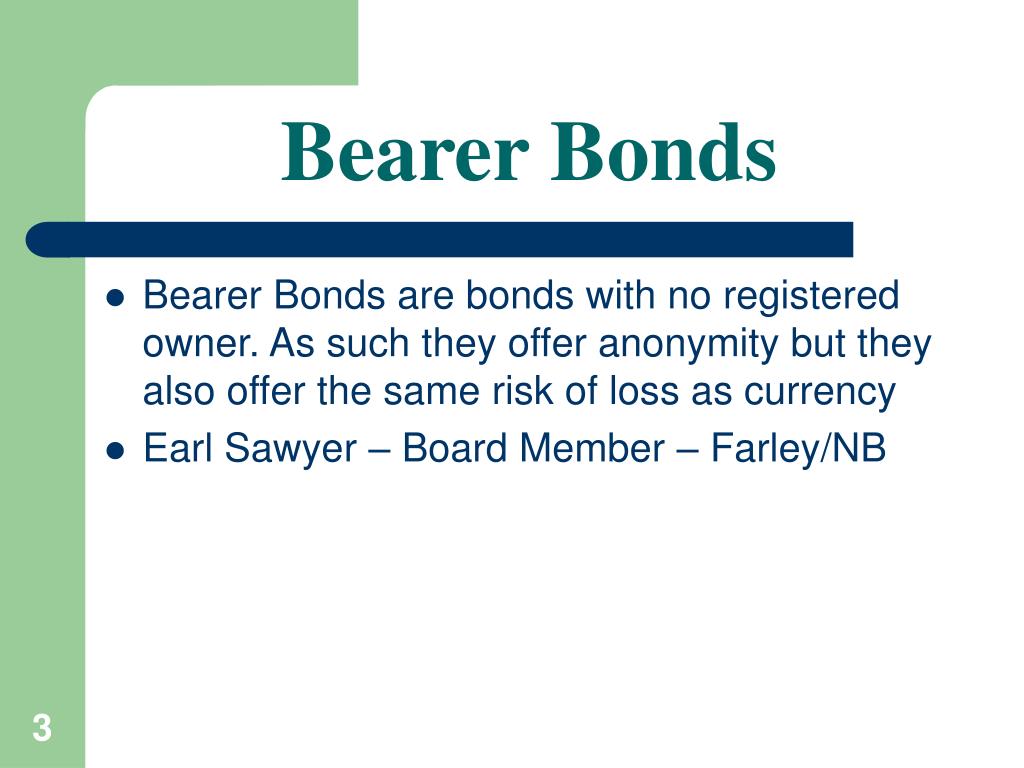
Bearer bonds, once a common financial instrument, represent a significant chapter in the history of global finance. These bonds, unlike registered bonds, are unregistered, meaning ownership is determined solely by possession of the physical certificate. This characteristic made them highly liquid and attractive to investors seeking anonymity. However, this same feature also made them susceptible to illicit activities, leading to their decline in popularity and increased regulatory scrutiny. This article delves into the history of bearer bonds, explores their inherent risks, examines their modern relevance, and discusses the regulations surrounding them.
The Historical Context of Bearer Bonds
The origins of bearer bonds can be traced back to the 19th century, a period of rapid industrialization and burgeoning international trade. As governments and corporations sought capital to fund large-scale projects, bearer bonds emerged as a convenient and efficient way to raise funds. The anonymity they offered appealed to a broad range of investors, from wealthy individuals to institutional investors. The ease of transfer and lack of registration requirements simplified transactions, making them a popular choice in a less regulated financial environment. These financial instruments played a crucial role in financing infrastructure projects, wars, and economic development across the globe. The simplicity and transferability of bearer bonds made them an indispensable tool in the financial landscape of that era.
The Golden Age of Bearer Bonds
During the late 19th and early 20th centuries, bearer bonds experienced their golden age. They were widely used by European nations to finance their colonial ventures and by American corporations to fund railway construction and industrial expansion. The lack of reporting requirements and the ease with which they could be traded across borders facilitated capital flows and contributed to the growth of global financial markets. However, this era also saw the rise of financial speculation and the potential for abuse, which would later contribute to the decline of bearer bonds.
The Risks Associated with Bearer Bonds
The very characteristics that made bearer bonds attractive – anonymity and ease of transfer – also created significant risks. These risks can be broadly categorized into those faced by investors and those related to illicit activities.
Risks for Investors
Investors holding bearer bonds face several unique risks. The most obvious is the risk of loss or theft. Because ownership is determined by possession, a lost or stolen bearer bond is essentially cash in the hands of the finder or thief. There is no recourse for the original owner to reclaim the bond. Additionally, investors bear the responsibility of clipping coupons to receive interest payments, which can be cumbersome and time-consuming. The lack of registration also means that investors may not receive notifications about bond calls or other important information, potentially missing out on opportunities or incurring losses. [See also: Understanding Bond Yields and Risks]
Risks Related to Illicit Activities
The anonymity afforded by bearer bonds made them a favored tool for money laundering, tax evasion, and the financing of terrorism. Criminals could use bearer bonds to move large sums of money across borders without leaving a paper trail, making it difficult for law enforcement to track and intercept illicit funds. The lack of registration requirements also made it easier to conceal assets from tax authorities, leading to significant revenue losses for governments. The use of bearer bonds in illicit activities has been a major factor in the decline of their popularity and the imposition of stricter regulations.
The Decline of Bearer Bonds and Regulatory Scrutiny
As the risks associated with bearer bonds became increasingly apparent, governments and international organizations began to impose stricter regulations. The United States took the lead in the 1980s, enacting legislation that effectively eliminated the issuance of new bearer bonds. Other countries followed suit, either banning them outright or imposing strict reporting requirements on transactions involving bearer bonds. These regulations were aimed at combating money laundering, tax evasion, and the financing of terrorism. The increased regulatory scrutiny significantly reduced the demand for bearer bonds and led to their decline as a major financial instrument.
Key Regulations and Legislation
Several key pieces of legislation have contributed to the decline of bearer bonds. The Tax Equity and Fiscal Responsibility Act of 1982 (TEFRA) in the United States effectively prohibited the issuance of new bearer bonds by imposing significant penalties on issuers. Other countries have implemented similar measures, either banning them outright or imposing strict reporting requirements. International organizations such as the Financial Action Task Force (FATF) have also played a role by issuing recommendations on combating money laundering and terrorist financing, which have further discouraged the use of bearer bonds. [See also: FATF Recommendations and Financial Regulations]
Modern Relevance and Limited Use Cases
While bearer bonds are no longer as prevalent as they once were, they still exist in some jurisdictions and continue to serve niche purposes. In some countries, they may be used for legitimate business transactions where anonymity is desired, such as in certain real estate deals or private placements. However, their use is generally limited and subject to strict regulations. The risks associated with bearer bonds mean that they are typically only used in situations where the benefits outweigh the risks and where compliance with regulations is carefully monitored.
Examples of Modern Use Cases
Despite their decline, bearer bonds still find limited use in specific scenarios. For instance, some ultra-high-net-worth individuals might use them for estate planning purposes, seeking to maintain privacy in their financial affairs. Similarly, certain businesses operating in countries with unstable political or economic environments might find bearer bonds useful for safeguarding assets. However, it is crucial to emphasize that these use cases are subject to stringent regulatory oversight, and any attempt to use bearer bonds for illicit activities is met with severe penalties.
The Future of Bearer Bonds
The future of bearer bonds appears bleak. The global trend towards greater transparency and increased regulatory scrutiny suggests that they will continue to decline in popularity. As governments and international organizations strengthen their efforts to combat money laundering, tax evasion, and terrorist financing, the use of bearer bonds will likely become even more restricted. While they may not disappear entirely, their role in the global financial system will likely remain limited and highly regulated. The legacy of bearer bonds serves as a cautionary tale about the importance of transparency and accountability in financial markets.
The Impact of Technology on Financial Transparency
Technological advancements are further contributing to the decline of bearer bonds. The rise of digital currencies and blockchain technology has created new opportunities for financial innovation, but also new challenges for regulators. As financial transactions become increasingly digitized, it becomes easier to track and monitor financial flows, making it more difficult to use bearer bonds for illicit purposes. The increasing sophistication of financial technology is likely to further erode the appeal of bearer bonds and accelerate their decline. [See also: Blockchain Technology and Financial Regulation]
Conclusion
Bearer bonds, once a cornerstone of global finance, have declined significantly due to their inherent risks and the rise of stricter regulations. While they still exist in limited contexts, their use is heavily scrutinized and subject to stringent compliance requirements. The story of bearer bonds serves as a reminder of the importance of transparency and accountability in financial markets and the ongoing efforts to combat financial crime. The future of bearer bonds is uncertain, but it is clear that they will continue to play a diminishing role in the global financial system. Their history provides valuable lessons about the need for robust regulatory frameworks and the challenges of balancing financial innovation with the need to prevent illicit activities. The legacy of bearer bonds continues to shape the landscape of modern finance, emphasizing the critical role of transparency and regulation in maintaining the integrity of financial markets. The era of widespread bearer bonds is largely over, replaced by more transparent and regulated financial instruments.
