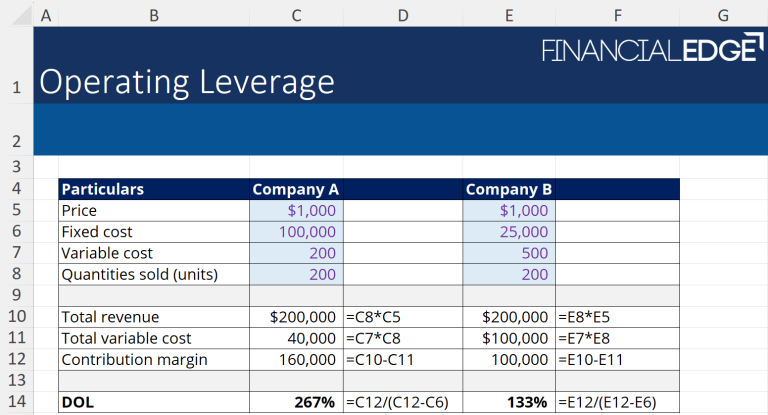
Calculate Leverage: A Comprehensive Guide for Traders and Investors
Leverage is a powerful tool in the hands of traders and investors, capable of amplifying both potential profits and potential losses. Understanding how to calculate leverage and manage its risks is crucial for anyone participating in leveraged markets. This guide provides a comprehensive overview of leverage, its calculation, its impact, and how to use it responsibly.
What is Leverage?
In financial terms, leverage refers to the use of borrowed capital to increase the potential return of an investment. It allows you to control a larger position with a smaller amount of your own capital. Essentially, it’s like using a loan to amplify your trading power. While it can significantly boost profits if your trades are successful, it also magnifies losses if the market moves against you. The concept of leverage is used across various financial instruments and markets, including forex, stocks, commodities, and real estate.
Why Use Leverage?
The primary reason traders and investors use leverage is to increase their potential returns. Without leverage, the profits from relatively small price movements might be insignificant. Leverage allows you to participate in larger market movements, potentially generating more substantial gains. However, it’s important to remember that this works both ways; losses are also amplified.
How to Calculate Leverage: The Formula
The basic formula to calculate leverage is quite simple:
Leverage Ratio = Total Value of Position / Capital Required
Let’s break this down with examples:
Example 1: Forex Trading
Suppose you want to trade EUR/USD and your broker offers a leverage of 100:1. This means for every $1 of your capital, you can control $100 worth of the currency pair. If you have $1,000 in your account, you can control a position worth $100,000.
In this case:
Total Value of Position = $100,000
Capital Required = $1,000
Leverage Ratio = $100,000 / $1,000 = 100
Example 2: Stock Trading
Imagine you want to buy 100 shares of a stock priced at $50 per share. The total value of the position is $5,000. If your broker offers a leverage of 2:1, you only need to deposit $2,500 (50% of the total value) and the broker will loan you the remaining $2,500.
In this case:
Total Value of Position = $5,000
Capital Required = $2,500
Leverage Ratio = $5,000 / $2,500 = 2
Understanding Margin and Leverage
Margin and leverage are closely related concepts. Margin is the amount of capital you need to deposit with your broker to open and maintain a leveraged position. It’s essentially a good faith deposit that ensures you can cover potential losses. The margin requirement is usually expressed as a percentage of the total position size. For example, a 1% margin requirement means you need to deposit 1% of the total position value as margin. The higher the leverage offered, the lower the margin requirement.
It’s crucial to understand margin calls. If your losses erode your margin below a certain level (the maintenance margin), your broker will issue a margin call, demanding you deposit additional funds to cover the losses. If you fail to meet the margin call, the broker may close your position, potentially resulting in significant losses.
The Risks of Leverage
While leverage can amplify profits, it also significantly increases the risk of losses. Here are some key risks associated with leverage:
- Magnified Losses: As mentioned earlier, losses are amplified to the same extent as profits. A small adverse price movement can wipe out your entire trading account if you’re using high leverage.
- Margin Calls: The risk of margin calls is ever-present when using leverage. If you can’t meet a margin call, your position will be closed, resulting in a realized loss.
- Increased Volatility: Leveraged positions are more sensitive to market volatility. Even small price fluctuations can trigger significant gains or losses.
- Emotional Trading: The pressure of managing leveraged positions can lead to emotional trading decisions, such as panic selling or chasing losses, which can further exacerbate losses.
Strategies for Managing Leverage
Responsible use of leverage is paramount to long-term success in trading and investing. Here are some strategies to manage leverage effectively:
- Start with Low Leverage: If you’re new to leverage, begin with low leverage ratios and gradually increase them as you gain experience and confidence.
- Use Stop-Loss Orders: Stop-loss orders automatically close your position when the price reaches a predetermined level, limiting your potential losses.
- Calculate Risk-Reward Ratio: Before entering a trade, assess the potential profit versus the potential loss. Ensure that the risk-reward ratio is favorable.
- Diversify Your Portfolio: Avoid putting all your eggs in one basket. Diversifying your portfolio across different assets and markets can reduce your overall risk.
- Monitor Your Positions: Regularly monitor your leveraged positions and be prepared to take action if the market moves against you.
- Understand the Market: Thoroughly research the market and the assets you’re trading. Knowledge is power when it comes to managing risk.
- Don’t Over-Leverage: Never use more leverage than you can afford to lose. It’s better to miss out on a potential profit than to risk wiping out your entire account.
Leverage in Different Markets
The availability and levels of leverage vary across different financial markets:
- Forex: Forex trading typically offers high leverage, often up to 50:1 or even 100:1 for retail traders. This is due to the relatively small price movements in currency pairs.
- Stocks: Stock trading generally offers lower leverage compared to forex, often around 2:1 or 4:1.
- Commodities: Leverage in commodity trading varies depending on the commodity and the broker, but it’s typically lower than forex leverage.
- Real Estate: In real estate, leverage comes in the form of mortgages. Loan-to-value (LTV) ratios can be quite high, allowing you to control a property with a relatively small down payment.
Choosing the Right Leverage Ratio
Selecting the appropriate leverage ratio depends on your risk tolerance, trading style, and market knowledge. A conservative trader might prefer lower leverage ratios to minimize risk, while an aggressive trader might opt for higher leverage to maximize potential returns. There is no one-size-fits-all answer. The key is to find a leverage level that you are comfortable with and that aligns with your trading strategy.
The Psychology of Leverage
Leverage can have a significant psychological impact on traders. The potential for quick profits can be intoxicating, leading to overconfidence and reckless trading. Conversely, the fear of amplified losses can trigger anxiety and panic selling. It’s essential to be aware of these psychological biases and to develop a disciplined trading approach that is not driven by emotions.
Conclusion
Leverage is a double-edged sword that can significantly enhance both profits and losses. Understanding how to calculate leverage, manage its risks, and control your emotions is crucial for successful trading and investing. By using leverage responsibly and implementing sound risk management strategies, you can harness its power to achieve your financial goals. Remember to always do your research, start with low leverage, and never risk more than you can afford to lose. [See also: Understanding Margin Calls] [See also: Risk Management Strategies for Traders]
