Calculate Leverage: A Comprehensive Guide for Traders and Investors
Leverage is a powerful tool in the hands of experienced traders and investors, but it’s also a double-edged sword that can magnify both profits and losses. Understanding how to calculate leverage and manage its associated risks is crucial for anyone looking to participate in leveraged trading. This guide provides a detailed explanation of leverage, its benefits and risks, and, most importantly, how to calculate leverage effectively.
What is Leverage?
Leverage is essentially borrowing capital to increase the potential return on an investment. It allows you to control a larger position in the market with a smaller amount of your own capital. This can significantly amplify your profits if the trade moves in your favor. However, it’s equally important to remember that leverage also magnifies your losses if the trade goes against you.
Think of it this way: imagine you want to buy a house worth $200,000. You might put down a 20% down payment ($40,000) and borrow the remaining $160,000 from a bank. In this scenario, you are using leverage – the bank’s money is allowing you to control an asset (the house) much larger than what you could afford with your own funds. In financial markets, leverage works similarly, but with a variety of assets such as stocks, forex, and commodities.
Why Use Leverage?
The primary reason traders use leverage is to increase their potential returns. With leverage, even small price movements can result in significant profits. This is particularly attractive in markets with low volatility where traditional investments might not yield substantial returns. Here are some key benefits:
- Increased Profit Potential: Leverage can amplify profits on successful trades.
- Access to Larger Positions: Allows traders to control larger positions with less capital.
- Capital Efficiency: Frees up capital for other investment opportunities.
Risks of Leverage
While the potential benefits of leverage are appealing, it’s essential to understand the significant risks involved. The same magnifying effect that can boost profits can also amplify losses, potentially leading to substantial financial setbacks. Here are some key risks:
- Magnified Losses: Losses can be significantly larger than your initial investment.
- Margin Calls: If a trade moves against you, your broker may issue a margin call, requiring you to deposit additional funds to maintain your position.
- Increased Risk of Ruin: Overleveraging can quickly deplete your trading account, leading to financial ruin.
- Emotional Trading: The pressure of leveraged trading can lead to impulsive and emotional decision-making.
How to Calculate Leverage
Understanding how to calculate leverage is paramount for effective risk management. There are several ways to express and calculate leverage, but the most common is as a ratio.
Leverage Ratio
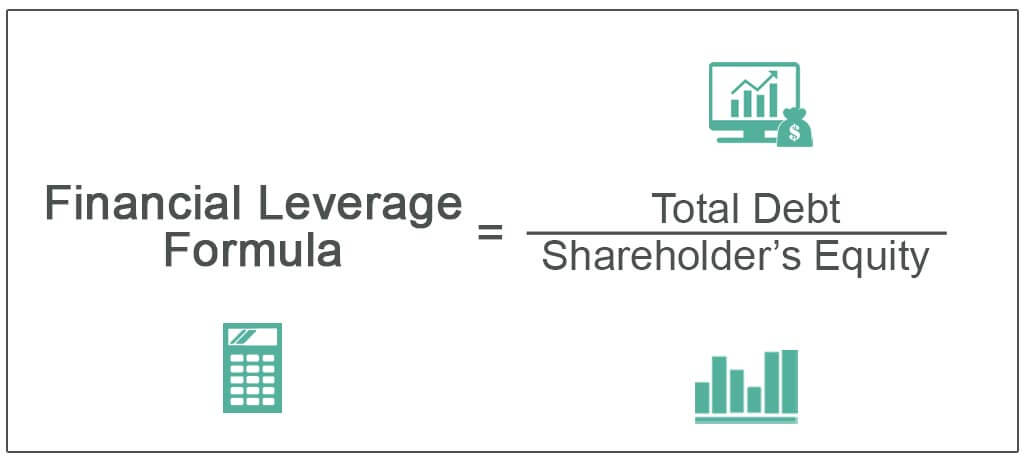
The leverage ratio expresses the relationship between the total value of your position and the amount of your own capital you’ve committed. The formula is:
Leverage Ratio = Total Position Value / Capital Invested
For example, if you control a position worth $100,000 with $10,000 of your own capital, your leverage ratio is 10:1. This means that for every $1 of your own capital, you are controlling $10 worth of assets.
Margin Requirement
Another way to understand leverage is through the margin requirement. Margin is the amount of capital you need to deposit with your broker to open and maintain a leveraged position. The margin requirement is often expressed as a percentage of the total position value.
For instance, a 1% margin requirement means you need to deposit 1% of the total position value as margin. If you want to control a $100,000 position with a 1% margin requirement, you would need to deposit $1,000 as margin.
To calculate leverage from the margin requirement, you can use the following formula:
Leverage = 1 / Margin Requirement
In the example above, the leverage would be 1 / 0.01 = 100:1. This means you are controlling $100 worth of assets for every $1 of your own capital.
Example Calculation
Let’s say you have $5,000 in your trading account and you want to trade EUR/USD. Your broker offers a leverage of 50:1. This means you can control a position worth $250,000 (50 x $5,000).
If EUR/USD moves in your favor by 1%, your profit would be $2,500 (1% of $250,000). This is a 50% return on your initial investment of $5,000.
However, if EUR/USD moves against you by 1%, your loss would also be $2,500. This is a 50% loss on your initial investment.
This example clearly illustrates the power and the risk of leverage. While the potential for profit is high, the potential for loss is equally significant.
Managing Leverage Effectively
Effective leverage management is crucial for long-term success in trading and investing. Here are some key strategies for managing leverage:
- Understand Your Risk Tolerance: Determine how much capital you are willing to risk on each trade.
- Use Stop-Loss Orders: Stop-loss orders automatically close your position if the price reaches a predetermined level, limiting your potential losses.
- Start Small: Begin with lower leverage ratios and gradually increase them as you gain experience and confidence.
- Monitor Your Positions: Regularly monitor your open positions and adjust your strategy as needed.
- Avoid Overleveraging: Don’t use excessive leverage in an attempt to quickly generate profits.
- Diversify Your Portfolio: Diversifying your investments can help reduce your overall risk exposure.
- Stay Informed: Keep up-to-date with market news and economic developments that could impact your trades.
Choosing the Right Leverage
The appropriate level of leverage depends on several factors, including your risk tolerance, trading experience, and the specific market you are trading. There is no one-size-fits-all answer, but here are some general guidelines:
- Beginners: Start with low leverage ratios (e.g., 2:1 or 5:1) to minimize risk.
- Experienced Traders: May be comfortable with higher leverage ratios (e.g., 10:1 or 20:1), but should still manage risk carefully.
- Volatile Markets: Use lower leverage ratios in volatile markets to reduce the risk of significant losses.
- Stable Markets: May be able to use higher leverage ratios in stable markets, but should still be cautious.
Leverage in Different Markets
Leverage is available in various financial markets, including:
- Forex: Forex trading typically offers high leverage ratios, often up to 50:1 or even 100:1.
- Stocks: Leverage in stock trading is generally lower than in forex, often around 2:1 or 4:1.
- Commodities: Leverage in commodities trading varies depending on the specific commodity and the broker, but can be significant.
- Cryptocurrencies: Some cryptocurrency exchanges offer leverage, but it is often very risky due to the high volatility of the market.
It’s important to understand the specific leverage offerings and regulations in each market before engaging in leveraged trading. [See also: Forex Leverage Explained]
Conclusion
Leverage can be a valuable tool for traders and investors looking to amplify their returns. However, it’s crucial to understand the risks involved and manage leverage effectively. By learning how to calculate leverage, understanding margin requirements, and implementing sound risk management strategies, you can increase your chances of success in leveraged trading. Remember that knowledge and discipline are your best defenses against the potential pitfalls of leverage. Before using leverage, carefully consider your financial situation, risk tolerance, and trading experience. If you are unsure about the risks involved, seek advice from a qualified financial advisor. Learning how to calculate leverage is just the first step; mastering its application is the real challenge. Always remember that responsible trading is key to long-term success. Mastering the ability to calculate leverage and apply it prudently will significantly improve your trading outcomes. The ability to accurately calculate leverage and associated risks is critical. Understanding how to calculate leverage is a fundamental skill for any trader.
