Converting 188 Centimeters to Inches: A Comprehensive Guide
Understanding measurements is a fundamental aspect of daily life, whether you’re involved in construction, fashion, or simply trying to figure out if that new piece of furniture will fit in your living room. One common conversion that often arises is converting centimeters to inches. Specifically, let’s delve into converting 188 centimeters to inches. This article provides a comprehensive guide to help you understand the conversion process, its applications, and some handy tips for accurate measurements. We’ll cover the basics of the metric and imperial systems, the conversion formula, practical examples, and even address some common questions.
The Basics: Centimeters and Inches
Before diving into the conversion, it’s essential to understand what centimeters and inches represent. Centimeters (cm) are a unit of length in the metric system, which is widely used around the world. Inches (in) are a unit of length in the imperial system, primarily used in the United States, the United Kingdom, and Canada.
Centimeters (cm)
A centimeter is equal to one-hundredth of a meter. The metric system is based on powers of ten, making conversions within the system relatively straightforward. Centimeters are commonly used for measuring smaller objects and distances.
Inches (in)
An inch is defined as 1/12 of a foot or 1/36 of a yard. The imperial system has historical roots and is still prevalent in certain industries and regions. Inches are often used for measuring things like screen sizes, paper dimensions, and clothing sizes.
The Conversion Formula
To convert centimeters to inches, you need to know the conversion factor. The relationship between centimeters and inches is:
1 inch = 2.54 centimeters
Therefore, to convert 188 centimeters to inches, you would use the following formula:
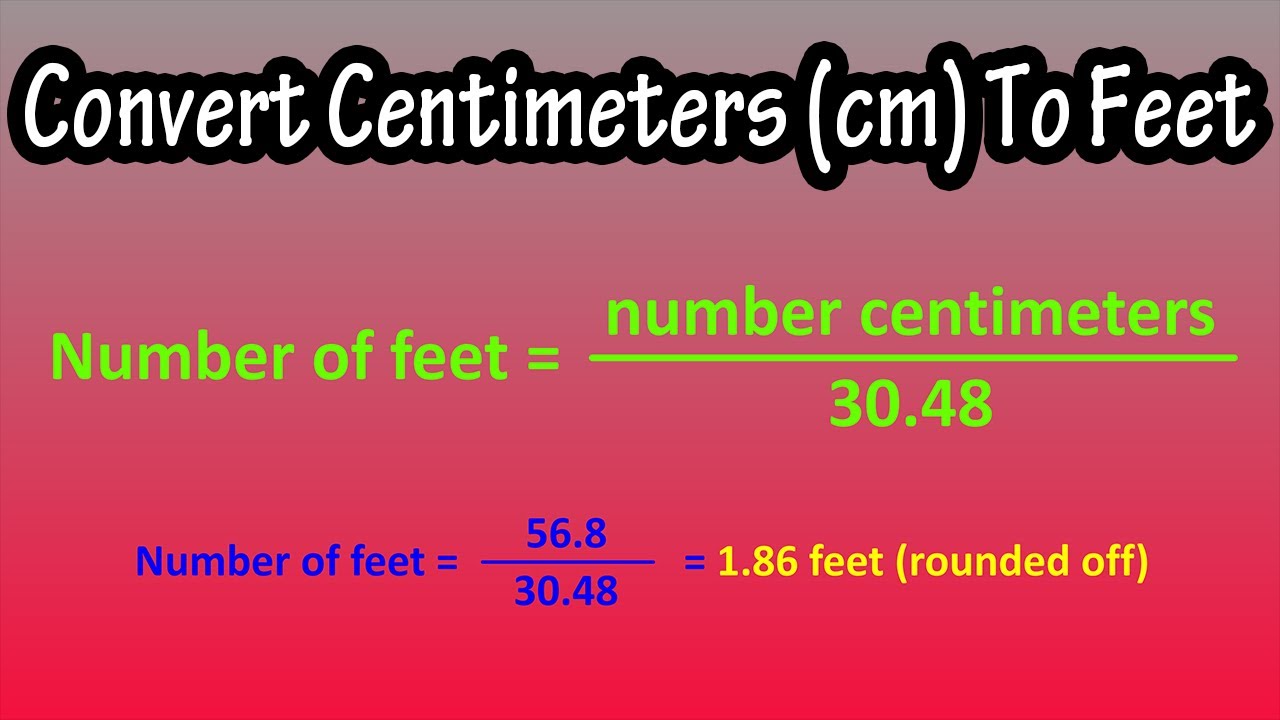
Inches = Centimeters / 2.54
Applying this to our specific measurement:
Inches = 188 / 2.54
Calculating 188 Centimeters to Inches
Let’s perform the calculation to find out how many inches are in 188 centimeters:
Inches = 188 / 2.54 ≈ 74.016 inches
So, 188 centimeters is approximately equal to 74.016 inches. For practical purposes, you might round this number to 74 inches, depending on the level of precision required.
Practical Applications of This Conversion
Understanding how to convert 188 centimeters to inches can be useful in various real-world scenarios:
- Fashion and Clothing: When buying clothes online from international retailers, sizes are often listed in centimeters. Converting to inches helps ensure a proper fit.
- Home Improvement: Measuring furniture, appliances, or room dimensions often requires converting between metric and imperial units.
- Construction and DIY Projects: Many construction projects in countries using the imperial system require measurements in inches, making this conversion essential.
- Travel: Understanding luggage size restrictions, which may be listed in centimeters, can be converted to inches to comply with airline regulations.
Step-by-Step Guide to Converting Centimeters to Inches
Here’s a detailed guide to help you convert any measurement from centimeters to inches:
- Identify the Measurement in Centimeters: Know the exact value you need to convert. In our case, it’s 188 centimeters.
- Use the Conversion Factor: Remember that 1 inch is equal to 2.54 centimeters.
- Apply the Formula: Divide the number of centimeters by 2.54 to get the equivalent in inches.
- Calculate: Perform the division. For 188 centimeters, it’s 188 / 2.54.
- Round if Necessary: Depending on the context, round the result to the nearest whole number or decimal place.
- Double-Check: Always verify your calculation to ensure accuracy.
Tips for Accurate Conversions
To ensure accurate conversions between centimeters and inches, consider the following tips:
- Use a Reliable Calculator: Online calculators or apps can provide precise conversions.
- Be Mindful of Rounding: Rounding too early in the calculation can lead to inaccuracies.
- Understand the Context: The required level of precision can vary depending on the application.
- Double-Check Units: Ensure you are converting from centimeters to inches and not the other way around.
- Use Standard Conversion Factors: Always use the standard conversion factor of 2.54 cm per inch.
Common Mistakes to Avoid
When converting centimeters to inches, it’s easy to make mistakes. Here are some common pitfalls to avoid:
- Incorrect Conversion Factor: Using the wrong conversion factor will lead to incorrect results. Always use 2.54 cm per inch.
- Rounding Errors: Rounding intermediate values can accumulate errors, especially in multi-step calculations.
- Unit Confusion: Mixing up centimeters and inches can lead to significant discrepancies.
- Calculation Errors: Simple arithmetic mistakes can result in incorrect conversions.
Why is This Conversion Important?
The ability to convert 188 centimeters to inches, or any measurement between these units, is crucial for several reasons. It bridges the gap between the metric and imperial systems, facilitating international trade, travel, and collaboration. In industries like manufacturing and engineering, precise conversions are essential for ensuring compatibility and accuracy in designs and products.
Real-World Examples
Let’s look at some real-world examples where converting 188 centimeters to inches might be necessary:
- Buying a TV: If a TV screen size is listed as 188 centimeters diagonally, you can convert it to inches to see if it fits your entertainment center.
- Ordering Furniture: When purchasing furniture online, dimensions might be in centimeters. Converting to inches helps you visualize the size in a familiar unit.
- Planning a Room Layout: If you have measurements in centimeters from an architectural plan, converting them to inches can help you plan your room layout using imperial-based tools.
Tools and Resources for Conversions
Several tools and resources are available to help you with centimeter to inch conversions:
- Online Conversion Calculators: Numerous websites offer free conversion calculators.
- Mobile Apps: Many mobile apps are designed for unit conversions, providing quick and accurate results.
- Spreadsheet Software: Programs like Microsoft Excel or Google Sheets can perform conversions using formulas.
- Conversion Tables: Pre-calculated tables provide quick references for common conversions.
Understanding Different Levels of Precision
The level of precision required in a conversion depends on the application. For some tasks, rounding to the nearest inch is sufficient, while others require greater accuracy:
- Rough Estimates: Rounding to the nearest inch is acceptable for general estimations.
- Standard Measurements: Rounding to one or two decimal places is suitable for most standard measurements.
- Precise Applications: Engineering or scientific applications may require even greater precision, using more decimal places.
Historical Context of Measurement Systems
Understanding the history of measurement systems can provide context for the importance of conversions. The metric system was developed in France in the late 18th century, aiming for a universal, standardized system. The imperial system, on the other hand, has roots in various historical standards and practices. Today, the coexistence of these systems necessitates accurate conversions.
How to Memorize the Conversion Factor
Memorizing the conversion factor (1 inch = 2.54 cm) can be helpful for quick conversions. Here are some memory aids:
- Repetition: Repeatedly saying or writing the conversion factor can help commit it to memory.
- Visual Aids: Creating a visual representation of the relationship between inches and centimeters can be effective.
- Mnemonics: Using a mnemonic phrase or sentence can aid memorization.
Advanced Conversion Techniques
For more complex conversions, such as those involving multiple units or dimensions, advanced techniques may be necessary. These techniques often involve using conversion chains or dimensional analysis to ensure accuracy.
The Future of Measurement Systems
The future of measurement systems may involve a greater adoption of the metric system worldwide. However, the imperial system is likely to remain in use in certain regions and industries for the foreseeable future. As such, the ability to convert between these systems will continue to be important.
Conclusion
Converting 188 centimeters to inches is a straightforward process that can be incredibly useful in various situations. By understanding the conversion formula, following the steps outlined in this guide, and avoiding common mistakes, you can accurately convert between these units. Whether you’re involved in fashion, home improvement, or any other field that requires measurements, mastering this conversion will undoubtedly prove beneficial. Remember, 188 centimeters is approximately 74.016 inches, and with the right tools and knowledge, you can confidently navigate the world of measurements.
[See also: Understanding Metric System Conversions]
[See also: How to Measure Furniture Accurately]
[See also: International Clothing Size Conversion Charts]
