Decoding NFT Rarity: Choosing the Right NFT Rarity Tool
The world of Non-Fungible Tokens (NFTs) is rapidly evolving, transforming digital ownership and creating new avenues for creators and collectors alike. As the NFT market matures, understanding the nuances of NFT value becomes increasingly crucial. One of the key factors influencing an NFT’s value is its rarity. This is where an NFT rarity tool comes into play. These tools help collectors and investors assess the scarcity of an NFT within a collection, providing valuable insights into its potential worth. This article delves into the importance of rarity, explores various NFT rarity tools, and provides guidance on selecting the right tool for your needs.
Understanding NFT Rarity
Rarity in the NFT space refers to the scarcity of specific traits or attributes within a collection. Not all NFTs within a collection are created equal. Some may possess unique combinations of characteristics that are far less common than others. These rare attributes can significantly impact an NFT’s desirability and, consequently, its market value. For example, in a collection of 10,000 digital avatars, only a handful might possess a specific accessory or background. These NFTs, due to their rarity, often command higher prices on the secondary market.
Rarity is not solely determined by the visual aspects of an NFT. Other factors, such as the mint number (the order in which an NFT was created), the specific artist or creator, or even historical significance, can also contribute to its overall rarity. Understanding how these factors combine to influence an NFT’s scarcity is essential for making informed investment decisions.
Why is Rarity Important?
Rarity is a cornerstone of NFT value for several reasons:
- Scarcity Drives Demand: Limited availability naturally increases demand, especially for highly sought-after traits.
- Collector Appeal: Collectors are often drawn to unique and rare items, adding a premium to the value of rare NFTs.
- Investment Potential: Rare NFTs have the potential for significant appreciation in value as the collection gains popularity.
- Community Status: Owning a rare NFT can be a status symbol within a particular community, adding social value to the asset.
However, it’s crucial to remember that rarity is just one piece of the puzzle. Other factors, such as the project’s overall quality, community engagement, and artistic merit, also play a significant role in determining an NFT’s long-term value. It is crucial to use an NFT rarity tool with other analysis methods.
Exploring Different NFT Rarity Tools
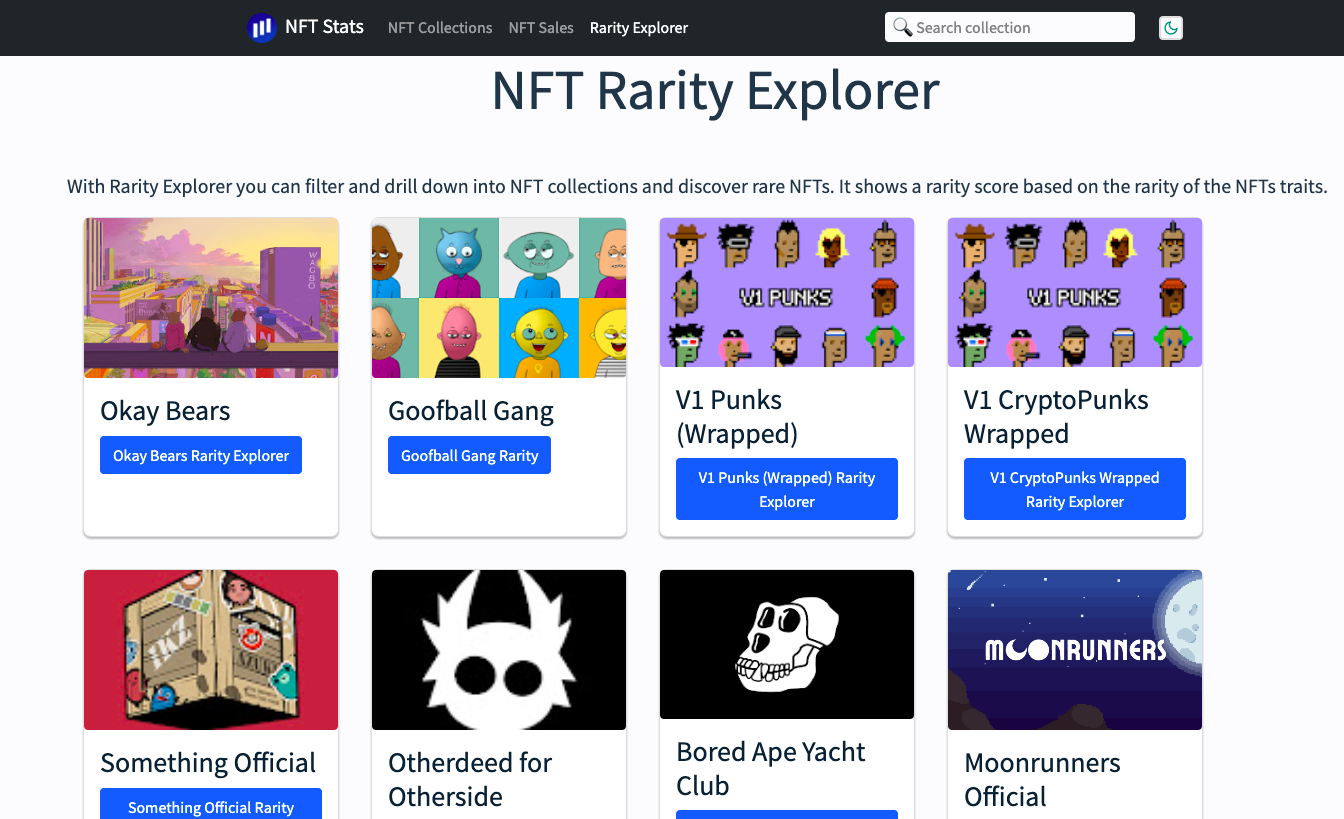
Several NFT rarity tools are available, each with its own features, strengths, and weaknesses. These tools analyze NFT collections and calculate rarity scores based on the frequency of different traits. Here are some of the popular options:
Rarity Sniper
Rarity Sniper is a widely used NFT rarity tool known for its comprehensive database and real-time updates. It supports a vast number of NFT collections across different blockchains, making it a versatile option for collectors. Rarity Sniper provides a simple and intuitive interface, allowing users to quickly identify rare NFTs within a collection. It also offers features like watchlist tracking and rarity alerts, helping users stay informed about price fluctuations and new listings.
Trait Sniper
Trait Sniper is another popular NFT rarity tool that focuses on analyzing individual traits and their impact on rarity. It provides detailed information about the frequency of each trait within a collection, allowing users to understand which attributes are the most scarce. Trait Sniper also offers advanced filtering options, enabling users to search for NFTs based on specific trait combinations. This feature is particularly useful for collectors who are looking for NFTs with specific characteristics.
Rarity.Tools
Rarity.Tools is one of the earliest and most established NFT rarity tools in the market. It uses a unique rarity scoring system that takes into account the frequency of each trait, as well as the overall distribution of traits within a collection. Rarity.Tools provides detailed reports on NFT collections, including rarity rankings, trait distributions, and historical price data. This tool is particularly useful for in-depth analysis of NFT collections.
OpenRarity
OpenRarity is an initiative aimed at creating a standardized and transparent method for calculating NFT rarity. It is a collaborative project involving several leading NFT platforms and communities. OpenRarity uses a mathematical formula to calculate rarity scores based on the statistical properties of each trait. The goal of OpenRarity is to provide a consistent and reliable measure of rarity across different NFT collections. This helps to eliminate some of the subjectivity and inconsistencies that can arise with other NFT rarity tools.
How Rare Is
How Rare Is is a user-friendly NFT rarity tool that provides a simple and straightforward way to assess the rarity of an NFT. It offers a clean interface and easy-to-understand rarity scores. How Rare Is supports a wide range of NFT collections and is constantly updated with new data. This tool is a good option for beginners who are new to the world of NFT rarity analysis.
Choosing the Right NFT Rarity Tool
Selecting the right NFT rarity tool depends on your individual needs and preferences. Consider the following factors when making your decision:
- Collection Coverage: Ensure that the tool supports the NFT collections you are interested in.
- Data Accuracy: Look for a tool that provides accurate and up-to-date data on NFT traits and rarity scores.
- User Interface: Choose a tool with a user-friendly interface that is easy to navigate and understand.
- Features: Consider the features offered by the tool, such as watchlist tracking, rarity alerts, and advanced filtering options.
- Cost: Some NFT rarity tools are free, while others require a subscription. Choose a tool that fits your budget.
It is also important to remember that no single NFT rarity tool is perfect. It is often beneficial to use multiple tools and compare their results to get a more comprehensive understanding of an NFT’s rarity.
Beyond Rarity: Other Factors to Consider
While rarity is an important factor in determining the value of an NFT, it is not the only one. Other factors to consider include:
- Artistic Merit: The aesthetic appeal and artistic quality of the NFT.
- Project Community: The strength and engagement of the NFT project’s community.
- Creator Reputation: The reputation and track record of the NFT creator.
- Utility: The real-world utility or benefits associated with owning the NFT.
- Market Trends: The overall trends and sentiment in the NFT market.
A holistic approach to NFT valuation involves considering all of these factors, not just rarity. Using an NFT rarity tool in conjunction with other research and analysis methods can help you make more informed investment decisions.
Tips for Using NFT Rarity Tools Effectively
Here are some tips for using NFT rarity tools effectively:
- Verify Data: Always verify the data provided by the tool with other sources, such as the official NFT project website or blockchain explorers.
- Understand Rarity Scores: Familiarize yourself with the rarity scoring system used by the tool and how it calculates rarity scores.
- Consider Trait Combinations: Pay attention to the combinations of traits that make an NFT rare, not just individual traits.
- Track Price History: Monitor the price history of rare NFTs to identify potential investment opportunities.
- Stay Informed: Keep up-to-date with the latest news and trends in the NFT market.
By following these tips, you can use NFT rarity tools to gain a competitive edge in the NFT market.
The Future of NFT Rarity Analysis
The field of NFT rarity analysis is constantly evolving. As the NFT market matures, we can expect to see even more sophisticated tools and techniques emerge. Machine learning and artificial intelligence are likely to play an increasingly important role in analyzing NFT data and identifying rare traits. Standardized rarity metrics, such as OpenRarity, will also become more prevalent, providing greater transparency and consistency in the market.
Furthermore, the concept of rarity itself may evolve. As new types of NFTs emerge, the factors that contribute to rarity may change. For example, rarity could be based on the dynamic properties of an NFT, such as its performance in a game or its interaction with other NFTs. [See also: Understanding Dynamic NFTs]
Conclusion
NFT rarity tools are valuable resources for collectors and investors looking to navigate the complex world of NFTs. By understanding how these tools work and using them effectively, you can gain a competitive edge in the market and identify potentially valuable NFTs. However, it is important to remember that rarity is just one piece of the puzzle. A holistic approach to NFT valuation involves considering all relevant factors, including artistic merit, community engagement, creator reputation, and market trends. By combining the insights from NFT rarity tools with other research and analysis methods, you can make more informed investment decisions and increase your chances of success in the NFT space. Remember to always do your own research (DYOR) before investing in any NFT project.
