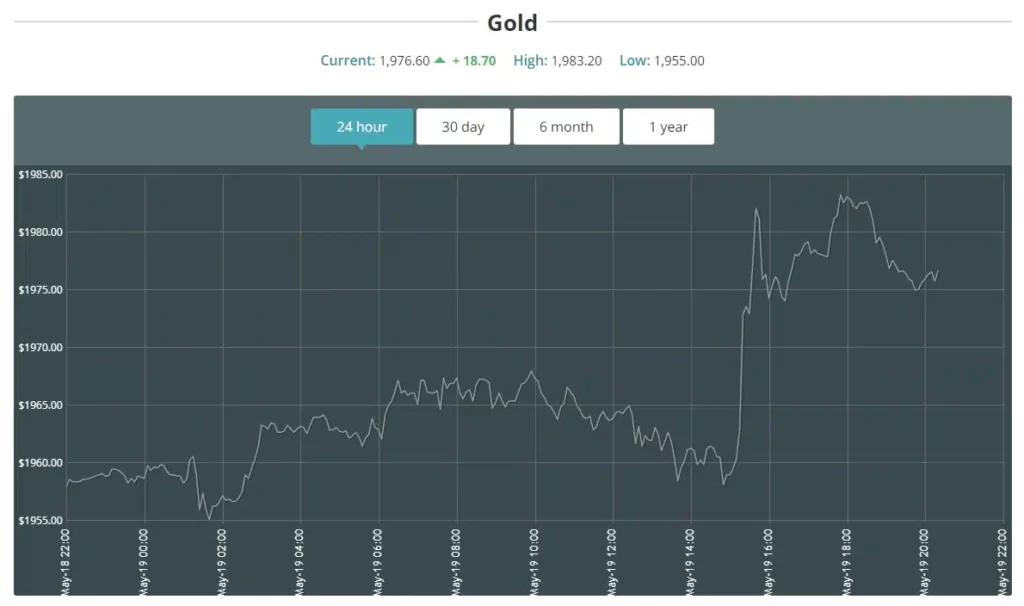
Decoding the Spot Gold Price: A Comprehensive Guide for Investors
The spot gold price is a critical benchmark for anyone involved in the gold market, from seasoned investors to casual observers. It represents the current price at which gold can be bought or sold for immediate delivery. Understanding the factors that influence the spot gold price is essential for making informed investment decisions. This article provides a comprehensive overview of the spot gold price, exploring its definition, determinants, and significance in the global financial landscape.
What is the Spot Gold Price?
The spot gold price refers to the current market price for immediate delivery of one troy ounce of gold. Unlike futures contracts, which involve agreements to buy or sell gold at a future date, the spot gold price reflects the price for transactions that are settled almost immediately. This price is continuously updated based on real-time trading activity in major gold markets around the world.
It’s important to distinguish the spot gold price from other gold prices, such as the gold futures price or the price of gold ETFs. While these prices are related, they represent different aspects of the gold market. The futures price reflects expectations about the future value of gold, while the spot gold price reflects its current value. Gold ETFs, on the other hand, track the spot gold price but may also be influenced by supply and demand for the ETF shares themselves.
Factors Influencing the Spot Gold Price
Several factors can influence the spot gold price, making it a dynamic and often volatile market. These factors can be broadly categorized into economic, geopolitical, and market-specific influences.
Economic Factors
Inflation: Gold is often considered a hedge against inflation. When inflation rises, investors may turn to gold as a store of value, driving up the spot gold price.
Interest Rates: Interest rates have an inverse relationship with the spot gold price. Higher interest rates make interest-bearing assets more attractive, reducing the appeal of gold, which does not pay interest. Conversely, lower interest rates can boost the spot gold price.
Currency Fluctuations: The spot gold price is typically quoted in US dollars. Therefore, fluctuations in the value of the dollar can impact the spot gold price. A weaker dollar tends to make gold more attractive to investors holding other currencies, increasing demand and pushing up the price.
Economic Growth: Overall economic growth can also influence the spot gold price. Strong economic growth may lead to increased demand for gold in industries such as electronics and jewelry, supporting the price. However, strong growth can also lead to higher interest rates, which could dampen demand for gold as an investment.
Geopolitical Factors
Political Instability: Geopolitical instability and uncertainty can drive investors towards safe-haven assets like gold, increasing the spot gold price. Events such as wars, political crises, and social unrest can all contribute to increased demand for gold.
Global Conflicts: Similarly, global conflicts and tensions can lead to a flight to safety, benefiting the spot gold price. Gold is seen as a safe store of value during times of crisis, providing a hedge against economic and political uncertainty.
Market-Specific Factors
Supply and Demand: The basic principles of supply and demand also apply to the spot gold price. Changes in gold production, mining costs, and demand from industries and investors can all influence the price.
Central Bank Activity: Central banks are major holders of gold reserves. Their buying and selling activity can significantly impact the spot gold price. For example, central bank purchases of gold can signal confidence in the precious metal and support the price.
Investor Sentiment: Investor sentiment and speculation can also play a role in the spot gold price. Positive news and bullish forecasts can attract more investors to the gold market, driving up the price. Conversely, negative news and bearish forecasts can lead to selling pressure and lower prices.
How to Track the Spot Gold Price
The spot gold price is widely available from various sources, including financial websites, news outlets, and brokerage platforms. Investors can track the price in real-time using online charts and tools. Some popular sources for tracking the spot gold price include:
- Financial news websites (e.g., Bloomberg, Reuters, CNBC)
- Brokerage platforms (e.g., Fidelity, Charles Schwab)
- Gold-specific websites and resources
When tracking the spot gold price, it’s important to pay attention to the currency in which the price is quoted (typically USD) and the unit of measurement (typically troy ounces). Also, be aware that the spot gold price can fluctuate rapidly, so it’s essential to use reliable and up-to-date sources.
Investing in Gold Based on the Spot Price
Investors can use the spot gold price as a basis for making investment decisions in various ways. Some common strategies include:
- Buying physical gold: Investors can purchase gold bullion, coins, or jewelry at prices that are closely linked to the spot gold price.
- Investing in gold ETFs: Gold ETFs are exchange-traded funds that track the spot gold price. They offer a convenient way to gain exposure to gold without physically owning it.
- Trading gold futures: Experienced investors can trade gold futures contracts, which are agreements to buy or sell gold at a future date. The price of gold futures is influenced by the spot gold price and expectations about future price movements.
- Investing in gold mining stocks: Another way to gain exposure to gold is by investing in companies that mine gold. The performance of gold mining stocks is often correlated with the spot gold price.
Before investing in gold, it’s important to consider your investment goals, risk tolerance, and time horizon. Gold can be a volatile asset, and its price can fluctuate significantly in response to economic and geopolitical events. It’s also advisable to consult with a financial advisor before making any investment decisions.
The Spot Gold Price and the Global Economy
The spot gold price serves as an important indicator of global economic health. Rising gold prices often signal economic uncertainty and investor risk aversion, while falling gold prices may suggest increased confidence in the global economy. The spot gold price is closely watched by economists, policymakers, and investors around the world.
Furthermore, the spot gold price can influence monetary policy decisions. Central banks may consider the spot gold price when setting interest rates or implementing other monetary policies. For example, rising gold prices may prompt central banks to tighten monetary policy in order to curb inflation.
Future Outlook for the Spot Gold Price
Predicting the future direction of the spot gold price is challenging, as it depends on a complex interplay of economic, geopolitical, and market factors. However, some analysts believe that the spot gold price will continue to be supported by ongoing economic uncertainty, geopolitical risks, and rising inflation. Others argue that rising interest rates and a strengthening US dollar could put downward pressure on the spot gold price. Ultimately, the future performance of gold will depend on how these factors evolve over time.
Investors should stay informed about the factors that influence the spot gold price and adjust their investment strategies accordingly. Diversifying your portfolio and consulting with a financial advisor can help you manage the risks associated with investing in gold.
Conclusion
The spot gold price is a crucial benchmark for the gold market and a key indicator of global economic health. Understanding the factors that influence the spot gold price is essential for making informed investment decisions. By tracking the spot gold price, staying informed about market trends, and consulting with a financial advisor, investors can navigate the complexities of the gold market and potentially benefit from its long-term value as a store of wealth. The spot gold price remains a vital tool for anyone looking to understand the dynamics of the precious metals market.
The current trends suggest a continued interest in the spot gold price as investors seek safe-haven assets amid global economic uncertainties. Keeping a close watch on the spot gold price and related market indicators is crucial for making informed decisions in the ever-changing financial landscape. [See also: Gold Investment Strategies]
