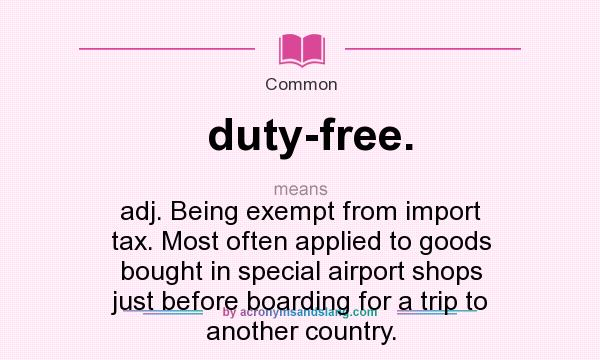
Duty-Free Definition: Understanding Tax-Free Shopping
The term “duty-free” is commonly encountered at airports and border crossings, promising savings on various goods. But what exactly does duty-free mean? This article provides a comprehensive definition of duty free, exploring its nuances, benefits, limitations, and global implications. Understanding the definition of duty free is crucial for travelers seeking to maximize their savings and navigate international commerce regulations effectively.
Defining Duty-Free: The Core Concept
At its core, duty-free refers to the exemption of certain goods from the payment of import duties, excise taxes, and sometimes sales taxes. These goods are sold in designated areas, such as international airports, seaports, and border shops, to travelers who are about to leave a country or are in transit. The primary purpose is to encourage international travel and trade by offering a tax advantage on specific products.
The definition of duty free hinges on the condition that the goods are intended for export, meaning they will be consumed or used outside the country where they were purchased. This is why duty-free shops are typically located in departure areas, ensuring that the products are taken out of the country.
The Historical Context of Duty-Free
The concept of duty-free shopping dates back to the mid-20th century, with the establishment of the first duty-free shop at Shannon Airport in Ireland in 1947. Brendan O’Regan, the airport’s catering comptroller, conceived the idea as a way to generate revenue from transatlantic passengers who were stopping to refuel. This innovative approach quickly gained popularity, and duty-free shops began to appear in airports worldwide.
Over the years, the definition of duty free has evolved alongside international trade agreements and regulations. While the basic principle remains the same, the specific rules and allowances vary significantly from country to country.
How Duty-Free Shopping Works
The process of duty-free shopping is relatively straightforward. Travelers can purchase goods at duty-free shops by presenting their boarding pass or travel documents, which serve as proof that they are leaving the country. The goods are then typically handed over just before boarding or collected upon arrival at their destination, depending on the airport’s procedures.
It’s important to note that while the goods are exempt from certain taxes in the country of purchase, they may be subject to import duties and taxes in the destination country if they exceed the allowable limits. Therefore, understanding the definition of duty free also involves being aware of the customs regulations of the country you are entering.
Benefits of Duty-Free Shopping
The primary benefit of duty-free shopping is the potential for cost savings. By avoiding taxes and duties, travelers can often purchase goods at lower prices than they would pay in regular retail stores. This is particularly true for items that are heavily taxed, such as alcohol, tobacco, and perfumes.
Another benefit is the convenience of purchasing goods at the airport or border crossing, saving time and effort compared to shopping in city centers. Duty-free shops also often offer a wider selection of international brands and exclusive products that may not be available elsewhere.
Furthermore, duty-free shopping contributes to the revenue of airports and other transportation hubs, helping to fund infrastructure improvements and enhance the overall travel experience.
Limitations and Considerations
While duty-free shopping offers several advantages, it’s essential to be aware of its limitations. The perceived savings may not always be as significant as they appear. Factors such as exchange rates, promotional discounts in regular stores, and the specific pricing policies of duty-free shops can affect the actual cost difference.
Another consideration is the quantity limits imposed by customs regulations. Travelers are typically allowed to bring a certain amount of duty-free goods into a country without paying additional taxes. Exceeding these limits can result in the goods being confiscated or subject to import duties.
Additionally, the definition of duty free doesn’t imply that the goods are necessarily cheaper than those available online or in local shops, especially when factoring in special offers and promotions. Therefore, it’s always a good idea to compare prices before making a purchase.
Duty-Free Allowances: Navigating Customs Regulations
Understanding duty-free allowances is crucial for avoiding unexpected taxes and penalties. These allowances vary significantly from country to country and depend on factors such as the traveler’s destination, the type of goods, and the duration of the trip.
Typically, duty-free allowances are specified for items such as alcohol, tobacco, perfumes, and other personal goods. It’s essential to check the customs regulations of the country you are entering to determine the specific limits and any restrictions that may apply. Many countries provide this information on their government websites or through their embassies and consulates.
Failure to comply with duty-free allowances can result in the goods being confiscated, fines being imposed, or even legal action being taken. Therefore, it’s always better to be informed and err on the side of caution.
The Future of Duty-Free Shopping
The future of duty-free shopping is likely to be shaped by several factors, including changes in international trade regulations, technological advancements, and evolving consumer preferences. The rise of e-commerce and online shopping has already had a significant impact on the retail industry, and duty-free shops are adapting to this new landscape by offering online ordering and delivery services.
Another trend is the increasing focus on sustainability and ethical sourcing. Consumers are becoming more conscious of the environmental and social impact of their purchases, and duty-free shops are responding by offering a wider range of eco-friendly and ethically produced goods.
Furthermore, the definition of duty free may be subject to further refinement and clarification as governments seek to balance the benefits of promoting international travel and trade with the need to protect domestic industries and generate tax revenue.
Duty-Free vs. Tax-Free: Understanding the Difference
While the terms “duty-free” and “tax-free” are often used interchangeably, they have distinct meanings. As we’ve established, duty-free refers to goods that are exempt from import duties and excise taxes. Tax-free, on the other hand, typically refers to goods that are exempt from sales taxes or value-added tax (VAT).
In some countries, tax-free shopping is available to tourists who purchase goods and then claim a refund of the sales tax when they leave the country. This is a different concept than duty-free shopping, which involves purchasing goods in designated areas without paying the taxes upfront.
Understanding the difference between duty-free and tax-free is important for maximizing savings and navigating international shopping regulations effectively. [See also: Guide to International Shopping]
Examples of Duty-Free Products
Common examples of products frequently sold in duty-free shops include:
- Alcoholic beverages (liquor, wine, beer)
- Tobacco products (cigarettes, cigars, tobacco)
- Perfumes and cosmetics
- Luxury goods (watches, jewelry, designer clothing)
- Electronics (cameras, smartphones, headphones)
- Confectionery (chocolates, sweets)
- Souvenirs and local products
The availability of specific products may vary depending on the location of the duty-free shop and the regulations of the country.
Tips for Smart Duty-Free Shopping
To make the most of your duty-free shopping experience, consider the following tips:
- Compare prices: Don’t assume that duty-free goods are always cheaper. Check prices online or in local stores to ensure you are getting a good deal.
- Know your allowances: Familiarize yourself with the duty-free allowances of the country you are entering to avoid exceeding the limits.
- Check for promotions: Duty-free shops often offer special promotions and discounts, so be sure to inquire about any available deals.
- Consider the exchange rate: The exchange rate can affect the actual cost of the goods, so factor this into your calculations.
- Be aware of restrictions: Some countries have restrictions on certain products, such as agricultural goods or endangered species items.
- Plan ahead: If you know you want to purchase specific items, research prices and availability in advance to save time and avoid disappointment.
Conclusion: Mastering the Duty-Free Landscape
In conclusion, the definition of duty free encompasses the exemption of certain goods from import duties, excise taxes, and sometimes sales taxes, offered to travelers in designated areas such as airports and border crossings. While it presents opportunities for cost savings and convenience, understanding the limitations, allowances, and regulations is crucial for a successful and compliant shopping experience. By staying informed and following the tips outlined in this article, travelers can navigate the duty-free landscape with confidence and make informed purchasing decisions. The evolving nature of international trade and consumer preferences suggests that the definition of duty free and its practical application will continue to adapt, making ongoing awareness essential for both shoppers and businesses alike. [See also: International Travel Tips]
