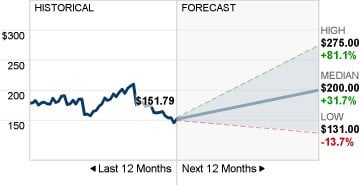
Forecast Stocks: Navigating the Market with Predictions and Analysis
In the dynamic world of finance, investors are constantly seeking an edge. The ability to accurately forecast stocks can mean the difference between substantial gains and significant losses. But what does it truly mean to forecast stocks, and how reliable are these predictions? This article delves into the intricacies of stock forecasting, examining the various methods, challenges, and the critical role it plays in investment strategies.
Understanding Stock Forecasting
Stock forecasting is the process of predicting the future value of a company’s stock. It involves analyzing historical data, current market trends, and various economic indicators to make informed estimations about potential price movements. The goal is to identify opportunities to buy low and sell high, maximizing returns while minimizing risk.
Methods of Stock Forecasting
Several methods are employed to forecast stocks, each with its own strengths and weaknesses:
- Technical Analysis: This approach involves studying historical price and volume data to identify patterns and trends. Technical analysts use charts and various indicators to predict future price movements based on past performance.
- Fundamental Analysis: This method focuses on evaluating a company’s financial health, including its revenue, earnings, assets, and liabilities. Fundamental analysts also consider macroeconomic factors, industry trends, and the competitive landscape.
- Quantitative Analysis: This involves using mathematical and statistical models to identify investment opportunities. Quantitative analysts often use algorithms and computer programs to analyze large datasets and generate trading signals.
- Sentiment Analysis: This approach gauges market sentiment by analyzing news articles, social media posts, and other sources of information. Sentiment analysts believe that positive or negative sentiment can influence stock prices.
The Role of Data in Stock Forecasting
Data is the backbone of stock forecasting. Accurate and reliable data is essential for building effective forecasting models. This data includes:
- Historical Stock Prices: Past price movements provide valuable insights into how a stock has performed over time.
- Financial Statements: Income statements, balance sheets, and cash flow statements offer a detailed look at a company’s financial health.
- Economic Indicators: Inflation rates, interest rates, GDP growth, and unemployment rates can all impact stock prices.
- News and Events: Major news events, such as earnings announcements, product launches, and regulatory changes, can significantly influence stock prices.
Challenges in Stock Forecasting
Despite the advancements in forecasting techniques, accurately forecasting stocks remains a significant challenge. Several factors contribute to this difficulty:
- Market Volatility: Stock markets are inherently volatile, and unexpected events can quickly disrupt even the most carefully constructed forecasts.
- Information Asymmetry: Some investors may have access to information that is not available to the general public, giving them an unfair advantage.
- Human Behavior: Investor sentiment and emotions can drive stock prices in unpredictable ways, making it difficult to rely solely on data-driven models.
- Black Swan Events: Unforeseeable events, such as pandemics or financial crises, can have a profound impact on stock markets and render existing forecasts useless.
Tools and Technologies for Stock Forecasting
A variety of tools and technologies are available to assist investors in forecasting stocks:
- Trading Platforms: Platforms like MetaTrader 5, TradingView, and thinkorswim offer charting tools, technical indicators, and other resources for analyzing stock prices.
- Financial Data Providers: Companies like Bloomberg, Refinitiv, and FactSet provide access to comprehensive financial data and analytics tools.
- AI and Machine Learning: Artificial intelligence (AI) and machine learning (ML) algorithms are increasingly being used to analyze large datasets and identify patterns that humans may miss. These technologies can improve the accuracy of stock forecasts, though they are not foolproof.
The Importance of Risk Management
While forecasting stocks can help investors make more informed decisions, it is essential to remember that no forecast is guaranteed to be accurate. Risk management is a crucial aspect of investing, and investors should always consider their risk tolerance and diversification strategies. [See also: Diversification Strategies for Long-Term Growth]
Here are some key risk management strategies:
- Diversification: Spreading investments across different asset classes, industries, and geographic regions can help reduce risk.
- Stop-Loss Orders: Setting stop-loss orders can limit potential losses by automatically selling a stock if it falls below a certain price.
- Position Sizing: Carefully determining the size of each investment can help manage overall risk.
- Due Diligence: Thoroughly researching companies and understanding their business models is essential for making informed investment decisions.
Examples of Stock Forecasting in Practice
Let’s consider a few hypothetical scenarios to illustrate how stock forecasting might be used in practice:
- Scenario 1: A technical analyst observes a bullish pattern on a stock chart, suggesting that the stock price is likely to rise. Based on this analysis, the investor decides to buy the stock with the expectation of a short-term gain.
- Scenario 2: A fundamental analyst believes that a company is undervalued based on its financial statements and growth prospects. The investor decides to buy the stock with a long-term investment horizon.
- Scenario 3: A quantitative analyst develops an algorithm that identifies stocks with high potential for growth based on historical data. The investor uses this algorithm to generate trading signals and make investment decisions.
The Future of Stock Forecasting
The field of stock forecasting is constantly evolving, with new technologies and techniques emerging all the time. AI and machine learning are expected to play an increasingly important role in the future, as these technologies become more sophisticated and accessible. [See also: The Impact of AI on Financial Markets]
However, it is important to remember that no technology can eliminate the inherent uncertainty of the stock market. Human judgment and experience will continue to be essential for making informed investment decisions. Stock forecasting should be viewed as a tool to assist investors, not a substitute for sound financial planning and risk management.
Ethical Considerations in Stock Forecasting
Ethical considerations are paramount in the realm of stock forecasting. Transparency, honesty, and integrity are crucial for maintaining trust and confidence in the financial markets. It is unethical to engage in insider trading, manipulate market prices, or disseminate false or misleading information. Investors and analysts have a responsibility to act in the best interests of their clients and the public.
Conclusion: Navigating the Uncertainties of the Stock Market
Forecasting stocks is a complex and challenging endeavor. While it can provide valuable insights and help investors make more informed decisions, it is essential to approach forecasting with caution and a healthy dose of skepticism. The stock market is inherently unpredictable, and no forecast is guaranteed to be accurate. By understanding the various methods, challenges, and ethical considerations involved in stock forecasting, investors can navigate the uncertainties of the market with greater confidence and increase their chances of achieving their financial goals. Remember, a well-informed investor is an empowered investor. The ability to analyze and forecast stocks, coupled with sound risk management, is a powerful combination in the quest for financial success. Always conduct thorough research, seek professional advice when needed, and stay informed about market trends and economic developments. [See also: How to Choose a Financial Advisor]
