Forecasting Stocks: Navigating the Complex World of Stock Market Predictions
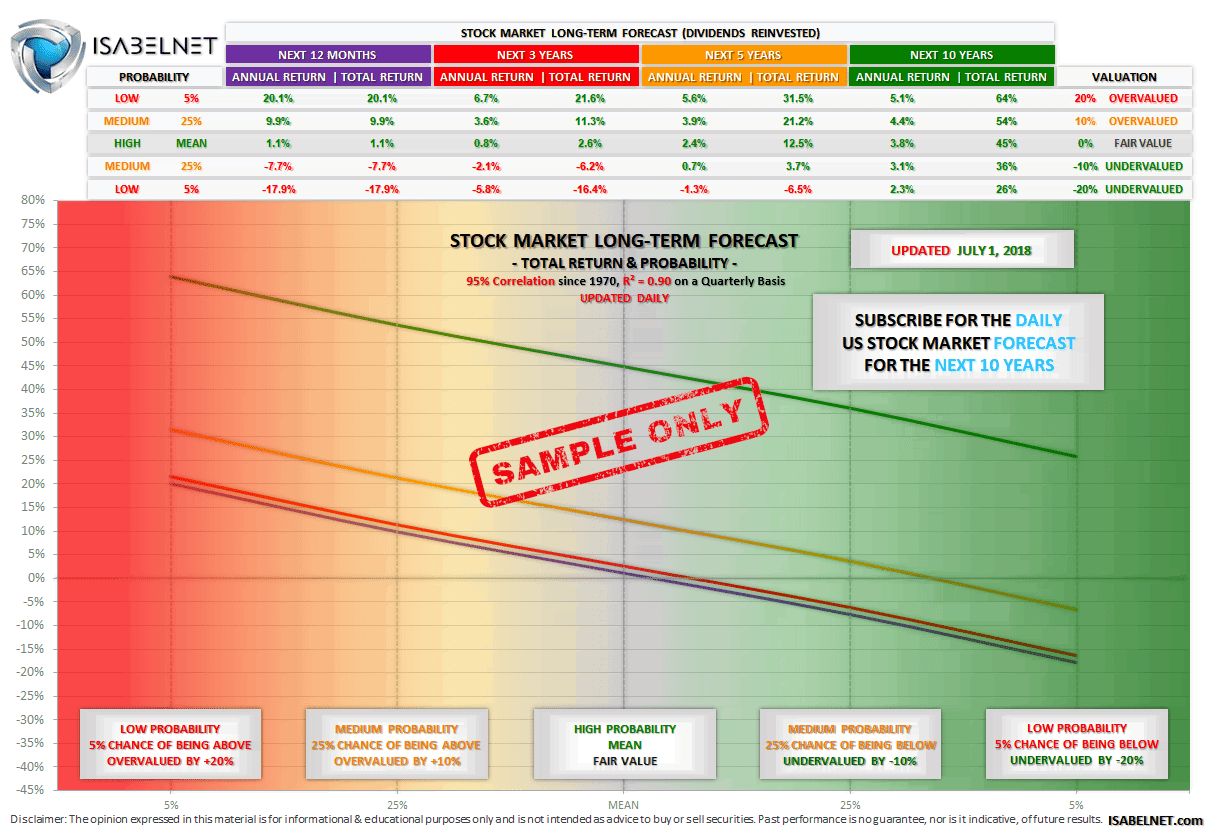
The ability to accurately forecast stocks is a holy grail for investors, traders, and financial institutions alike. The allure of predicting future stock prices stems from the potential for substantial profits and reduced risk. However, the stock market is a complex, dynamic system influenced by a myriad of factors, making accurate stock forecast a notoriously challenging task. This article delves into the various methodologies, challenges, and considerations involved in forecast stock movements, providing a comprehensive overview for anyone interested in understanding this intricate field.
Understanding the Basics of Stock Forecasting
Before diving into the complexities, it’s crucial to understand the fundamental concepts. Stock forecast involves analyzing historical data, current market conditions, and various economic indicators to predict the future price movements of a particular stock or the overall market. This process isn’t about guaranteeing future outcomes but rather about making informed estimations based on available information.
Technical Analysis
Technical analysis is a methodology that focuses on identifying patterns and trends in historical price and volume data. Technical analysts believe that past market behavior can provide insights into future price movements. Common tools used in technical analysis include:
- Chart Patterns: Identifying formations like head and shoulders, double tops, and triangles to predict potential price reversals or continuations.
- Moving Averages: Calculating the average price of a stock over a specific period to smooth out price fluctuations and identify trends.
- Relative Strength Index (RSI): Measuring the magnitude of recent price changes to evaluate overbought or oversold conditions.
- MACD (Moving Average Convergence Divergence): A trend-following momentum indicator that shows the relationship between two moving averages of a stock’s price.
While technical analysis can be useful for short-term stock forecast, it’s important to remember that it relies on historical data and may not always be accurate in predicting future movements, especially during periods of significant market volatility or unexpected events. [See also: Understanding Stock Market Volatility]
Fundamental Analysis
Fundamental analysis takes a different approach by focusing on the intrinsic value of a company. This involves analyzing a company’s financial statements (balance sheet, income statement, cash flow statement), industry trends, competitive landscape, and overall economic conditions. Key metrics used in fundamental analysis include:
- Earnings per Share (EPS): A measure of a company’s profitability, calculated by dividing net income by the number of outstanding shares.
- Price-to-Earnings Ratio (P/E Ratio): Comparing a company’s stock price to its earnings per share to assess its valuation relative to its peers.
- Debt-to-Equity Ratio: Measuring the amount of debt a company uses to finance its assets relative to the amount of equity.
- Return on Equity (ROE): A measure of how efficiently a company is using shareholders’ equity to generate profits.
Fundamental analysis aims to determine whether a stock is undervalued or overvalued relative to its intrinsic worth. By identifying undervalued stocks, investors hope to profit from future price appreciation as the market recognizes the company’s true value. It’s a long-term approach to stock forecast, suitable for investors seeking to hold stocks for extended periods.
Quantitative Analysis
Quantitative analysis employs mathematical and statistical models to forecast stock prices. This approach relies on data-driven insights and algorithmic trading strategies. Quantitative analysts, often referred to as “quants,” develop sophisticated models that incorporate various factors, such as macroeconomic indicators, market sentiment, and technical indicators. Examples of quantitative models include:
- Time Series Analysis: Using historical data to identify patterns and trends that can be extrapolated into the future.
- Regression Analysis: Identifying the relationship between a dependent variable (e.g., stock price) and one or more independent variables (e.g., interest rates, inflation).
- Machine Learning: Training algorithms on vast amounts of data to identify patterns and predict future price movements.
Quantitative analysis can be highly effective, but it requires significant expertise in mathematics, statistics, and computer programming. Moreover, the models need to be constantly refined and updated to adapt to changing market conditions. [See also: The Role of Artificial Intelligence in Finance]
Challenges in Stock Forecasting
Despite the advancements in forecasting methodologies, accurately forecast stock prices remains a significant challenge. The stock market is inherently unpredictable due to several factors:
Market Volatility
The stock market is subject to periods of high volatility, often triggered by unexpected events, economic news, or geopolitical developments. These volatile periods can disrupt established trends and make it difficult to apply traditional forecasting techniques. News events can also significantly impact a stock forecast.
Information Asymmetry
Not all market participants have access to the same information. Insider information, for example, can give certain individuals or institutions an unfair advantage in predicting future price movements. While insider trading is illegal, it can still occur and influence market behavior, making stock forecast more difficult for those without access to privileged information.
Behavioral Biases
Human emotions and biases can significantly impact investment decisions and market behavior. Investors may be prone to herd behavior, following the crowd rather than making rational decisions based on fundamental analysis. Cognitive biases, such as confirmation bias and anchoring bias, can also distort investors’ perceptions and lead to poor investment choices. These biases make it more difficult to forecast stock movements based on rational analysis alone.
Black Swan Events
Black swan events are rare, unpredictable occurrences that have a significant impact on the market. Examples include financial crises, natural disasters, and political upheavals. These events are difficult to anticipate and can invalidate even the most sophisticated forecasting models. Considering the potential for these events is critical when attempting to forecast stock prices.
Improving Stock Forecasting Accuracy
While perfect accuracy is unattainable, there are several steps investors and analysts can take to improve their stock forecast accuracy:
Diversification
Diversifying investments across different asset classes, industries, and geographic regions can reduce the risk associated with individual stock selections. Diversification helps to mitigate the impact of unexpected events and market volatility on overall portfolio performance. A well-diversified portfolio is less susceptible to the inaccuracies of a single stock forecast.
Combining Methodologies
Instead of relying solely on one forecasting methodology, consider combining different approaches. For example, combining technical analysis with fundamental analysis can provide a more comprehensive view of a stock’s potential. Similarly, incorporating quantitative models with qualitative insights can enhance the accuracy of stock forecast.
Continuous Learning and Adaptation
The stock market is constantly evolving, so it’s essential to stay informed about the latest developments and adapt forecasting strategies accordingly. This includes keeping up with economic news, industry trends, and technological advancements. Continuous learning and adaptation are crucial for maintaining a competitive edge in the world of stock forecast.
Risk Management
Effective risk management is paramount when making investment decisions based on stock forecast. This includes setting stop-loss orders to limit potential losses and using hedging strategies to protect against market downturns. Understanding and managing risk is just as important as accurately predicting future price movements.
The Future of Stock Forecasting
The field of stock forecast is constantly evolving, driven by advancements in technology and data analytics. Machine learning and artificial intelligence are playing an increasingly important role in developing more sophisticated and accurate forecasting models. As more data becomes available and computational power increases, we can expect to see further innovations in this field. However, it’s important to remember that even the most advanced models are not foolproof, and human judgment will always be necessary to interpret the results and make informed investment decisions. The future of stock forecast will likely involve a combination of human expertise and advanced technology.
Conclusion
Forecasting stocks is a complex and challenging endeavor, but it remains a critical skill for investors and financial professionals. By understanding the various methodologies, challenges, and considerations involved, individuals can improve their ability to make informed investment decisions and navigate the complexities of the stock market. While perfect accuracy is unattainable, continuous learning, adaptation, and effective risk management are essential for achieving success in the world of stock forecast. Always remember that past performance is not indicative of future results, and any stock forecast should be considered as an estimate, not a guarantee.
