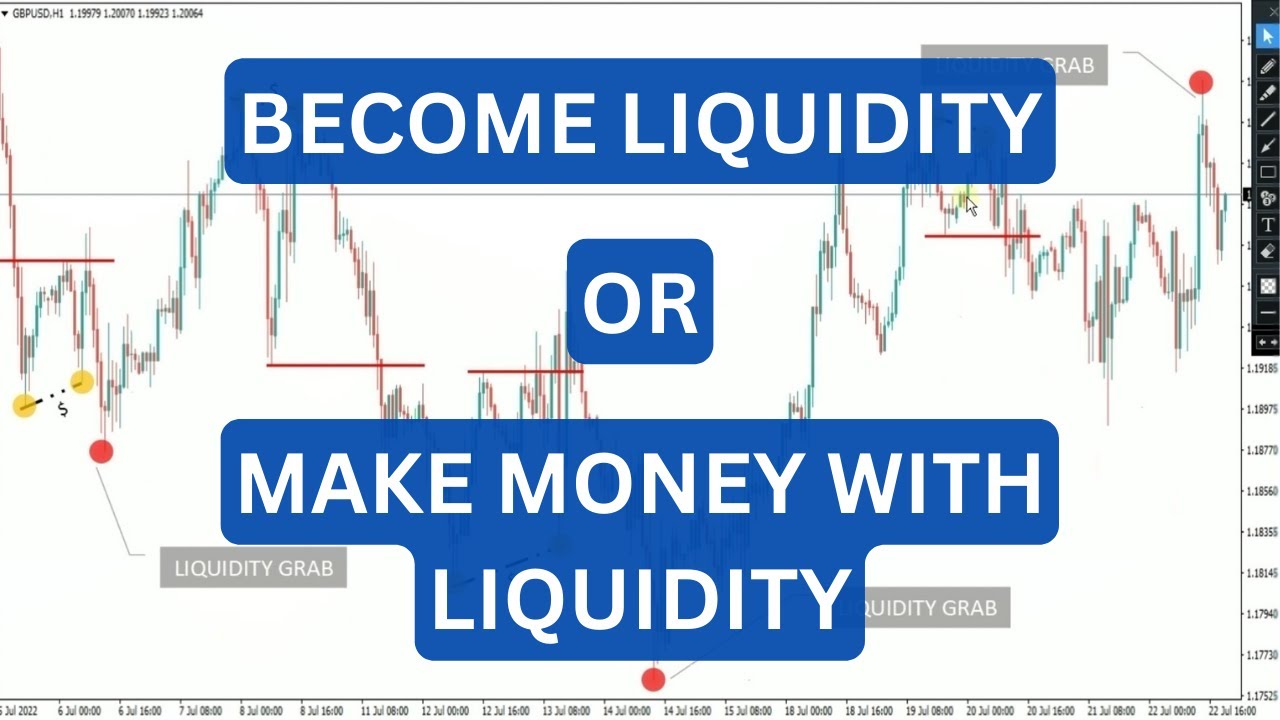
Liquidity Sweep Meaning: Understanding Order Routing and Market Dynamics
In the fast-paced world of financial markets, understanding the nuances of order execution is crucial for both traders and investors. One such concept is the liquidity sweep. A liquidity sweep is a type of order routing strategy designed to quickly execute a large order by accessing multiple price levels and liquidity pools. This article delves into the liquidity sweep meaning, exploring its mechanics, benefits, and implications for market participants.
What is a Liquidity Sweep?
A liquidity sweep order, also known as a sweep order or marketable limit order, is an order to buy or sell a security that is automatically routed to multiple exchanges or market centers to find the best available prices and execute the entire order as quickly as possible. Unlike a traditional limit order, which is only executed at a specified price or better, a liquidity sweep aggressively seeks out available liquidity at various price points.
The Mechanics of a Liquidity Sweep
When a trader or investor places a liquidity sweep order, the brokerage or trading platform’s order routing system immediately scans various exchanges and market centers for the best available prices. The system then breaks up the original order into smaller orders and routes them to different venues where liquidity exists at those prices. This process continues until the entire order is filled, potentially at multiple price levels.
For example, suppose a trader wants to buy 1,000 shares of a particular stock. Instead of placing a single order for 1,000 shares at a specific price, they can place a liquidity sweep order. The order routing system might then execute 200 shares at $50.00 on Exchange A, 300 shares at $50.01 on Exchange B, and the remaining 500 shares at $50.02 on Exchange C. The result is that the trader quickly acquires the desired shares, albeit at slightly varying prices.
Benefits of Using Liquidity Sweeps
Liquidity sweeps offer several advantages, particularly for large orders or in fast-moving markets:
- Faster Execution: By accessing multiple liquidity pools simultaneously, liquidity sweeps significantly reduce the time it takes to fill an order. This is especially important in volatile markets where prices can change rapidly.
- Improved Fill Rates: Traditional limit orders may not be fully executed if the market price moves away from the specified limit. Liquidity sweeps increase the likelihood of a complete fill by seeking out available liquidity at multiple price levels.
- Reduced Market Impact: Breaking up a large order into smaller orders and routing them to different venues can minimize the impact on the overall market price. This is because the order is less likely to overwhelm any single exchange or market center.
When to Use a Liquidity Sweep
Liquidity sweeps are most suitable for:
- Large Orders: When dealing with a substantial number of shares, a liquidity sweep can help ensure that the entire order is filled efficiently.
- Fast-Moving Markets: In volatile markets, the speed of execution is critical. Liquidity sweeps provide a faster way to execute orders compared to traditional methods.
- Marketable Orders: When the primary goal is to execute the order quickly rather than to obtain a specific price, a liquidity sweep is an appropriate choice.
Risks and Considerations
While liquidity sweeps offer several benefits, there are also some risks and considerations to keep in mind:
- Price Uncertainty: Because liquidity sweeps execute at multiple price levels, the final execution price may be different from what the trader initially expected. This can be a disadvantage if the trader is highly price-sensitive.
- Increased Commission Costs: Some brokers may charge higher commissions for liquidity sweep orders due to the increased complexity and routing costs.
- Potential for Partial Fills: Although liquidity sweeps aim for complete fills, there is still a possibility that the entire order may not be executed if sufficient liquidity is not available at the acceptable price range.
Liquidity Sweep vs. Other Order Types
It’s important to understand how liquidity sweeps differ from other common order types:
- Limit Order: A limit order is an order to buy or sell a security at a specific price or better. It will only be executed if the market price reaches the specified limit. Unlike a liquidity sweep, a limit order does not actively seek out liquidity at multiple price levels.
- Market Order: A market order is an order to buy or sell a security immediately at the best available price. While market orders prioritize speed of execution, they do not provide any price control. A liquidity sweep offers a balance between speed and price, as it seeks out the best available prices within a certain range.
- Hidden Order (Iceberg Order): A hidden order, also known as an iceberg order, is a large order that is partially displayed to the market to avoid revealing the full size of the order. While both liquidity sweeps and hidden orders are used for large orders, they serve different purposes. A liquidity sweep prioritizes speed and fill rate, while a hidden order prioritizes minimizing market impact.
Examples of Liquidity Sweep in Action
Consider a hedge fund that needs to quickly acquire a large position in a particular stock due to breaking news. The fund’s trader might use a liquidity sweep to rapidly buy up shares across multiple exchanges, ensuring that the fund’s order is filled before the price moves significantly.
Another example is a retail investor who wants to exit a large position in a volatile stock. By using a liquidity sweep, the investor can quickly sell their shares, minimizing the risk of losing value due to price fluctuations. The liquidity sweep meaning in this context is to optimize the sale in a dynamic market.
The Role of Technology in Liquidity Sweeps
Advanced order routing systems and algorithmic trading platforms play a crucial role in the execution of liquidity sweeps. These systems use sophisticated algorithms to scan multiple exchanges, identify available liquidity, and route orders efficiently. The speed and precision of these systems are essential for maximizing the benefits of liquidity sweeps.
The Impact of Liquidity Sweeps on Market Dynamics
Liquidity sweeps can have a significant impact on market dynamics by:
- Increasing Liquidity: By aggregating liquidity from multiple sources, liquidity sweeps can enhance overall market liquidity, making it easier for traders to execute large orders.
- Improving Price Discovery: The process of seeking out the best available prices across different exchanges can contribute to more accurate price discovery.
- Reducing Price Volatility: By minimizing the impact of large orders on individual exchanges, liquidity sweeps can help reduce price volatility.
Regulatory Considerations
The use of liquidity sweeps is subject to regulatory oversight by agencies such as the Securities and Exchange Commission (SEC) in the United States. These regulations aim to ensure fair and transparent order execution practices and to prevent market manipulation.
Conclusion: Mastering Liquidity Sweeps for Effective Trading
Understanding the liquidity sweep meaning is essential for any serious trader or investor. By leveraging this order routing strategy, market participants can improve their order execution speed, increase fill rates, and reduce market impact. However, it’s crucial to be aware of the risks and considerations associated with liquidity sweeps and to use them appropriately based on individual trading goals and market conditions. As technology continues to evolve, liquidity sweeps will likely become even more sophisticated and play an increasingly important role in the global financial markets. Properly understanding the liquidity sweep can lead to more effective and efficient trading strategies. [See also: Market Order vs Limit Order] [See also: Algorithmic Trading Strategies] [See also: Understanding Order Routing]
