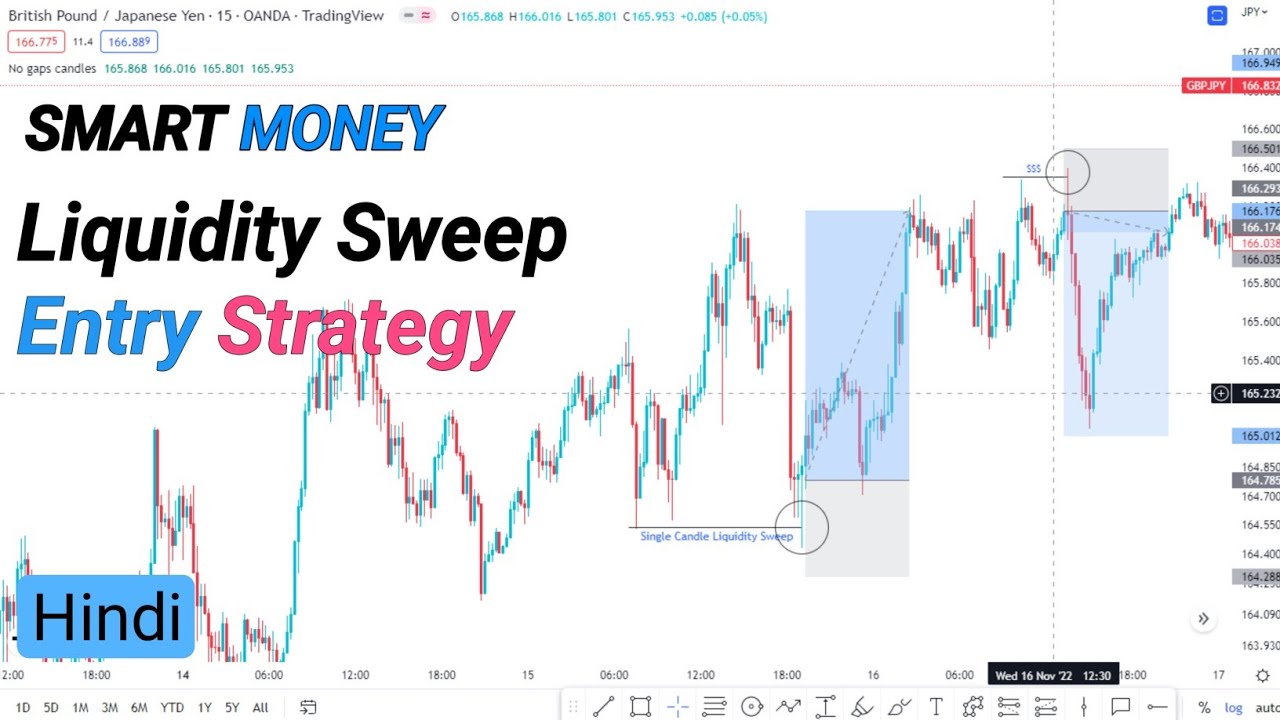
Liquidity Sweep: Understanding Market Dynamics and Strategic Implications
In the dynamic world of finance, understanding market mechanics is crucial for investors, traders, and analysts alike. One such market phenomenon is the liquidity sweep. A liquidity sweep refers to a situation where a significant amount of buy or sell orders are executed rapidly, depleting available liquidity at specific price levels. This often results in a sharp and swift price movement. Understanding how liquidity sweeps occur and their potential impact can significantly enhance trading strategies and risk management.
What is a Liquidity Sweep?
A liquidity sweep is essentially a rapid execution of orders that consumes available liquidity at certain price points. Liquidity, in this context, refers to the ease with which an asset can be bought or sold without causing a significant change in its price. High liquidity means there are many willing buyers and sellers at various price levels, ensuring smooth transactions. Conversely, low liquidity means fewer orders are available, and a large order can cause a substantial price shift.
A liquidity sweep occurs when a large order or a series of orders are placed to quickly fill available bids (for selling) or asks (for buying). This process can lead to a cascade effect, where the price rapidly moves to the next available liquidity level. This movement can be particularly pronounced in markets with thin order books or during periods of high volatility.
How Liquidity Sweeps Occur
Several factors can trigger a liquidity sweep:
- Large Market Orders: A single, substantial market order can initiate a liquidity sweep if it is large enough to consume all available orders at the current price and subsequent price levels.
- Stop-Loss Orders: Clusters of stop-loss orders placed at similar price points can trigger a liquidity sweep when the price reaches that level. As stop-loss orders are triggered, they become market orders, further accelerating the price movement.
- Algorithmic Trading: Automated trading systems can be programmed to detect imbalances in the order book and execute large orders to exploit these inefficiencies, leading to a liquidity sweep.
- News Events: Unexpected news or economic data releases can cause a sudden surge in buying or selling pressure, resulting in a liquidity sweep.
- Market Manipulation: In some cases, a liquidity sweep can be intentionally orchestrated by market participants with substantial capital to trigger stop-loss orders and profit from the resulting price movement.
Impact of Liquidity Sweeps
The impact of a liquidity sweep can be significant for traders and investors:
- Price Volatility: Liquidity sweeps lead to increased price volatility, creating opportunities for profit but also increasing the risk of losses.
- Slippage: Traders may experience slippage, where the actual execution price of their order differs from the expected price due to the rapid price movement caused by the liquidity sweep.
- Stop-Loss Hunting: Liquidity sweeps can trigger stop-loss orders, leading to unexpected losses for traders who have placed their stops too close to the current market price.
- Market Inefficiencies: Liquidity sweeps can expose inefficiencies in the market, creating opportunities for arbitrage and other trading strategies.
Strategies to Mitigate Risks from Liquidity Sweeps
While liquidity sweeps can be unpredictable, there are strategies traders can use to mitigate their risks:
Proper Stop-Loss Placement
Avoid placing stop-loss orders too close to the current market price, as these are more likely to be triggered during a liquidity sweep. Consider using wider stop-loss orders or dynamic stop-loss strategies that adjust to market volatility.
Limit Orders
Using limit orders instead of market orders can help avoid slippage during a liquidity sweep. A limit order ensures that you only buy or sell at a specified price or better.
Monitoring Order Book Depth
Pay attention to the depth of the order book to identify areas where liquidity is thin. Avoid placing large orders in these areas, as they are more likely to trigger a liquidity sweep.
Risk Management
Implement robust risk management techniques, such as position sizing and diversification, to limit potential losses from unexpected market movements. Always assess your risk tolerance and only trade with capital you can afford to lose.
Staying Informed
Keep abreast of market news and economic data releases that could trigger a liquidity sweep. Be prepared to adjust your trading strategy accordingly.
Liquidity Sweep in Different Markets
Liquidity sweeps can occur in various financial markets, including:
- Forex: The foreign exchange market is highly liquid, but liquidity sweeps can still occur, particularly during periods of high volatility or around major economic announcements.
- Stock Market: In the stock market, liquidity sweeps can happen in thinly traded stocks or during after-hours trading when liquidity is reduced.
- Cryptocurrency: The cryptocurrency market is known for its high volatility and relatively low liquidity compared to traditional markets, making it prone to liquidity sweeps.
- Commodities: Commodity markets can also experience liquidity sweeps, especially during periods of supply disruptions or unexpected demand changes.
Real-World Examples of Liquidity Sweeps
Several historical events can be attributed to liquidity sweeps. One example is the “Flash Crash” of May 6, 2010, when the Dow Jones Industrial Average plunged nearly 1,000 points in a matter of minutes. While the exact cause is debated, the event was partly attributed to automated trading systems triggering a cascade of sell orders, leading to a liquidity sweep and exacerbating the market decline. Another example can be seen in cryptocurrency markets where sudden price drops often result from large sell orders triggering cascading liquidity sweeps.
The Role of High-Frequency Trading
High-frequency trading (HFT) firms play a significant role in liquidity sweeps. These firms use sophisticated algorithms and high-speed connections to execute orders in milliseconds. While HFT can provide liquidity to the market, it can also exacerbate liquidity sweeps by quickly reacting to imbalances in the order book and triggering automated trading strategies that amplify price movements. [See also: Algorithmic Trading Strategies]
Future Trends and Liquidity Sweeps
As financial markets continue to evolve, the dynamics of liquidity sweeps are likely to change. The increasing use of artificial intelligence and machine learning in trading could lead to more sophisticated algorithms that are better at detecting and exploiting liquidity imbalances. Regulatory changes could also impact the frequency and severity of liquidity sweeps. It’s crucial for market participants to stay informed about these trends and adapt their strategies accordingly.
Conclusion
Understanding liquidity sweeps is essential for navigating the complexities of modern financial markets. By recognizing the factors that contribute to liquidity sweeps and implementing appropriate risk management strategies, traders and investors can protect themselves from potential losses and even capitalize on opportunities created by these market events. As markets become increasingly automated and interconnected, the ability to anticipate and respond to liquidity sweeps will become even more critical. The concept of a liquidity sweep is vital for any serious trader to grasp. It is important to remember that market dynamics are always changing, and continuous learning and adaptation are key to success in the financial world. A liquidity sweep is a powerful force in the market, and understanding it can give you a significant edge. [See also: Risk Management in Trading]
