Market Tomorrow Prediction: Navigating Uncertainty and Identifying Opportunities
Predicting the market tomorrow is a complex endeavor, akin to forecasting the weather weeks in advance. It’s a field fraught with uncertainty, yet crucial for investors, businesses, and policymakers alike. Understanding the dynamics influencing the market requires a multi-faceted approach, considering economic indicators, geopolitical events, technological advancements, and even consumer sentiment. This article delves into the challenges and methodologies involved in market tomorrow prediction, exploring how various factors contribute to market movements and offering insights into navigating the inherent uncertainties.
Understanding the Complexity of Market Prediction
The stock market, commodity markets, and even the real estate market are influenced by a myriad of interconnected factors. Simply relying on historical data or a single indicator is insufficient for accurate market tomorrow prediction. The market is a dynamic system, constantly adapting to new information and evolving expectations. Therefore, a comprehensive understanding requires considering several key areas:
- Economic Indicators: GDP growth, inflation rates, unemployment figures, and interest rates all play a significant role in shaping market sentiment and influencing investment decisions.
- Geopolitical Events: Political instability, trade wars, and international conflicts can create significant volatility and disrupt market trends.
- Technological Advancements: Disruptive technologies can transform industries, create new opportunities, and render existing business models obsolete.
- Investor Sentiment: Market psychology, driven by fear and greed, can lead to irrational exuberance or panic selling, exacerbating market fluctuations.
- Global Interconnectedness: Today’s markets are highly interconnected. Events in one region can have ripple effects across the globe.
Methodologies for Market Tomorrow Prediction
Despite the inherent challenges, various methodologies are employed to attempt to predict market movements. These range from traditional economic models to sophisticated machine learning algorithms. Here are some common approaches:
Technical Analysis
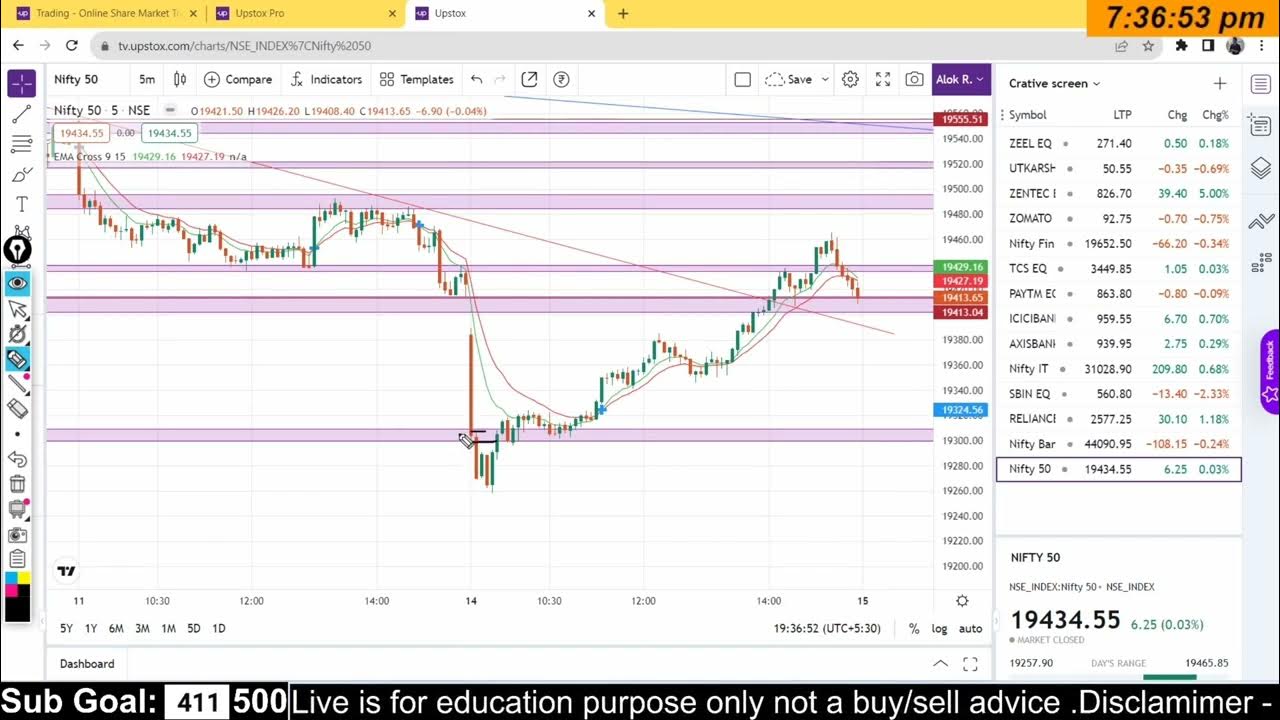
Technical analysis focuses on identifying patterns and trends in historical market data, such as price charts and trading volumes. Analysts use various indicators and tools to predict future price movements based on past performance. While technical analysis can be useful for short-term market tomorrow prediction, its effectiveness is limited by its reliance on historical data and its inability to account for unforeseen events.
Fundamental Analysis
Fundamental analysis involves evaluating the intrinsic value of assets by analyzing economic and financial factors. This approach considers factors such as a company’s earnings, revenue, debt, and growth prospects. Fundamental analysis is often used for long-term investment decisions, but it can also provide insights into short-term market tomorrow prediction by identifying undervalued or overvalued assets.
Econometric Modeling
Econometric models use statistical techniques to analyze economic data and forecast future market trends. These models often incorporate multiple variables and attempt to quantify the relationships between them. While econometric models can be sophisticated, their accuracy is limited by the quality of the data and the assumptions underlying the model. [See also: Understanding Econometric Models]
Sentiment Analysis
Sentiment analysis involves analyzing news articles, social media posts, and other sources of information to gauge market sentiment. This approach attempts to identify prevailing emotions and attitudes that may influence investor behavior. Sentiment analysis can be useful for identifying short-term market trends, but it is often subjective and prone to biases.
Machine Learning and Artificial Intelligence
Machine learning algorithms are increasingly being used for market tomorrow prediction. These algorithms can analyze vast amounts of data and identify complex patterns that humans may miss. Machine learning models can be trained to predict market movements based on historical data, economic indicators, and sentiment analysis. However, these models are only as good as the data they are trained on, and they can be susceptible to overfitting and biases. The use of AI allows for more dynamic and adaptable models that can learn from new data in real-time, potentially improving the accuracy of market tomorrow prediction. [See also: The Role of AI in Financial Markets]
Factors Influencing Market Tomorrow Prediction
Several factors can significantly influence the accuracy of market tomorrow prediction. Understanding these factors is crucial for interpreting market forecasts and making informed investment decisions:
- Data Quality: The accuracy of any prediction model depends on the quality of the data it uses. Inaccurate or incomplete data can lead to flawed predictions.
- Model Complexity: More complex models are not necessarily more accurate. Overly complex models can be prone to overfitting, which means they perform well on historical data but poorly on new data.
- Black Swan Events: Unforeseen events, such as natural disasters or political crises, can have a significant impact on market movements and are difficult to predict.
- Market Volatility: Highly volatile markets are more difficult to predict than stable markets. Periods of high volatility are often characterized by irrational behavior and unpredictable price swings.
- Regulatory Changes: New regulations can significantly impact market dynamics and disrupt existing trends.
The Role of Experts and Analysts
Financial experts and analysts play a crucial role in providing insights and guidance to investors. These professionals use their knowledge and experience to analyze market trends, assess risks, and make recommendations. While their forecasts are not always accurate, they can provide valuable perspectives and help investors make informed decisions. It’s important to remember that even the most experienced analysts can be wrong, and their predictions should be viewed as one input among many. The best approach often involves considering diverse perspectives and conducting independent research.
Practical Implications for Investors
For investors, understanding the limitations of market tomorrow prediction is paramount. Rather than relying solely on forecasts, investors should focus on building a diversified portfolio that aligns with their risk tolerance and investment goals. A long-term investment strategy, based on fundamental analysis and a thorough understanding of market dynamics, is more likely to be successful than attempting to time the market based on short-term predictions. Diversification across asset classes and geographic regions can help mitigate risk and improve long-term returns. [See also: Building a Diversified Investment Portfolio]
The Future of Market Prediction
The field of market tomorrow prediction is constantly evolving, driven by advancements in technology and the availability of new data sources. Machine learning and artificial intelligence are expected to play an increasingly important role in the future of market forecasting. As these technologies improve, they may be able to identify more subtle patterns and predict market movements with greater accuracy. However, it is unlikely that market prediction will ever be perfect. The inherent uncertainty of human behavior and the unpredictable nature of global events will continue to pose challenges for even the most sophisticated prediction models. The development of quantum computing could revolutionize the field, allowing for the analysis of even more complex datasets and potentially leading to more accurate predictions. However, the ethical implications of advanced prediction technologies must also be considered.
Ethical Considerations
The increasing sophistication of market tomorrow prediction raises ethical concerns. Access to advanced prediction tools could create an unfair advantage for those with the resources to invest in them. This could exacerbate existing inequalities and undermine the fairness of financial markets. It is important to ensure that these technologies are used responsibly and that all investors have access to the information they need to make informed decisions. Transparency in the development and deployment of prediction models is also crucial to building trust and preventing manipulation.
Conclusion
While the pursuit of accurate market tomorrow prediction continues, it’s crucial to acknowledge its inherent limitations. Markets are complex and dynamic systems, influenced by a multitude of factors that are often difficult to predict. Investors should focus on building a diversified portfolio, conducting thorough research, and understanding their own risk tolerance. While expert analysis and advanced prediction models can provide valuable insights, they should not be relied upon as the sole basis for investment decisions. The key to success in the market lies in a long-term perspective, a disciplined approach, and a willingness to adapt to changing conditions. Ultimately, the ability to navigate uncertainty and identify opportunities will be more valuable than any attempt to perfectly predict the future.
