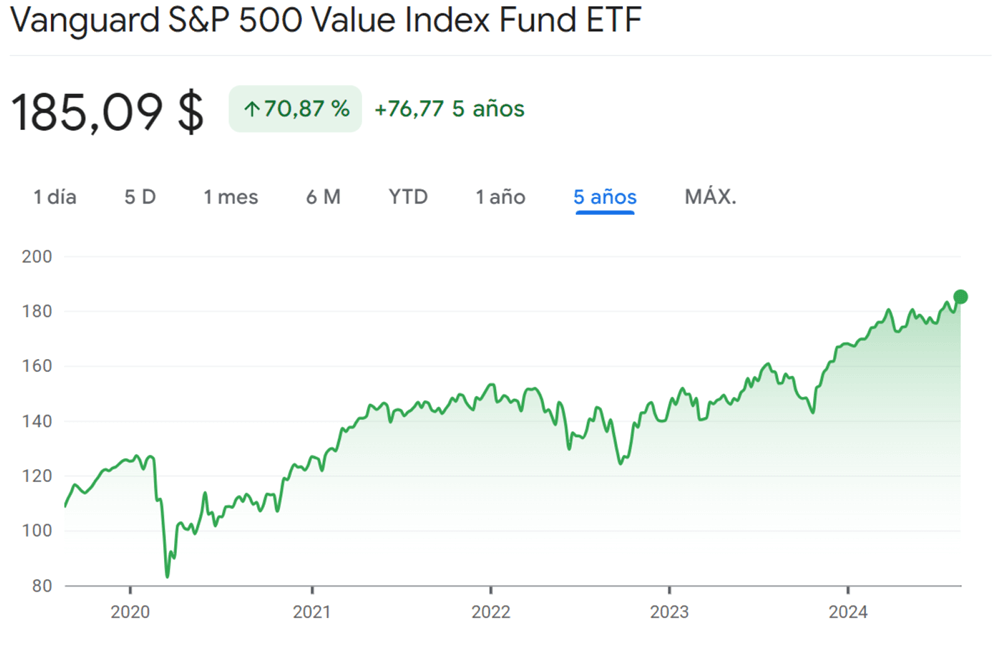
Maximize Your Returns with the Vanguard S&P 500 ETF: A Comprehensive Guide
The Vanguard S&P 500 ETF (VOO) is a popular investment vehicle that offers diversified exposure to the U.S. stock market. Tracking the S&P 500 index, this ETF provides investors with a simple and cost-effective way to participate in the performance of 500 of the largest publicly traded companies in the United States. Understanding the nuances of the Vanguard S&P 500 ETF, including its benefits, risks, and how it fits into a broader investment strategy, is crucial for making informed financial decisions. This guide will provide a comprehensive overview, helping you determine if the Vanguard S&P 500 ETF aligns with your investment goals.
Understanding the S&P 500 Index
The Standard & Poor’s 500 (S&P 500) is a market-capitalization-weighted index of the 500 largest publicly traded companies in the United States. It’s widely regarded as one of the best single gauges of large-cap U.S. equities. The index includes leading companies across various sectors, providing a broad representation of the U.S. economy. Changes in the S&P 500 are closely watched by investors and economists as an indicator of market sentiment and economic health. The S&P 500 is maintained by S&P Dow Jones Indices, a joint venture between S&P Global and CME Group.
What is the Vanguard S&P 500 ETF (VOO)?
The Vanguard S&P 500 ETF (VOO) is an exchange-traded fund that aims to track the performance of the S&P 500 index. It seeks to replicate the index by investing in the same stocks and in the same proportions as the S&P 500. VOO is managed by Vanguard, a well-respected investment management company known for its low-cost investment options. The ETF offers investors a convenient and affordable way to gain exposure to the broad U.S. stock market. With a low expense ratio, VOO is an attractive option for both novice and experienced investors looking to diversify their portfolios.
Key Features of the Vanguard S&P 500 ETF
- Low Expense Ratio: VOO boasts a very low expense ratio, making it a cost-effective investment option.
- Diversification: By tracking the S&P 500, VOO provides exposure to 500 of the largest U.S. companies across various sectors.
- Liquidity: As an ETF, VOO is highly liquid, meaning it can be easily bought and sold on the stock exchange.
- Transparency: The holdings of VOO are publicly available, allowing investors to see exactly what stocks the ETF owns.
- Tax Efficiency: ETFs are generally more tax-efficient than mutual funds, potentially reducing the tax burden on investors.
Benefits of Investing in the Vanguard S&P 500 ETF
Investing in the Vanguard S&P 500 ETF offers several advantages:
- Diversification: As mentioned earlier, VOO provides instant diversification across 500 of the largest U.S. companies. This helps to reduce the risk associated with investing in individual stocks.
- Low Cost: The low expense ratio of VOO makes it an affordable investment option, especially for long-term investors.
- Ease of Investment: VOO can be easily bought and sold through any brokerage account, making it accessible to a wide range of investors.
- Potential for Long-Term Growth: Historically, the S&P 500 has delivered strong long-term returns, making VOO a potentially attractive investment for those seeking capital appreciation.
- Passive Management: VOO is passively managed, meaning it simply tracks the S&P 500 index. This can result in lower costs and more predictable performance compared to actively managed funds.
Risks Associated with Investing in the Vanguard S&P 500 ETF
While the Vanguard S&P 500 ETF offers many benefits, it’s important to be aware of the potential risks:
- Market Risk: The value of VOO can fluctuate based on overall market conditions. A downturn in the stock market can negatively impact the ETF’s performance.
- Concentration Risk: While VOO is diversified across 500 companies, the index is weighted by market capitalization. This means that a few large companies can have a significant impact on the ETF’s performance.
- Sector Risk: Certain sectors may be overrepresented in the S&P 500, which could expose VOO to sector-specific risks.
- Tracking Error: Although VOO aims to track the S&P 500, there may be slight differences in performance due to factors such as expenses and trading costs.
- Inflation Risk: The returns from VOO may not keep pace with inflation, potentially eroding the real value of your investment.
How to Invest in the Vanguard S&P 500 ETF
Investing in the Vanguard S&P 500 ETF is a straightforward process:
- Open a Brokerage Account: You’ll need to open an account with a brokerage firm that allows you to trade ETFs.
- Fund Your Account: Deposit funds into your brokerage account using methods such as electronic transfer, check, or wire transfer.
- Search for VOO: Use the ticker symbol “VOO” to find the Vanguard S&P 500 ETF on your brokerage platform.
- Place Your Order: Enter the number of shares you want to buy and place your order. You can choose between a market order (to buy shares at the current market price) or a limit order (to buy shares at a specific price).
- Monitor Your Investment: Regularly review your investment portfolio to ensure that VOO continues to align with your financial goals.
Vanguard S&P 500 ETF vs. Other S&P 500 ETFs
While VOO is a popular choice, there are other S&P 500 ETFs available, such as the SPDR S&P 500 ETF Trust (SPY) and the iShares Core S&P 500 ETF (IVV). These ETFs are similar in that they all track the S&P 500 index. However, there may be slight differences in expense ratios, trading volume, and tracking error. Investors should compare these factors to determine which ETF best suits their needs. VOO often wins out due to its extremely low expense ratio. [See also: Comparing S&P 500 ETFs: SPY vs. IVV vs. VOO]
Incorporating the Vanguard S&P 500 ETF into Your Investment Strategy
The Vanguard S&P 500 ETF can be a valuable component of a well-diversified investment portfolio. It’s particularly suitable for:
- Long-Term Investors: Those with a long-term investment horizon can benefit from the potential for capital appreciation offered by the S&P 500.
- Passive Investors: Investors who prefer a passive investment approach can use VOO to easily track the performance of the broad U.S. stock market.
- Beginner Investors: VOO is a simple and affordable way for beginners to gain exposure to the stock market.
- Retirement Savers: VOO can be used as a core holding in a retirement account, such as a 401(k) or IRA.
Consider your risk tolerance, investment goals, and time horizon when determining how much of your portfolio to allocate to the Vanguard S&P 500 ETF. A financial advisor can provide personalized guidance based on your individual circumstances.
The Vanguard Advantage
Vanguard’s reputation for low-cost investing makes the Vanguard S&P 500 ETF a compelling choice. Vanguard’s unique ownership structure, where the funds are owned by their investors, allows them to operate at cost, passing the savings on to shareholders. This translates to lower expense ratios and potentially higher returns over the long term. The Vanguard S&P 500 is a cornerstone of many investment portfolios for good reason. [See also: Understanding Vanguard’s Unique Ownership Structure]
Conclusion
The Vanguard S&P 500 ETF (VOO) provides a convenient, cost-effective, and diversified way to invest in the U.S. stock market. By tracking the S&P 500 index, VOO offers exposure to 500 of the largest U.S. companies, making it a valuable tool for building a well-rounded investment portfolio. While it’s important to be aware of the potential risks, the benefits of diversification, low cost, and ease of investment make VOO an attractive option for a wide range of investors. Whether you’re a seasoned investor or just starting out, consider adding the Vanguard S&P 500 ETF to your portfolio to potentially maximize your returns over the long term. Always consult with a financial advisor to determine the best investment strategy for your individual needs and circumstances.
