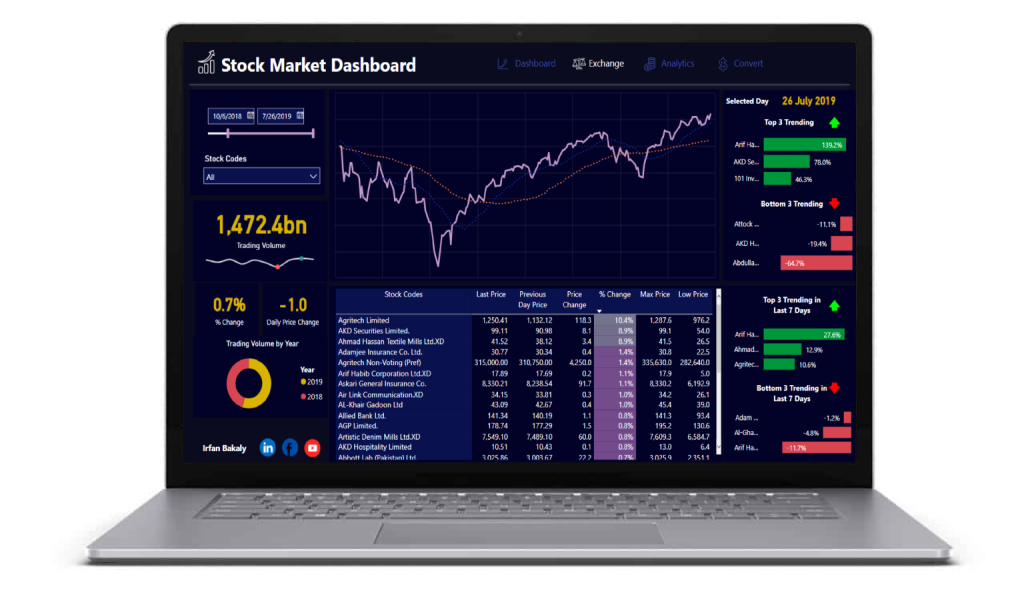
Navigating the Market: A Comprehensive Guide to Stock Analysis Forecasts
In the dynamic world of finance, making informed investment decisions is paramount. This is where stock analysis forecasts come into play. These forecasts, derived from a variety of analytical methods, aim to predict the future performance of stocks. Understanding how these forecasts are generated and their limitations is crucial for any investor, from beginners to seasoned professionals. This article provides a comprehensive overview of stock analysis forecasts, exploring their methodologies, benefits, and potential pitfalls.
Understanding Stock Analysis
Before diving into forecasts, it’s essential to understand the underlying principles of stock analysis. At its core, stock analysis involves evaluating a company’s financial health, industry position, and overall economic environment to determine the intrinsic value of its stock. This intrinsic value is then compared to the current market price to identify potential investment opportunities. There are two primary approaches to stock analysis: fundamental analysis and technical analysis.
Fundamental Analysis
Fundamental analysis focuses on a company’s intrinsic value by examining its financial statements, management, competitive advantages, and industry dynamics. Key metrics used in fundamental analysis include:
- Earnings per Share (EPS): A measure of a company’s profitability.
- Price-to-Earnings (P/E) Ratio: Compares a company’s stock price to its earnings per share.
- Debt-to-Equity Ratio: Indicates the proportion of debt and equity a company uses to finance its assets.
- Return on Equity (ROE): Measures a company’s profitability relative to shareholder equity.
Analysts using fundamental analysis create stock analysis forecasts by projecting future financial performance based on these metrics and other qualitative factors. They might consider factors such as new product launches, changes in management, or shifts in the competitive landscape. [See also: Understanding Financial Ratios for Investment Decisions]
Technical Analysis
Technical analysis, on the other hand, focuses on historical price and volume data to identify patterns and trends that can predict future price movements. Technical analysts use charts and indicators to identify potential buy and sell signals. Common technical indicators include:
- Moving Averages: Smooth out price data to identify trends.
- Relative Strength Index (RSI): Measures the magnitude of recent price changes to evaluate overbought or oversold conditions.
- Moving Average Convergence Divergence (MACD): A trend-following momentum indicator that shows the relationship between two moving averages of a security’s price.
- Fibonacci Retracements: Used to identify potential support and resistance levels based on Fibonacci ratios.
Stock analysis forecasts generated through technical analysis rely on the belief that history tends to repeat itself and that price patterns can provide insights into future price movements. These forecasts are often shorter-term in nature compared to those derived from fundamental analysis. [See also: Mastering Technical Analysis for Stock Trading]
Methods of Stock Analysis Forecasting
Several methods are employed to generate stock analysis forecasts, each with its own strengths and weaknesses.
Quantitative Analysis
Quantitative analysis involves using mathematical and statistical models to analyze financial data and generate forecasts. This approach relies heavily on data and algorithms, minimizing subjective judgment. Common quantitative techniques include:
- Regression Analysis: Identifies the relationship between a dependent variable (e.g., stock price) and one or more independent variables (e.g., interest rates, economic growth).
- Time Series Analysis: Analyzes historical data points collected over time to identify patterns and trends.
- Monte Carlo Simulation: Uses random sampling to simulate possible outcomes and assess the probability of different scenarios.
Quantitative analysts build stock analysis forecasts based on these models, aiming to identify undervalued or overvalued stocks. [See also: The Power of Quantitative Analysis in Investing]
Qualitative Analysis
Qualitative analysis involves assessing non-numerical factors that can influence a company’s performance, such as management quality, brand reputation, and regulatory environment. This approach relies on subjective judgment and expert opinions.
Qualitative analysts might conduct interviews with industry experts, analyze news articles, and assess a company’s corporate governance to form their stock analysis forecasts. While qualitative analysis can be subjective, it can provide valuable insights that quantitative models may miss. [See also: The Importance of Qualitative Factors in Investment Decisions]
Combining Quantitative and Qualitative Analysis
Many analysts believe that the most effective approach to stock analysis forecasting involves combining both quantitative and qualitative methods. By integrating data-driven insights with subjective judgment, analysts can gain a more comprehensive understanding of a company’s prospects.
For example, an analyst might use quantitative models to identify undervalued stocks based on financial metrics, but then conduct qualitative research to assess the company’s management team and competitive advantages before making an investment decision. This integrated approach can lead to more informed and accurate stock analysis forecasts.
Interpreting Stock Analysis Forecasts
It’s crucial to understand how to interpret stock analysis forecasts and their limitations. Here are some key considerations:
- Forecast Accuracy: No forecast is perfect. Market conditions can change rapidly, and unforeseen events can impact stock prices. Always consider the historical accuracy of the analyst or firm providing the forecast.
- Time Horizon: Stock analysis forecasts can range from short-term (days or weeks) to long-term (years). Ensure that the forecast’s time horizon aligns with your investment goals.
- Assumptions: Understand the assumptions underlying the forecast. What economic conditions are assumed? What are the company’s growth expectations? Be aware of how changes in these assumptions could affect the forecast.
- Multiple Perspectives: Don’t rely on a single forecast. Seek out multiple perspectives and compare different stock analysis forecasts to get a more balanced view.
Benefits of Using Stock Analysis Forecasts
Despite their limitations, stock analysis forecasts can provide several benefits to investors:
- Informed Decision-Making: Forecasts can help investors make more informed decisions by providing insights into a company’s potential future performance.
- Risk Management: By understanding potential risks and opportunities, investors can better manage their portfolio risk.
- Identifying Opportunities: Forecasts can help investors identify undervalued stocks or emerging trends that they might otherwise miss.
- Time Savings: Analyzing stocks can be time-consuming. Forecasts can save investors time by providing a condensed analysis of a company’s prospects.
Risks and Limitations of Stock Analysis Forecasts
It’s equally important to be aware of the risks and limitations of stock analysis forecasts:
- Inaccuracy: As mentioned earlier, no forecast is perfect. Market conditions can change unexpectedly, and unforeseen events can disrupt even the most carefully crafted forecasts.
- Bias: Analysts may have biases, either intentional or unintentional, that can influence their forecasts. Be aware of potential conflicts of interest.
- Overreliance: Don’t rely solely on stock analysis forecasts. Conduct your own research and due diligence before making any investment decisions.
- Complexity: Some forecasting models can be complex and difficult to understand. Ensure that you understand the methodology and assumptions behind the forecast before using it.
Tools and Resources for Stock Analysis Forecasting
Numerous tools and resources are available to assist investors in stock analysis forecasting:
- Financial News Websites: Websites like Bloomberg, Reuters, and the Wall Street Journal provide news, analysis, and data on publicly traded companies.
- Financial Data Providers: Companies like Refinitiv, FactSet, and S&P Capital IQ provide comprehensive financial data and analytics tools.
- Brokerage Platforms: Many brokerage platforms offer research reports, stock analysis forecasts, and charting tools.
- Investment Research Firms: Firms like Morningstar, Zacks Investment Research, and Value Line provide independent research reports and stock analysis forecasts.
The Future of Stock Analysis Forecasting
The field of stock analysis forecasting is constantly evolving. Advances in technology, such as artificial intelligence (AI) and machine learning (ML), are transforming the way analysts generate forecasts.
AI and ML algorithms can analyze vast amounts of data and identify patterns that humans might miss. These technologies are being used to develop more sophisticated forecasting models that can adapt to changing market conditions.
However, it’s important to remember that technology is just a tool. Human judgment and expertise will continue to play a crucial role in stock analysis forecasting. The most effective approach is likely to be a combination of AI-powered analytics and human insight.
Conclusion
Stock analysis forecasts can be valuable tools for investors, providing insights into a company’s potential future performance. However, it’s crucial to understand their limitations and to use them in conjunction with your own research and due diligence. By understanding the methodologies, benefits, and risks of stock analysis forecasts, investors can make more informed decisions and improve their chances of success in the market. Remember to consider multiple perspectives, understand the underlying assumptions, and never rely solely on forecasts without conducting your own thorough analysis. The world of stock analysis and stock analysis forecasts is complex, but with the right knowledge and approach, you can navigate it successfully.
