Navigating the Murky Waters: Understanding Stock Price Predictions
The allure of predicting the future, particularly when it comes to financial markets, is undeniable. Stock price predictions are a constant topic of discussion among investors, analysts, and even casual observers. The potential to anticipate market movements and capitalize on them is a powerful motivator. However, the reality of accurately forecasting stock prices is far more complex than many realize. This article aims to delve into the intricacies of stock price predictions, exploring the methodologies used, the challenges faced, and the overall reliability of these forecasts.
The Allure and the Challenge of Predicting Stock Prices
The stock market, by its very nature, is dynamic and unpredictable. A multitude of factors, ranging from macroeconomic trends to company-specific news, can influence stock prices. This inherent complexity makes accurate prediction a formidable task. While various models and techniques exist to analyze historical data and identify potential patterns, no method can guarantee future success. The challenge lies in the fact that the future is not simply a linear extrapolation of the past; unforeseen events and shifts in investor sentiment can dramatically alter market trajectories.
Methods Employed in Stock Price Predictions
Several approaches are used in an attempt to forecast stock price movements. These methods can be broadly categorized into two main groups: fundamental analysis and technical analysis.
Fundamental Analysis
Fundamental analysis involves evaluating a company’s intrinsic value by examining its financial statements, industry trends, and overall economic outlook. Analysts using this approach look at factors such as revenue growth, profitability, debt levels, and management quality to determine whether a stock is undervalued or overvalued. Based on this assessment, they may make predictions about future stock price performance. For example, a company with strong earnings growth and a solid balance sheet might be considered a good investment, leading to a prediction of future price appreciation.
Technical Analysis
Technical analysis, on the other hand, focuses on studying historical stock price and volume data to identify patterns and trends. Technical analysts use charts and indicators to identify potential buy and sell signals. They believe that market psychology and investor behavior can be predictive of future price movements, regardless of the underlying fundamentals of the company. Common technical indicators include moving averages, relative strength index (RSI), and Fibonacci retracements. A technical analyst might, for instance, identify a “head and shoulders” pattern on a stock chart and predict a subsequent price decline.
Quantitative Analysis
Quantitative analysis, or quant analysis, uses mathematical and statistical models to identify trading opportunities. Quants develop algorithms that analyze vast amounts of data to find patterns and correlations that may not be apparent to human analysts. These algorithms can be used to make stock price predictions based on a variety of factors, including economic indicators, market sentiment, and news events. The advantage of quantitative analysis is its ability to process large amounts of data quickly and objectively, potentially identifying opportunities that might be missed by traditional methods.
Machine Learning and AI in Stock Price Prediction
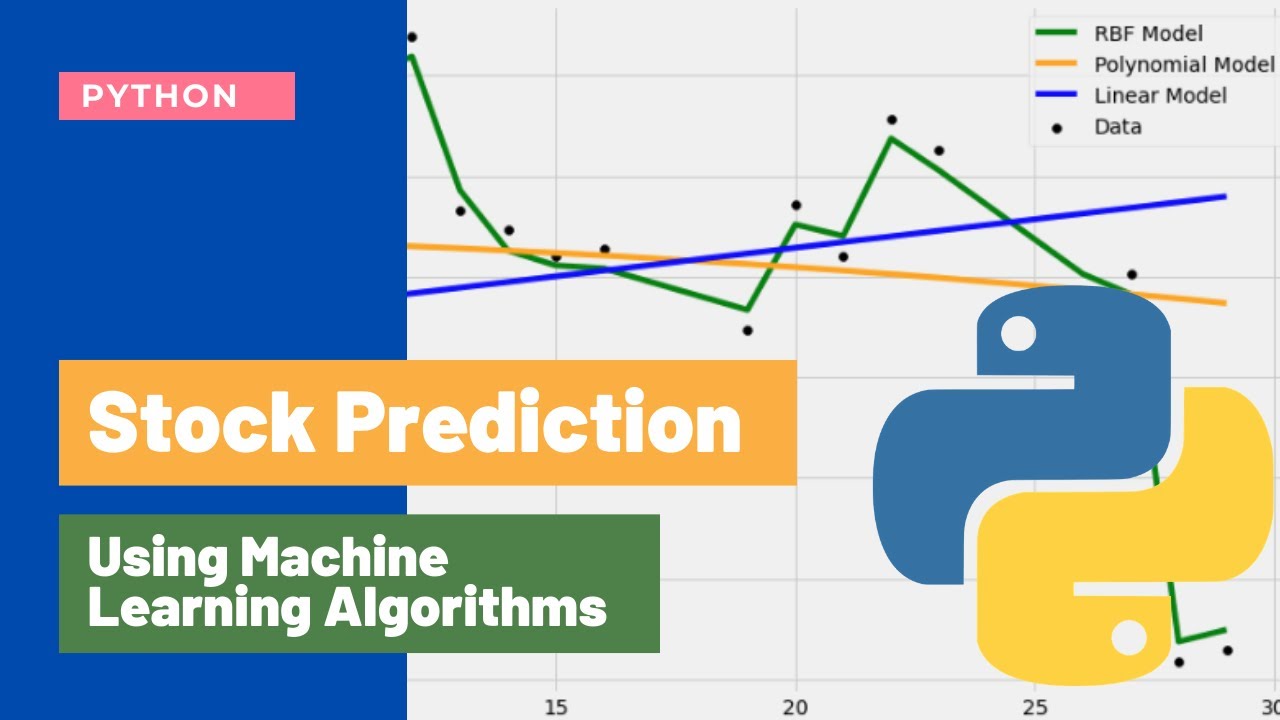
The rise of machine learning and artificial intelligence (AI) has opened up new possibilities in the field of stock price predictions. These technologies can analyze vast datasets and identify complex patterns that are difficult for humans to discern. Machine learning algorithms can be trained on historical stock price data, financial news, and social media sentiment to predict future price movements. While AI-powered stock price predictions show promise, it’s important to remember that these models are only as good as the data they are trained on. Furthermore, market conditions can change rapidly, rendering even the most sophisticated AI models ineffective. [See also: The Role of Artificial Intelligence in Finance]
Factors Influencing Stock Prices
Understanding the factors that influence stock prices is crucial for anyone attempting to make predictions. These factors can be broadly categorized into macroeconomic, company-specific, and market sentiment factors.
Macroeconomic Factors
Macroeconomic factors, such as interest rates, inflation, and economic growth, can have a significant impact on stock prices. For example, rising interest rates can make borrowing more expensive for companies, which can lead to lower earnings and a decline in stock prices. Conversely, strong economic growth can boost corporate profits and drive stock prices higher. Inflation can also play a role, as it can erode corporate earnings and reduce consumer spending. Monitoring these macroeconomic indicators is essential for understanding the broader economic context in which companies operate and for making informed stock price predictions.
Company-Specific Factors
Company-specific factors, such as earnings reports, new product launches, and management changes, can also influence stock prices. Positive news about a company, such as better-than-expected earnings or a successful new product launch, can lead to a surge in its stock price. Conversely, negative news, such as a disappointing earnings report or a product recall, can cause the stock price to decline. Investors closely monitor company-specific news and events to assess the health and prospects of individual companies and to make informed investment decisions. [See also: Analyzing Company Financial Statements]
Market Sentiment
Market sentiment, which refers to the overall attitude of investors towards the stock market, can also play a significant role in stock price movements. Positive market sentiment, often referred to as a “bull market,” can drive stock prices higher, even if there is no fundamental reason for the increase. Conversely, negative market sentiment, known as a “bear market,” can cause stock prices to decline, even if companies are performing well. Market sentiment can be influenced by a variety of factors, including economic news, political events, and investor psychology. Understanding market sentiment is important for gauging the overall mood of the market and for anticipating potential price swings.
The Accuracy of Stock Price Predictions: A Reality Check
While the pursuit of accurate stock price predictions is a constant endeavor, it’s crucial to acknowledge the inherent limitations of these forecasts. Numerous studies have shown that consistently outperforming the market is extremely difficult, and even professional analysts often struggle to accurately predict stock price movements. The Efficient Market Hypothesis (EMH) suggests that stock prices already reflect all available information, making it impossible to consistently beat the market through analysis or prediction. While the EMH is a subject of ongoing debate, it highlights the challenges of achieving consistently accurate stock price predictions.
It is vital to approach stock price predictions with a healthy dose of skepticism. Relying solely on forecasts without conducting independent research and due diligence can be a risky strategy. Instead, consider stock price predictions as one piece of information among many, and always make investment decisions based on your own analysis and risk tolerance. [See also: Risk Management Strategies for Investors]
The Role of Stock Price Predictions in Investment Decisions
Despite their limitations, stock price predictions can still play a valuable role in investment decision-making. They can provide insights into potential market trends and help investors identify opportunities and risks. However, it’s important to use stock price predictions responsibly and to avoid relying on them as the sole basis for investment decisions.
Here are some ways stock price predictions can be used effectively:
- Generating ideas: Stock price predictions can help investors generate ideas for potential investments. By identifying stocks that are predicted to perform well, investors can focus their research on those companies and assess whether they are a good fit for their portfolio.
- Assessing risk: Stock price predictions can also help investors assess the potential risks associated with an investment. If a stock is predicted to decline in value, investors can consider reducing their exposure to that stock or avoiding it altogether.
- Informing trading strategies: Stock price predictions can be used to inform trading strategies. For example, an investor might use a prediction of rising stock prices to justify buying a particular stock, or a prediction of falling stock prices to justify selling a stock short.
Ultimately, the key to using stock price predictions effectively is to combine them with other sources of information and to exercise sound judgment. Don’t rely solely on forecasts, but use them as one tool among many in your investment decision-making process.
Conclusion: Navigating the Uncertainty
Stock price predictions will likely remain a captivating subject for investors and analysts alike. While the quest for perfect accuracy may be unattainable, understanding the methodologies, limitations, and influencing factors behind these forecasts is crucial for making informed investment decisions. By approaching stock price predictions with a critical and discerning eye, investors can navigate the inherent uncertainty of the stock market and increase their chances of achieving their financial goals. The key is to remember that stock price predictions are just one piece of the puzzle, and a well-rounded investment strategy requires a combination of research, analysis, and disciplined risk management.
