Navigating Tomorrow’s Markets: A Practical Guide to Stock Prediction
The allure of predicting the stock market’s movements has captivated investors for generations. The idea of knowing, with some degree of certainty, whether a stock will rise or fall tomorrow is undeniably compelling. While a crystal ball remains elusive, advancements in data science, machine learning, and financial modeling have equipped investors with sophisticated tools for stock prediction. This article provides a practical, fact-checked guide to understanding the complexities of stock prediction for tomorrow, exploring the methodologies, challenges, and responsible applications of these techniques.
Understanding the Fundamentals of Stock Prediction
Before diving into advanced techniques, it’s crucial to grasp the fundamental factors influencing stock prices. These can be broadly categorized into:
- Financial Performance: A company’s revenue, earnings, profit margins, and debt levels directly impact its stock value. Analyzing financial statements (balance sheets, income statements, cash flow statements) provides insights into a company’s financial health.
- Economic Indicators: Macroeconomic factors such as GDP growth, inflation rates, interest rates, and unemployment figures can significantly influence investor sentiment and market performance.
- Industry Trends: Understanding the dynamics of the industry in which a company operates is essential. Factors like technological advancements, regulatory changes, and competitive landscape can all affect stock prices.
- Company News and Events: Announcements of new products, mergers, acquisitions, earnings reports, and management changes can cause significant price fluctuations.
- Market Sentiment: Investor psychology and overall market mood can drive short-term price movements. Factors like fear, greed, and herd behavior can create volatility.
Methods for Stock Prediction
Various methods are employed for stock prediction, each with its own strengths and limitations.
Technical Analysis
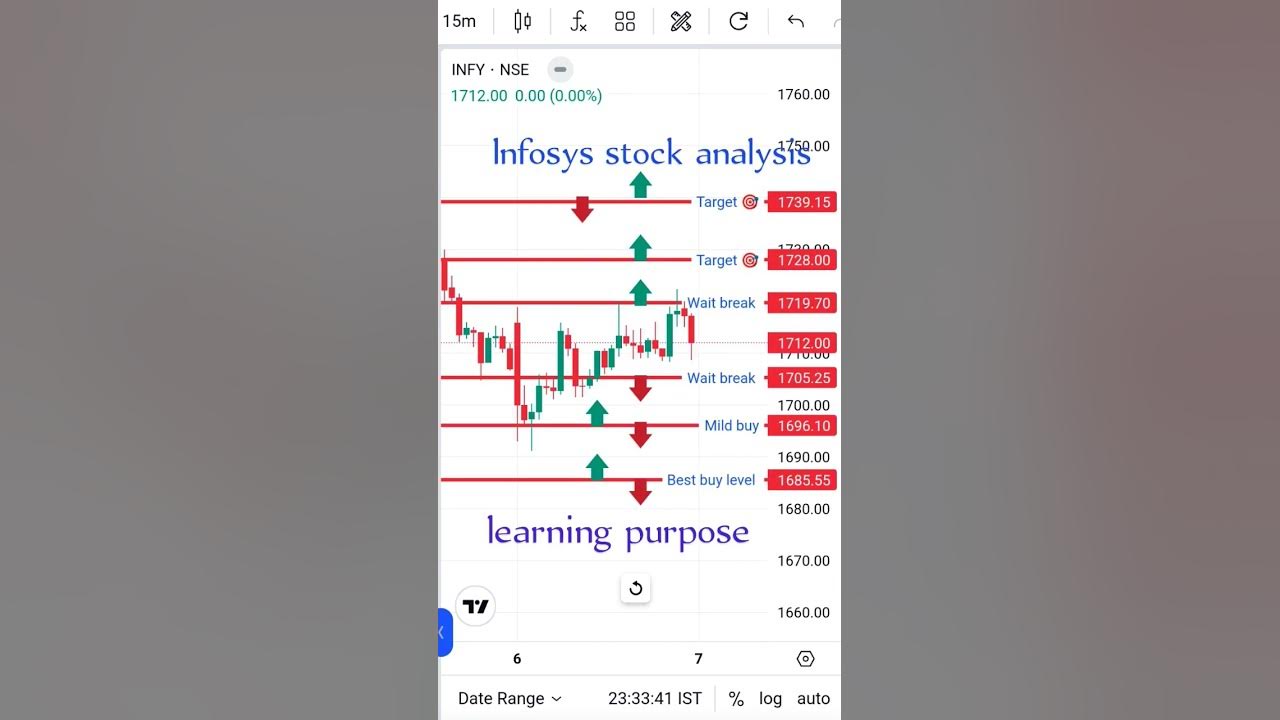
Technical analysis involves studying historical price and volume data to identify patterns and trends. Technical analysts use charts, indicators, and oscillators to predict future price movements. Common technical indicators include moving averages, relative strength index (RSI), and Moving Average Convergence Divergence (MACD). While technical analysis can be useful for identifying short-term trading opportunities, its effectiveness for long-term stock prediction is debated.
Fundamental Analysis
Fundamental analysis focuses on evaluating a company’s intrinsic value by examining its financial statements, industry position, and competitive landscape. Fundamental analysts use ratios like price-to-earnings (P/E), price-to-book (P/B), and debt-to-equity (D/E) to assess a company’s valuation and profitability. This approach is generally considered more suitable for long-term investment decisions rather than predicting stock prediction for tomorrow.
Quantitative Analysis
Quantitative analysis (quant) uses mathematical and statistical models to identify investment opportunities. Quants develop algorithms that analyze vast amounts of data to detect patterns and predict price movements. These models often incorporate technical indicators, fundamental data, and economic indicators. While quant models can be highly sophisticated, they are not foolproof and can be vulnerable to unexpected market events.
Machine Learning
Machine learning (ML) has emerged as a powerful tool for stock prediction. ML algorithms can learn from historical data and identify complex patterns that humans may miss. Common ML techniques used in stock prediction include:
- Regression Models: Linear regression, polynomial regression, and support vector regression can be used to predict stock prices based on various input variables.
- Classification Models: Logistic regression, support vector machines (SVM), and decision trees can be used to classify stocks as buy, sell, or hold.
- Neural Networks: Artificial neural networks (ANNs), including recurrent neural networks (RNNs) and long short-term memory (LSTM) networks, are particularly well-suited for analyzing time-series data and predicting future stock prices.
The effectiveness of machine learning models depends on the quality and quantity of data used for training. Overfitting, where the model performs well on the training data but poorly on unseen data, is a common challenge. [See also: Avoiding Overfitting in Machine Learning Models] Regularization techniques and cross-validation can help mitigate overfitting.
Challenges in Stock Prediction
Stock prediction is inherently challenging due to the complexity and unpredictability of financial markets. Some of the key challenges include:
- Market Volatility: Unexpected events, such as geopolitical tensions, economic crises, and natural disasters, can cause significant market volatility and disrupt even the most sophisticated prediction models.
- Data Quality: The accuracy of stock prediction models depends on the quality of the data used for training. Inaccurate or incomplete data can lead to flawed predictions.
- Overfitting: As mentioned earlier, overfitting is a common problem in machine learning. Models that are too complex may memorize the training data but fail to generalize to new data.
- Black Swan Events: Nassim Nicholas Taleb coined the term “black swan” to describe rare, unpredictable events that have a significant impact on the market. These events are difficult to predict and can invalidate even the most carefully constructed models.
- Regulatory Changes: Changes in regulations can impact market dynamics and affect the accuracy of stock prediction models.
Ethical Considerations
The use of stock prediction models raises ethical concerns. It’s crucial to use these tools responsibly and avoid:
- Market Manipulation: Using prediction models to manipulate stock prices or engage in insider trading is illegal and unethical.
- Bias: Prediction models can perpetuate existing biases in the data, leading to unfair or discriminatory outcomes.
- Lack of Transparency: The complexity of some prediction models can make it difficult to understand how they arrive at their conclusions. Transparency is essential for accountability and trust.
Practical Tips for Using Stock Prediction Models
If you’re considering using stock prediction models, here are some practical tips:
- Start with a Solid Foundation: Understand the fundamentals of finance and investing before diving into advanced prediction techniques.
- Choose the Right Model: Select a model that is appropriate for your investment goals and risk tolerance.
- Use Multiple Models: Combining multiple models can improve accuracy and reduce the risk of relying on a single model.
- Backtest Your Models: Test your models on historical data to evaluate their performance and identify potential weaknesses.
- Monitor Your Models: Continuously monitor your models and adjust them as needed based on market conditions.
- Don’t Rely Solely on Predictions: Use stock prediction models as one tool among many in your investment decision-making process. Consider other factors, such as your financial goals, risk tolerance, and investment horizon.
- Be Aware of Limitations: Recognize that no prediction model is perfect, and there is always a risk of loss.
The Future of Stock Prediction
The field of stock prediction is constantly evolving. As technology advances, we can expect to see even more sophisticated models and techniques emerge. The increasing availability of data, the growing power of computing, and the development of new algorithms are all driving innovation in this area. However, it’s important to remember that stock prediction will always be subject to uncertainty and risk. [See also: The Role of Artificial Intelligence in Financial Markets] The key is to use these tools responsibly and ethically, and to always be aware of their limitations.
While predicting the stock market with absolute certainty remains an unattainable goal, understanding the tools and techniques available for stock prediction for tomorrow can empower investors to make more informed decisions and navigate the complexities of the financial markets with greater confidence. Remember to always conduct thorough research, consider your own risk tolerance, and consult with a financial advisor before making any investment decisions. The dream of accurately predicting stock prediction outcomes remains, but a grounded and informed approach is crucial for success.
