Navigating Uncertainty: Stock Market Predictions and Investment Strategies
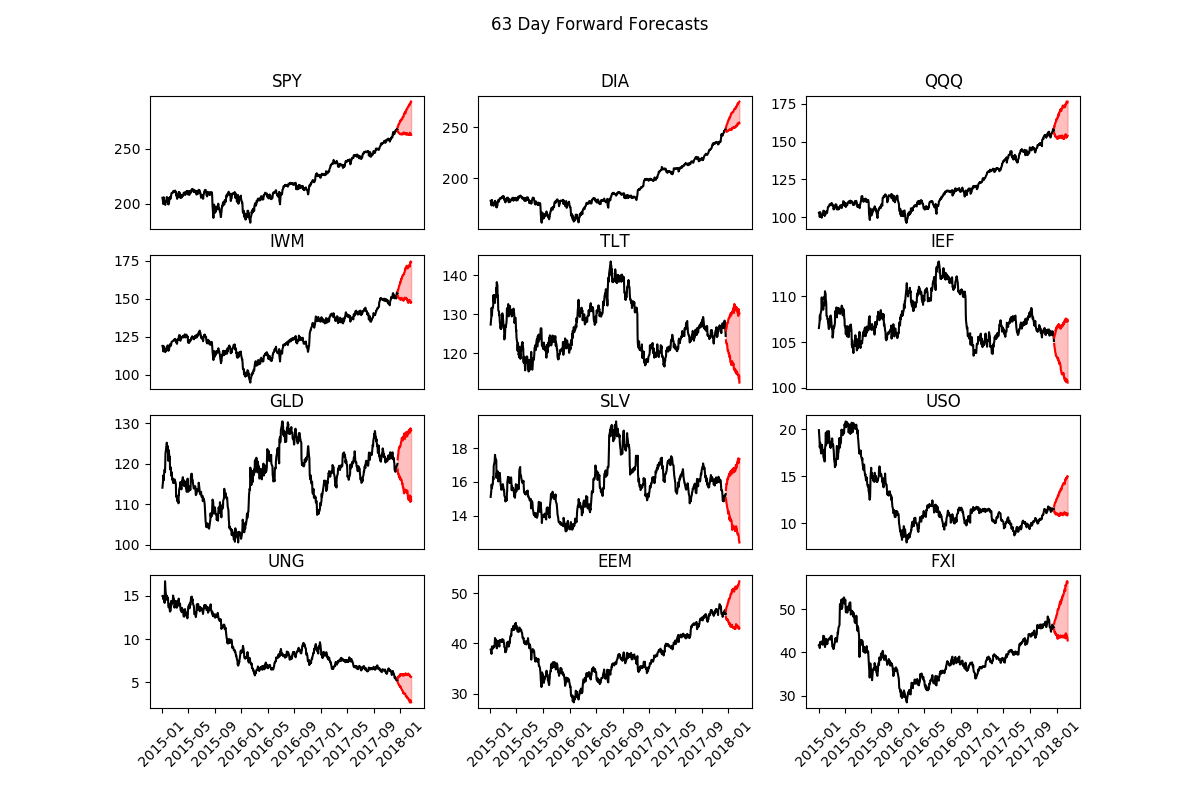
The allure of predicting the future of the stock market is undeniable. Investors, analysts, and even casual observers are constantly seeking insights into where the market is headed. While definitive stock market predictions remain elusive, understanding the factors influencing market movements and adopting sound investment strategies can significantly improve one’s chances of success. This article explores the complexities of stock market predictions, examines various forecasting methods, and provides practical guidance for navigating the inherent uncertainties of the market.
The Illusion of Certainty in Stock Market Predictions
Attempting to predict the stock market is akin to forecasting the weather months in advance. Numerous variables, many of which are unpredictable, contribute to market fluctuations. Economic indicators, geopolitical events, technological advancements, and even investor sentiment can all play a role. Therefore, any stock market prediction should be viewed with a healthy dose of skepticism.
Historical data can provide valuable insights, but it is not a foolproof predictor of future performance. Past trends may not necessarily repeat themselves, and unforeseen events can quickly disrupt established patterns. Overreliance on historical data can lead to flawed assumptions and poor investment decisions. It’s crucial to remember that the stock market is a dynamic and ever-evolving system.
Methods for Forecasting Stock Market Trends
Despite the inherent challenges, various methods are employed to forecast stock market trends. These methods can be broadly categorized into technical analysis, fundamental analysis, and sentiment analysis.
Technical Analysis
Technical analysis involves studying past market data, such as price charts and trading volumes, to identify patterns and predict future price movements. Technical analysts use a variety of indicators, such as moving averages, relative strength index (RSI), and Fibonacci retracements, to assess market trends and identify potential buying or selling opportunities. While technical analysis can be useful for short-term trading, its effectiveness for long-term stock market predictions is debatable.
Fundamental Analysis
Fundamental analysis focuses on evaluating the intrinsic value of a company or a market by examining its financial statements, industry trends, and overall economic conditions. Fundamental analysts consider factors such as revenue growth, profitability, debt levels, and competitive landscape to assess the long-term prospects of a company or a market. Fundamental analysis is often used to identify undervalued or overvalued assets and make informed investment decisions. It’s a cornerstone of long-term investment strategies and can be used to inform broader stock market predictions.
Sentiment Analysis
Sentiment analysis involves gauging investor sentiment and market psychology to predict future market movements. Sentiment analysis can be based on various sources of information, such as news articles, social media posts, and investor surveys. A common indicator is the VIX, or volatility index, which measures market expectations of near-term volatility. High volatility often indicates fear and uncertainty, potentially signaling a market downturn. Analyzing sentiment can provide a contrarian perspective, identifying opportunities when the crowd is overly pessimistic or optimistic. However, predicting market movements solely based on sentiment can be risky, as emotions can be volatile and unpredictable. Sentiment analysis can contribute to overall stock market predictions, but it is not a standalone solution.
The Role of Economic Indicators in Stock Market Predictions
Economic indicators provide valuable insights into the overall health of the economy and can influence stock market performance. Key economic indicators include:
- Gross Domestic Product (GDP): A measure of the total value of goods and services produced in a country.
- Inflation Rate: The rate at which the general level of prices for goods and services is rising.
- Unemployment Rate: The percentage of the labor force that is unemployed.
- Interest Rates: The cost of borrowing money.
- Consumer Confidence Index: A measure of consumer optimism about the economy.
Strong economic indicators generally support a positive outlook for the stock market, while weak economic indicators can signal a potential downturn. However, the relationship between economic indicators and stock market performance is not always straightforward, as the market can react differently to the same economic data depending on prevailing market conditions and investor expectations. Incorporating economic data into stock market predictions requires careful analysis and understanding of the underlying dynamics.
The Impact of Geopolitical Events on Stock Market Predictions
Geopolitical events, such as wars, political instability, and trade disputes, can have a significant impact on stock market performance. These events can create uncertainty and volatility in the market, leading to sharp price swings. For example, a sudden escalation of tensions in a politically sensitive region can trigger a sell-off in the stock market as investors seek to reduce their exposure to risk. Similarly, a trade war between major economies can disrupt global supply chains and negatively impact corporate earnings. Investors need to stay informed about geopolitical developments and assess their potential impact on their investment portfolios. Incorporating geopolitical factors into stock market predictions is challenging, as these events are often unpredictable and their impact can be difficult to quantify.
Building a Resilient Investment Strategy Amidst Uncertainty
Given the inherent uncertainties of the stock market, it is crucial to adopt a resilient investment strategy that can withstand market fluctuations. Here are some key principles to consider:
- Diversification: Spreading your investments across different asset classes, industries, and geographic regions to reduce risk.
- Long-Term Perspective: Focusing on long-term growth rather than short-term gains.
- Dollar-Cost Averaging: Investing a fixed amount of money at regular intervals, regardless of market conditions.
- Risk Management: Assessing your risk tolerance and adjusting your investment portfolio accordingly.
- Staying Informed: Keeping abreast of market trends, economic developments, and geopolitical events.
By following these principles, investors can build a portfolio that is well-positioned to weather market storms and achieve their long-term financial goals. Remember that reacting emotionally to stock market volatility can often lead to poor decisions. A disciplined approach, grounded in research and a long-term perspective, is essential for success.
The Future of Stock Market Predictions: AI and Machine Learning
The rise of artificial intelligence (AI) and machine learning (ML) is transforming many industries, and the stock market is no exception. AI and ML algorithms can analyze vast amounts of data, identify patterns, and make predictions with greater speed and accuracy than humans. These technologies are being used to develop sophisticated trading strategies, manage risk, and provide personalized investment advice. However, it is important to note that AI and ML are not foolproof. Their performance depends on the quality of the data they are trained on, and they can be susceptible to biases and errors. While AI and ML have the potential to improve stock market predictions, they should be used with caution and combined with human judgment.
Conclusion: Embracing Uncertainty and Making Informed Decisions
While the quest for accurate stock market predictions continues, it is essential to recognize the inherent uncertainties of the market and avoid relying solely on forecasts. Instead, investors should focus on building a well-diversified portfolio, adopting a long-term perspective, and staying informed about market trends and economic developments. By embracing uncertainty and making informed decisions based on sound principles, investors can increase their chances of achieving their financial goals, regardless of short-term market fluctuations. Remember, successful investing is a marathon, not a sprint. A disciplined approach, combined with a healthy dose of skepticism about stock market predictions, is the key to long-term success.
Ultimately, the best strategy is to educate yourself, understand your risk tolerance, and make informed decisions based on your own research and analysis. Don’t let the allure of quick profits or the fear of missing out cloud your judgment. A well-thought-out investment plan, consistently executed, is far more likely to lead to financial success than chasing elusive stock market predictions. [See also: Understanding Market Volatility] [See also: Building a Diversified Portfolio] [See also: The Role of Fundamental Analysis in Investing]
