Parabolic Meaning in Stocks: Understanding Exponential Growth
In the dynamic world of stock trading, understanding different price patterns is crucial for making informed investment decisions. One such pattern is the parabolic movement, a term frequently used to describe a stock’s price trajectory. But what exactly is the parabolic meaning in stocks? This article delves into the concept of parabolic moves, exploring its characteristics, potential causes, and how traders can identify and react to it.
What is a Parabolic Move in Stocks?
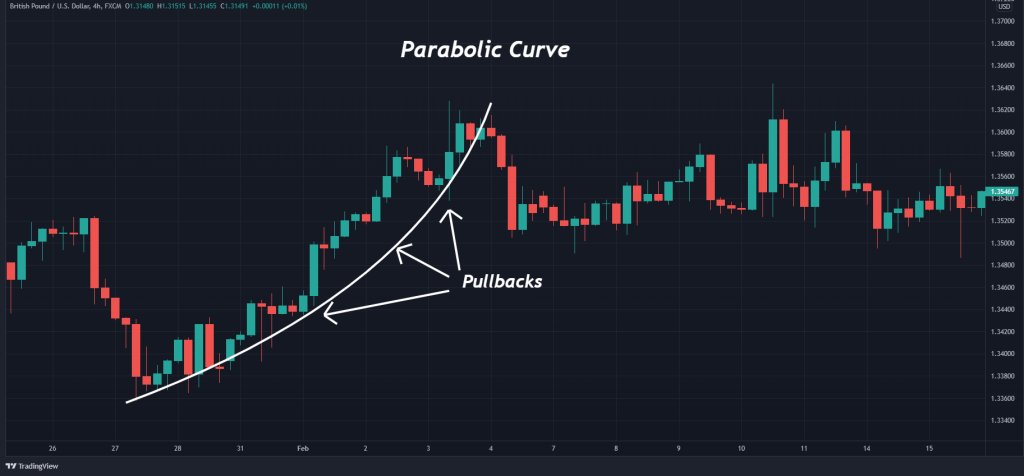
A parabolic move in stocks refers to a rapid and exponential increase in a stock’s price over a relatively short period. The price chart resembles a parabola, a U-shaped curve that becomes increasingly steep as it rises. This type of movement is characterized by aggressive buying pressure and often fueled by strong positive sentiment or news surrounding the company.
The parabolic meaning in stocks isn’t just about the shape of the price chart; it signifies a potentially unsustainable surge. While early investors might reap substantial profits, the rapid ascent also carries a high risk of a sharp correction or reversal. Understanding this risk is paramount for any trader considering entering or exiting a stock exhibiting parabolic behavior.
Characteristics of a Parabolic Stock
Several key characteristics define a stock undergoing a parabolic move:
- Steep Price Increase: The most obvious sign is a rapid and significant increase in price, often exceeding typical daily or weekly gains.
- High Trading Volume: Parabolic moves are usually accompanied by a surge in trading volume, indicating heightened interest and participation.
- Positive News or Sentiment: A catalyst, such as a positive earnings report, a groundbreaking product announcement, or favorable industry trends, often triggers the initial surge.
- Fear of Missing Out (FOMO): As the price continues to climb, the fear of missing out on potential profits can drive even more investors to buy, further accelerating the parabolic move.
- Unsustainable Momentum: The rate of price increase is generally unsustainable in the long term, making a correction or reversal inevitable.
Causes of Parabolic Moves
Several factors can contribute to a stock’s parabolic rise:
- Strong Earnings Growth: Exceptional financial performance can attract investors and drive up demand for the stock.
- Breakthrough Innovation: A company introducing a disruptive technology or product can generate significant excitement and investment.
- Positive Industry Trends: Favorable conditions within a specific industry can benefit companies operating in that sector.
- Short Squeezes: When a heavily shorted stock experiences a sudden price increase, short sellers may be forced to cover their positions, further driving up the price.
- Social Media Hype: In the age of social media, viral trends and online communities can significantly influence stock prices, sometimes leading to parabolic moves.
Identifying Parabolic Moves
Identifying potential parabolic moves requires a combination of technical analysis and fundamental research. Here are some tools and techniques traders can use:
- Price Charts: Visually inspect price charts for a rapid and exponential increase in price. Look for a U-shaped pattern that becomes increasingly steep.
- Volume Analysis: Monitor trading volume for a significant increase, which often accompanies parabolic moves.
- Relative Strength Index (RSI): The RSI is a momentum indicator that can help identify overbought conditions. An RSI reading above 70 often suggests that a stock is overbought and may be due for a correction.
- Moving Averages: Compare the current price to moving averages. A stock trading significantly above its moving averages may be in a parabolic move.
- News and Sentiment Analysis: Stay informed about news and events that could potentially trigger a parabolic move. Monitor social media and online forums for signs of hype and speculation.
Risks Associated with Parabolic Moves
While parabolic moves can offer the potential for quick profits, they also carry significant risks:
- Sharp Corrections: The rapid ascent is often followed by an equally rapid decline, as investors take profits and the initial hype subsides.
- Increased Volatility: Parabolic stocks are typically highly volatile, making them susceptible to large price swings.
- Emotional Trading: The fear of missing out can lead to impulsive and irrational trading decisions.
- Limited Liquidity: As the price collapses, it may become difficult to sell shares, especially for large positions.
Strategies for Trading Parabolic Stocks
Trading parabolic stocks requires a disciplined approach and a clear understanding of the risks involved. Here are some strategies traders can consider:
- Early Entry: Ideally, identify and enter the stock before the parabolic move gains significant momentum. This requires careful research and analysis to identify stocks with strong potential.
- Trailing Stop-Loss Orders: Use trailing stop-loss orders to protect profits and limit potential losses. A trailing stop-loss order automatically adjusts as the price increases, locking in gains while also providing a safety net in case of a reversal.
- Profit Taking: Don’t get greedy. Set realistic profit targets and take profits along the way. It’s often wise to scale out of a position as the price approaches its peak.
- Shorting: Experienced traders may consider shorting parabolic stocks, betting that the price will eventually decline. However, shorting is a high-risk strategy that should only be attempted by those with a thorough understanding of the market.
- Avoid Chasing: Resist the temptation to chase a stock that has already experienced a significant parabolic move. The risk of a correction is often too high at this point.
Examples of Parabolic Stocks
Throughout history, numerous stocks have exhibited parabolic behavior. Some notable examples include:
- GameStop (GME) in 2021: Fueled by social media hype and a short squeeze, GameStop experienced a dramatic parabolic rise before crashing back down.
- Tesla (TSLA) in 2020: Tesla’s stock price surged in 2020, driven by strong sales growth, positive investor sentiment, and anticipation of future innovations.
- Bitcoin (BTC) in 2017 and 2021: Bitcoin has experienced several parabolic moves throughout its history, driven by increasing adoption, institutional interest, and speculative trading.
The Psychology Behind Parabolic Moves
Understanding the psychology behind parabolic moves is crucial for making informed trading decisions. Several cognitive biases can contribute to the formation and continuation of these patterns:
- Confirmation Bias: Investors tend to seek out information that confirms their existing beliefs, even if that information is inaccurate or misleading.
- Herding Behavior: People often follow the crowd, even if they don’t fully understand the rationale behind the group’s actions.
- Loss Aversion: The pain of losing money is often greater than the pleasure of gaining an equivalent amount. This can lead investors to hold onto losing positions for too long.
- Overconfidence Bias: Investors may overestimate their ability to predict the market, leading them to take on excessive risk.
Conclusion
Understanding the parabolic meaning in stocks is essential for navigating the volatile world of stock trading. While these moves can offer the potential for quick profits, they also carry significant risks. By understanding the characteristics, causes, and potential pitfalls of parabolic moves, traders can make more informed decisions and protect their capital.
Remember to conduct thorough research, use risk management tools, and avoid emotional trading. A disciplined approach is key to successfully navigating the challenges and opportunities presented by parabolic stocks.
The parabolic meaning in stocks extends beyond mere price action; it’s a reflection of market sentiment, investor psychology, and the interplay of supply and demand. By mastering this concept, you can enhance your trading skills and improve your overall investment performance. Always remember that understanding the parabolic meaning in stocks and its inherent risks is paramount for any investor or trader looking to capitalize on these volatile market movements. The potential for rapid gains is tempting, but a cautious and well-informed approach is crucial to avoid significant losses. Recognizing the parabolic meaning in stocks allows you to assess risk-reward ratios more effectively and make smarter investment choices. The key is to identify the parabolic meaning in stocks early, manage risk effectively, and understand the market psychology driving the surge. The parabolic meaning in stocks also highlights the importance of diversification; avoid putting all your eggs in one basket, especially when dealing with stocks exhibiting parabolic behavior. The parabolic meaning in stocks serves as a reminder that what goes up must come down, and a well-defined exit strategy is crucial. Finally, continuously educating yourself about the parabolic meaning in stocks and other market dynamics is essential for long-term success in the stock market.
[See also: Understanding Stock Market Corrections]
[See also: Risk Management Strategies for Stock Traders]
[See also: How to Identify Potential Investment Opportunities]
