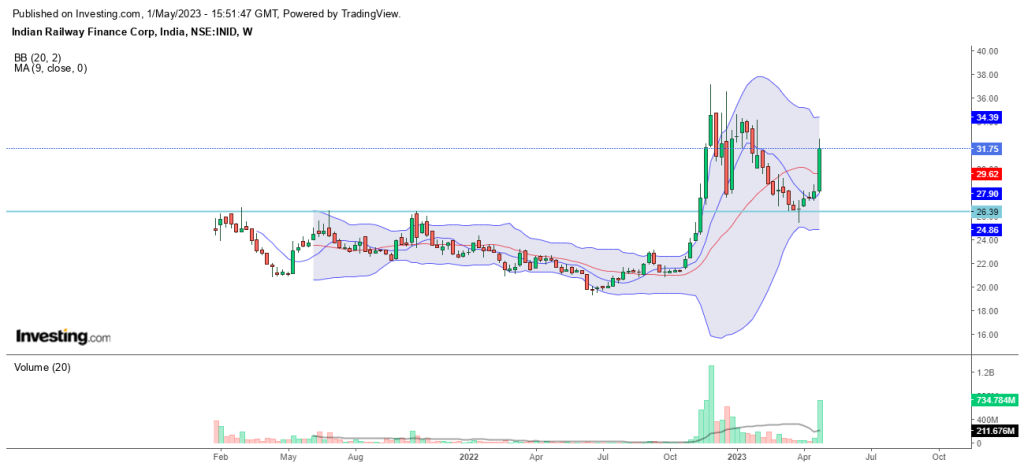
Share Price Forecast: Navigating Market Volatility with Expert Insights
In today’s dynamic financial landscape, understanding the potential trajectory of individual stocks is crucial for investors. A share price forecast serves as a valuable tool, offering insights into the anticipated future value of a company’s stock. However, it’s essential to approach these forecasts with a critical eye, acknowledging the inherent uncertainties and complexities of the market.
This article delves into the intricacies of share price forecasts, exploring the methodologies employed, the factors influencing predictions, and the practical applications for investors seeking to make informed decisions. We’ll examine the role of both fundamental and technical analysis, the impact of macroeconomic trends, and the importance of staying updated with the latest market news. Understanding these elements is paramount for anyone looking to leverage share price forecasts effectively.
Understanding Share Price Forecasting Methodologies
Several methodologies are utilized to generate share price forecasts. These can be broadly categorized into fundamental analysis and technical analysis. While each approach offers unique perspectives, a comprehensive understanding of both is beneficial for a well-rounded investment strategy.
Fundamental Analysis: Assessing Intrinsic Value
Fundamental analysis focuses on evaluating a company’s intrinsic value by examining its financial statements, industry position, competitive landscape, and overall economic environment. Key metrics analyzed include revenue growth, profitability margins, debt levels, and cash flow. Analysts using this approach aim to determine whether a stock is undervalued or overvalued relative to its perceived intrinsic worth.
The process often involves dissecting financial reports (balance sheets, income statements, cash flow statements), conducting ratio analysis (e.g., price-to-earnings ratio, debt-to-equity ratio), and assessing management’s effectiveness. By understanding the underlying financial health and future prospects of a company, fundamental analysts attempt to project future share price forecasts.
Technical Analysis: Identifying Patterns and Trends
Technical analysis, on the other hand, focuses on historical price and volume data to identify patterns and trends that may indicate future price movements. Technical analysts use various charts and indicators, such as moving averages, trend lines, and oscillators, to interpret market sentiment and predict potential price swings. This approach assumes that all known information is already reflected in the price and that history tends to repeat itself.
While fundamental analysis looks at the ‘why’ behind a company’s performance, technical analysis is more concerned with the ‘when’ and ‘how’ of price action. By studying price charts and identifying patterns, technical analysts aim to predict short-term share price forecasts and capitalize on market volatility. [See also: Understanding Technical Analysis in Stock Trading]
Factors Influencing Share Price Forecasts
Numerous factors can influence the accuracy and reliability of share price forecasts. These factors can be broadly categorized into company-specific, industry-related, and macroeconomic influences. Understanding these factors is crucial for evaluating the credibility of any forecast.
Company-Specific Factors
A company’s financial performance, management decisions, product innovation, and competitive positioning significantly impact its stock price. Positive earnings reports, successful product launches, and effective cost management can drive stock prices higher, while negative news, such as declining sales or regulatory challenges, can lead to price declines.
Furthermore, corporate actions like mergers, acquisitions, stock splits, and dividend announcements can also influence share price forecasts. Investors closely monitor these developments to assess their potential impact on the company’s future prospects. Effective communication from the company’s leadership team is also essential for maintaining investor confidence.
Industry-Related Factors
The overall health and outlook of the industry in which a company operates play a vital role in its stock performance. Industries experiencing rapid growth and innovation tend to attract more investment and higher valuations. Conversely, industries facing challenges, such as increased competition or technological disruption, may experience slower growth or decline.
Regulatory changes, technological advancements, and shifts in consumer preferences can also significantly impact industry dynamics and, consequently, share price forecasts. Analyzing industry trends and competitive forces is essential for understanding the potential risks and opportunities facing a company.
Macroeconomic Factors
Macroeconomic factors, such as interest rates, inflation, economic growth, and geopolitical events, can have a profound impact on the stock market as a whole and individual stock prices. Changes in interest rates, for example, can affect borrowing costs for companies and consumer spending, which in turn can influence earnings and valuations.
Economic recessions, trade wars, and political instability can also create uncertainty and volatility in the market, making it more challenging to predict future share price forecasts. Investors need to stay informed about macroeconomic trends and their potential impact on their investment portfolios. [See also: Impact of Economic Indicators on Stock Prices]
The Role of Market Sentiment and Investor Psychology
Beyond fundamental and technical factors, market sentiment and investor psychology play a significant role in shaping share price forecasts. Investor sentiment refers to the overall attitude or feeling of investors towards the market or a particular stock. Positive sentiment can drive prices higher, even if the underlying fundamentals don’t fully support the increase, while negative sentiment can lead to price declines, regardless of the company’s performance.
Psychological biases, such as herd behavior, confirmation bias, and loss aversion, can also influence investor decision-making and contribute to market volatility. Understanding these biases is crucial for avoiding emotional investment decisions and making rational choices based on objective analysis. A share price forecast must consider the potential impact of these psychological factors to be truly comprehensive.
Practical Applications of Share Price Forecasts for Investors
Share price forecasts can be valuable tools for investors seeking to make informed decisions. However, it’s essential to use them judiciously and in conjunction with other sources of information. Here are some practical applications:
- Informed Investment Decisions: Share price forecasts can help investors assess the potential upside and downside of a particular stock before making an investment decision. By comparing forecasts from different sources and considering their own risk tolerance, investors can make more informed choices.
- Portfolio Allocation: Forecasts can also be used to guide portfolio allocation decisions. By identifying stocks with high growth potential, investors can allocate a larger portion of their portfolio to those assets, while reducing their exposure to stocks with less favorable outlooks.
- Risk Management: Understanding the potential risks associated with a particular stock is crucial for effective risk management. Share price forecasts can help investors identify potential downside risks and implement strategies to mitigate those risks, such as setting stop-loss orders or diversifying their portfolio.
- Trading Strategies: Traders can use share price forecasts to develop short-term trading strategies. By identifying stocks that are expected to experience significant price movements, traders can capitalize on these opportunities through techniques like day trading or swing trading.
Limitations and Risks of Relying Solely on Share Price Forecasts
While share price forecasts can be helpful, it’s crucial to acknowledge their limitations and potential risks. No forecast is perfect, and relying solely on forecasts without conducting independent research can be detrimental to investment performance.
- Inherent Uncertainty: The stock market is inherently unpredictable, and unforeseen events can significantly impact stock prices. Economic downturns, geopolitical crises, and unexpected company-specific news can all invalidate even the most sophisticated forecasts.
- Bias and Conflicts of Interest: Forecasts can be influenced by bias or conflicts of interest. Analysts may have incentives to issue positive forecasts to attract investment banking business or to promote their own investment positions.
- Overreliance on Historical Data: Technical analysis relies heavily on historical data, which may not always be indicative of future performance. Market conditions and investor sentiment can change over time, rendering historical patterns less relevant.
- Ignoring Fundamental Analysis: Overemphasizing technical analysis while neglecting fundamental analysis can lead to overlooking important factors that drive long-term stock performance.
Conclusion: A Balanced Approach to Share Price Forecasting
Share price forecasts are valuable tools for investors, providing insights into the potential future value of a company’s stock. However, it’s crucial to approach these forecasts with a critical eye, acknowledging their limitations and potential risks. A balanced approach that combines fundamental analysis, technical analysis, and an understanding of market sentiment is essential for making informed investment decisions. Always conduct thorough research, consider your own risk tolerance, and diversify your portfolio to mitigate risk. Remember that a share price forecast is just one piece of the puzzle in the complex world of investing.
