The Future of Stock Market Prediction: Trends, Technologies, and Challenges
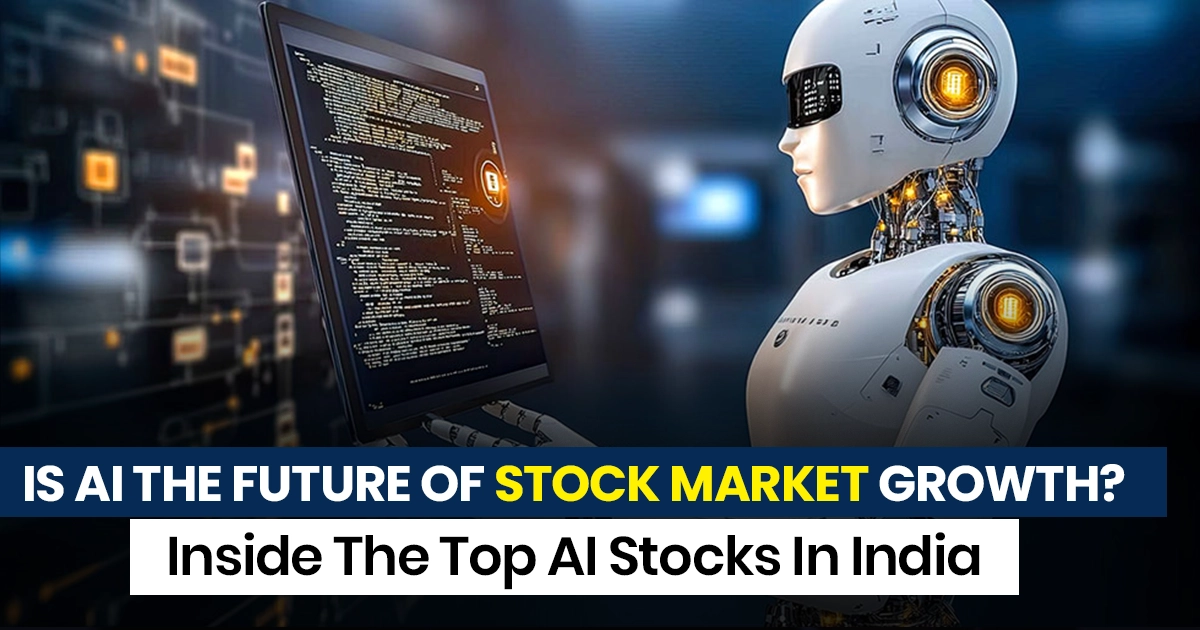
Predicting the stock market’s future has always been a Holy Grail for investors, traders, and financial institutions. The allure of accurately forecasting market movements is undeniable, promising substantial financial gains and a competitive edge. However, the stock market is a complex, dynamic system influenced by a myriad of factors, ranging from macroeconomic indicators and geopolitical events to investor sentiment and technological advancements. The future of stock market prediction is therefore poised for significant evolution, driven by innovations in artificial intelligence, machine learning, big data analytics, and alternative data sources.
The Evolution of Stock Market Prediction
Historically, stock market prediction relied heavily on fundamental and technical analysis. Fundamental analysis involves evaluating a company’s financial health, industry trends, and economic outlook to determine the intrinsic value of its stock. Technical analysis, on the other hand, focuses on identifying patterns in historical price and volume data to forecast future price movements. While these methods remain relevant, their predictive power is often limited by their reliance on historical data and inability to capture the full complexity of market dynamics.
The advent of computer technology and sophisticated statistical models marked a turning point in stock market prediction. Early quantitative models, such as the Capital Asset Pricing Model (CAPM) and the Fama-French three-factor model, provided a more systematic approach to assessing risk and return. However, these models often failed to account for non-linear relationships and behavioral biases that influence market behavior. As computing power increased and data availability expanded, more advanced techniques, such as time series analysis, regression models, and neural networks, began to emerge.
Key Technologies Shaping the Future of Prediction
Artificial Intelligence and Machine Learning
Artificial intelligence (AI) and machine learning (ML) are revolutionizing the future of stock market prediction. ML algorithms can analyze vast amounts of data, identify complex patterns, and adapt to changing market conditions in ways that traditional methods cannot. These algorithms can be trained on historical stock prices, financial news articles, social media sentiment, and other relevant data sources to predict future market movements. Common ML techniques used in stock market prediction include:
- Recurrent Neural Networks (RNNs): Well-suited for processing sequential data, such as time series of stock prices.
- Long Short-Term Memory (LSTM) Networks: A type of RNN that can capture long-range dependencies in time series data, making them particularly useful for predicting trends and turning points in the stock market.
- Support Vector Machines (SVMs): Effective for classification and regression tasks, SVMs can be used to predict whether a stock price will go up or down.
- Random Forests: An ensemble learning method that combines multiple decision trees to improve prediction accuracy and robustness.
AI-powered trading platforms are increasingly being used by institutional investors and hedge funds to automate trading strategies and optimize portfolio performance. These platforms can execute trades based on real-time market data and predictive models, allowing investors to react quickly to changing market conditions.
Big Data Analytics
The explosion of data in recent years has created new opportunities for stock market prediction. Big data analytics involves collecting, processing, and analyzing large volumes of data from various sources to extract valuable insights. In the context of stock market prediction, big data can include financial news articles, social media posts, search engine trends, economic indicators, and alternative data sources, such as satellite imagery and credit card transactions.
Analyzing this data requires sophisticated tools and techniques, such as distributed computing, natural language processing (NLP), and sentiment analysis. NLP can be used to extract information from unstructured text data, such as news articles and social media posts, while sentiment analysis can be used to gauge investor sentiment and predict market reactions. By combining big data analytics with machine learning algorithms, it is possible to develop more accurate and robust stock market prediction models.
Alternative Data Sources
Traditional stock market prediction models rely primarily on financial data, such as stock prices, trading volumes, and financial statements. However, alternative data sources are becoming increasingly important in the future of stock market prediction. Alternative data refers to non-traditional data sources that can provide insights into company performance and market trends. Examples of alternative data include:
- Satellite Imagery: Can be used to track retail foot traffic, monitor construction activity, and assess agricultural yields.
- Credit Card Transactions: Can provide insights into consumer spending patterns and economic activity.
- Social Media Data: Can be used to gauge investor sentiment and track brand reputation.
- Web Traffic Data: Can provide insights into company performance and customer engagement.
- Geolocation Data: Can be used to track supply chain movements and monitor competitor activity.
By incorporating alternative data into stock market prediction models, investors can gain a more comprehensive understanding of market dynamics and improve their ability to forecast future market movements. However, working with alternative data can be challenging, as it often requires specialized expertise and infrastructure.
Challenges and Limitations
Despite the advancements in technology and data availability, stock market prediction remains a challenging endeavor. The stock market is a complex, dynamic system influenced by a multitude of factors, many of which are difficult to predict or quantify. Some of the key challenges and limitations of stock market prediction include:
Market Volatility and Randomness
The stock market is inherently volatile and subject to random fluctuations. Unexpected events, such as geopolitical crises, natural disasters, and regulatory changes, can have a significant impact on market sentiment and stock prices. These events are often difficult to predict and can disrupt even the most sophisticated prediction models. The efficient market hypothesis (EMH) suggests that stock prices reflect all available information, making it impossible to consistently outperform the market. While the EMH is not universally accepted, it highlights the inherent difficulty of predicting market movements.
Data Quality and Availability
The accuracy of stock market prediction models depends heavily on the quality and availability of data. Inaccurate or incomplete data can lead to biased predictions and poor investment decisions. While there is an abundance of data available, not all of it is reliable or relevant. Cleaning, processing, and validating data can be time-consuming and resource-intensive. Furthermore, some data sources may be proprietary or restricted, limiting their availability to certain investors.
Overfitting and Backtesting Bias
Overfitting occurs when a prediction model is too closely tailored to historical data, resulting in poor performance on new data. Overfitting can be a significant problem in stock market prediction, as models that perform well on historical data may not generalize well to future market conditions. Backtesting bias can also lead to misleading results. Backtesting involves evaluating a prediction model on historical data to assess its performance. However, if the model is optimized based on backtesting results, it may not perform as well in real-world trading scenarios. [See also: Algorithmic Trading Strategies]
Behavioral Biases
Investor behavior is influenced by a variety of psychological biases, such as herding, confirmation bias, and loss aversion. These biases can lead to irrational trading decisions and market inefficiencies. Prediction models that fail to account for behavioral biases may not accurately capture market dynamics. Incorporating behavioral finance principles into stock market prediction models can improve their accuracy and robustness.
Ethical Considerations
As stock market prediction becomes more sophisticated, ethical considerations are becoming increasingly important. The use of AI and machine learning in stock market prediction raises concerns about transparency, fairness, and accountability. Prediction models can be complex and opaque, making it difficult to understand how they arrive at their predictions. This lack of transparency can raise concerns about bias and discrimination. Furthermore, the use of sophisticated prediction models can create an uneven playing field, giving an advantage to those with access to advanced technology and expertise.
It is important to develop ethical guidelines and regulations to ensure that stock market prediction is used responsibly and in a way that benefits society as a whole. These guidelines should address issues such as data privacy, algorithmic transparency, and market manipulation. [See also: Ethical Investing Trends]
The Future Landscape
The future of stock market prediction is likely to be characterized by increased reliance on AI, machine learning, and big data analytics. Prediction models will become more sophisticated and capable of capturing complex market dynamics. Alternative data sources will play an increasingly important role in stock market prediction, providing investors with a more comprehensive understanding of market trends. The rise of quantum computing could also revolutionize stock market prediction, enabling the development of even more powerful and accurate models. Quantum computers can perform complex calculations much faster than classical computers, potentially unlocking new insights into market behavior.
However, the challenges and limitations of stock market prediction will remain. Market volatility, data quality issues, and behavioral biases will continue to pose significant obstacles. Ethical considerations will also become increasingly important as stock market prediction becomes more sophisticated. The future of stock market prediction will require a combination of technological innovation, rigorous analysis, and ethical awareness. The ability to accurately forecast market movements will continue to be a valuable asset for investors, traders, and financial institutions. However, it is important to approach stock market prediction with caution and to recognize its inherent limitations. The journey to predict the future of stock market is a continuous evolution, blending technology, data, and ethical considerations to navigate the complex world of finance. As we advance, the focus on transparent, fair, and accountable practices will be crucial in shaping the future of stock market prediction.
