The Ultimate Guide to Choosing the Best Trading Laptop in 2024
In the fast-paced world of financial markets, having the right tools can make all the difference. For traders, a reliable and high-performing trading laptop is not just a convenience; it’s a necessity. Whether you’re day trading stocks, analyzing forex charts, or managing a cryptocurrency portfolio, your laptop is your command center. This comprehensive guide will walk you through everything you need to consider when selecting the best trading laptop in 2024, ensuring you’re equipped to make informed decisions and execute trades efficiently.
Why a Dedicated Trading Laptop Matters
While any laptop can technically access trading platforms, a dedicated trading laptop offers several advantages:
- Reliability: Trading requires stability. A well-chosen laptop minimizes crashes and downtime, which can be costly.
- Performance: Fast processing speeds and ample RAM allow you to run multiple applications and analyze data in real-time.
- Portability: A laptop allows you to trade from anywhere with an internet connection, providing flexibility and convenience.
- Security: Dedicated trading laptops can be configured with enhanced security measures to protect sensitive financial data.
Key Specifications to Consider
Choosing the right trading laptop involves carefully evaluating several key specifications. Here’s a breakdown of the most important factors:
Processor (CPU)
The processor is the brain of your laptop. For trading, you need a CPU that can handle complex calculations and run multiple applications simultaneously. Look for:
- Intel Core i5 or i7 (10th generation or newer): These processors offer a good balance of performance and efficiency.
- AMD Ryzen 5 or Ryzen 7 (4000 series or newer): AMD Ryzen processors are also excellent choices, often providing comparable or even better performance at a similar price point.
- Core Count: Aim for at least a quad-core processor. More cores mean better multitasking capabilities.
RAM (Random Access Memory)
RAM is crucial for smooth multitasking. Insufficient RAM can lead to lag and slowdowns, which are unacceptable when trading. Consider:
- 16GB of RAM: This is the sweet spot for most traders. It provides enough headroom for running multiple trading platforms, charting software, and web browsers.
- 32GB of RAM: If you frequently work with large datasets or run memory-intensive applications, 32GB might be a better choice.
Storage (SSD)
Solid State Drives (SSDs) are significantly faster than traditional Hard Disk Drives (HDDs). They offer quicker boot times, faster application loading, and improved overall performance. Opt for:
- 256GB SSD: This is the minimum recommended size. It provides enough space for your operating system, trading software, and essential files.
- 512GB SSD or 1TB SSD: If you plan to store large amounts of data locally (e.g., historical price data), consider a larger SSD.
- NVMe SSD: For the fastest performance, choose an NVMe SSD, which offers significantly higher read and write speeds compared to SATA SSDs.
Display
The display is your window into the market. A high-quality display can reduce eye strain and improve your overall trading experience. Look for:
- Screen Size: 15-inch to 17-inch screens are ideal for most traders. They provide enough screen real estate for charts and multiple windows.
- Resolution: Full HD (1920×1080) is the minimum recommended resolution. QHD (2560×1440) or 4K (3840×2160) displays offer even sharper images and more detail.
- Panel Type: IPS panels offer better color accuracy and wider viewing angles compared to TN panels.
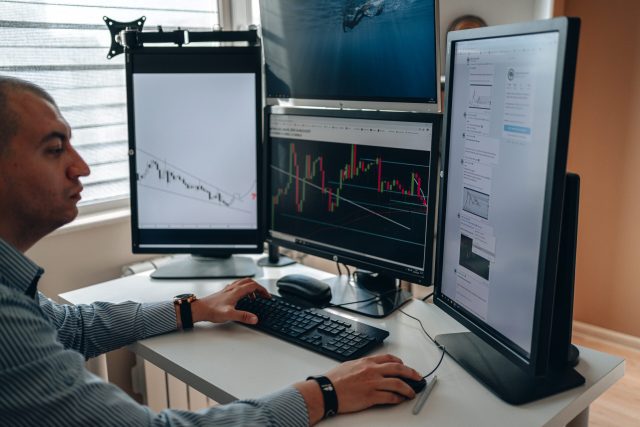
- External Monitors: Consider using multiple external monitors to expand your workspace. [See also: Best Monitor Setups for Day Trading]
Graphics Card (GPU)
While not as critical as the CPU or RAM, a dedicated graphics card can improve the performance of charting software and other graphically intensive applications. Consider:
- Integrated Graphics: For basic trading tasks, integrated graphics (e.g., Intel Iris Xe Graphics or AMD Radeon Graphics) may be sufficient.
- Dedicated Graphics Card: If you use advanced charting software or require high-resolution displays, a dedicated graphics card (e.g., NVIDIA GeForce MX series or AMD Radeon RX series) can provide a smoother experience.
Connectivity
Reliable connectivity is essential for trading. Ensure your laptop has:
- Wi-Fi 6 (802.11ax): The latest Wi-Fi standard offers faster speeds and improved reliability.
- Ethernet Port: A wired Ethernet connection provides the most stable and reliable internet connection.
- USB Ports: Multiple USB ports (including USB-A and USB-C) are necessary for connecting external monitors, keyboards, mice, and other peripherals.
- HDMI Port: An HDMI port is essential for connecting to external monitors.
- Thunderbolt Port: Thunderbolt ports offer high-speed data transfer and can also be used to connect external displays and docking stations.
Battery Life
If you plan to trade on the go, battery life is an important consideration. Look for a laptop that offers at least 6-8 hours of battery life under moderate use. Keep in mind that running multiple trading platforms and applications can significantly reduce battery life.
Operating System
The two main operating systems for laptops are Windows and macOS. Both are suitable for trading, but Windows is generally more popular due to its wider compatibility with trading software. Consider:
- Windows 10 or Windows 11: Windows is the most widely used operating system for trading. It offers excellent compatibility with trading platforms and software.
- macOS: macOS is a good choice if you prefer the Apple ecosystem. However, some trading platforms may not be fully compatible with macOS.
Top Trading Laptop Recommendations for 2024
Based on the specifications discussed above, here are some of the top trading laptop recommendations for 2024:
- Dell XPS 15: A premium laptop with excellent performance, a stunning display, and a sleek design.
- Apple MacBook Pro 16-inch: A powerful laptop with a brilliant display and long battery life, ideal for traders who prefer macOS.
- HP Spectre x360: A versatile 2-in-1 laptop with a premium design and excellent performance.
- Lenovo ThinkPad X1 Carbon: A lightweight and durable laptop with excellent keyboard and security features.
- ASUS ROG Zephyrus G14: A powerful and portable gaming laptop that can also be used for trading. [See also: Best Gaming Laptops for Professionals]
Setting Up Your Trading Laptop for Optimal Performance
Once you’ve chosen your trading laptop, it’s important to set it up correctly to ensure optimal performance:
- Install Trading Software: Install your preferred trading platforms, charting software, and other essential applications.
- Optimize System Settings: Adjust your system settings to prioritize performance. This may involve disabling unnecessary background processes and adjusting power settings.
- Secure Your Laptop: Implement robust security measures to protect your financial data. This includes using a strong password, enabling two-factor authentication, and installing a reputable antivirus program.
- Regular Maintenance: Perform regular maintenance tasks, such as updating your operating system, drivers, and software, to keep your laptop running smoothly.
Conclusion
Choosing the best trading laptop is a crucial investment for any serious trader. By carefully considering the key specifications and recommendations outlined in this guide, you can select a laptop that meets your specific needs and helps you achieve your trading goals. Remember to prioritize reliability, performance, and security to ensure a smooth and profitable trading experience. Investing in a quality trading laptop is an investment in your success.
