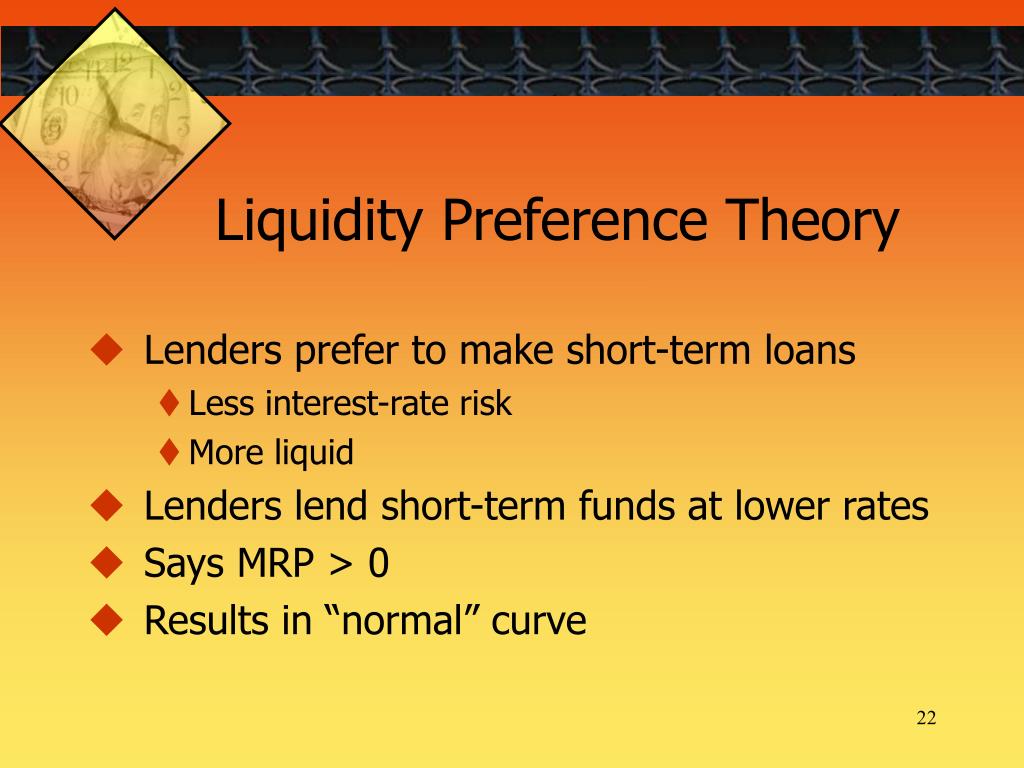
Understanding Liquid Preference Theory: An In-Depth Analysis
In the realm of macroeconomics, understanding the motivations behind investment decisions and interest rate fluctuations is crucial. One of the foundational theories that attempts to explain these phenomena is the liquid preference theory. Developed by the renowned economist John Maynard Keynes, this theory posits that the interest rate is determined by the supply and demand for money, specifically the desire to hold wealth in liquid form rather than investing it. Understanding liquid preference theory is essential for grasping the dynamics of monetary policy and its impact on the economy.
The Core Concepts of Liquid Preference Theory
At its heart, liquid preference theory revolves around the idea that individuals and businesses have a preference for holding their wealth in liquid assets, primarily cash. This preference stems from three primary motives:
- Transaction Motive: This motive arises from the need to hold money to facilitate everyday transactions. Individuals and businesses need cash to pay for goods, services, and expenses. The level of transactions and corresponding need for liquidity is directly related to the overall economic activity.
- Precautionary Motive: This motive reflects the desire to hold money as a buffer against unforeseen circumstances. Individuals and businesses may want to have cash on hand to cover unexpected expenses or take advantage of unanticipated opportunities. The strength of this motive can depend on economic uncertainty and risk aversion.
- Speculative Motive: This motive is based on the belief that holding cash can be advantageous when interest rates are expected to rise, or asset prices are expected to fall. In this scenario, individuals and businesses would prefer to hold cash to avoid losses or to capitalize on future investment opportunities. This is where the liquid preference theory becomes most intertwined with investment strategies.
Keynes argued that these three motives drive the demand for money. The total demand for money is the sum of the money demanded for transaction, precautionary, and speculative purposes. This demand interacts with the supply of money, which is controlled by the central bank, to determine the equilibrium interest rate.
The Role of Interest Rates
According to liquid preference theory, the interest rate is the ‘price’ of money. It represents the opportunity cost of holding money instead of investing it. When interest rates are high, the opportunity cost of holding cash is also high, which reduces the demand for money. Conversely, when interest rates are low, the opportunity cost of holding cash is low, which increases the demand for money.
The theory suggests that the supply of money is largely determined by the central bank. When the central bank increases the money supply, it lowers interest rates, stimulating investment and economic activity. Conversely, when the central bank decreases the money supply, it raises interest rates, dampening investment and economic activity. This is a cornerstone of monetary policy and its influence on the economy.
The relationship between interest rates and the speculative motive is particularly important. If investors expect interest rates to rise in the future, they will prefer to hold cash now to invest later at a higher rate. This increased demand for money will push up current interest rates. Conversely, if investors expect interest rates to fall in the future, they will be more inclined to invest now, reducing the demand for money and pushing down current interest rates.
Factors Influencing Liquid Preference
Several factors can influence the liquid preference of individuals and businesses. These include:
- Income: Higher income levels generally lead to a higher demand for money for transaction and precautionary purposes.
- Economic Uncertainty: Increased economic uncertainty typically increases the demand for money for precautionary purposes.
- Inflation Expectations: Expectations of higher inflation can reduce the demand for money as individuals and businesses seek to protect the purchasing power of their wealth by investing in assets that are expected to appreciate in value.
- Technological Advancements: The rise of digital payments and online banking can reduce the demand for physical cash, influencing the overall liquid preference in the economy.
Criticisms and Limitations of Liquid Preference Theory
While liquid preference theory provides a valuable framework for understanding the determination of interest rates, it is not without its criticisms and limitations. Some critics argue that the theory oversimplifies the complex interactions between money supply, demand, and interest rates. Other criticisms include:
- Ignoring the Supply Side: The theory focuses primarily on the demand for money and gives less attention to the factors that influence the supply of money beyond the central bank’s actions.
- The Assumption of Rationality: The theory assumes that individuals and businesses are rational in their decision-making, which may not always be the case in real-world scenarios. Behavioral economics has shown how emotions and cognitive biases can affect financial decisions.
- Oversimplification of Investment Decisions: The speculative motive assumes that investors are primarily driven by interest rate expectations, while other factors such as risk aversion and investment opportunities are also important.
Modern Applications and Relevance
Despite its limitations, liquid preference theory remains a relevant framework for understanding the dynamics of money and interest rates in modern economies. Central banks continue to use the theory as a guide for monetary policy decisions, adjusting the money supply to influence interest rates and stimulate or cool down the economy. [See also: Monetary Policy and Interest Rates].
Furthermore, the theory helps explain why individuals and businesses hold cash even when interest rates are low. During times of economic uncertainty, the precautionary motive for holding cash can become particularly strong, leading to a surge in demand for money and potentially pushing up interest rates. This highlights the importance of understanding the psychological factors that drive liquid preference.
Liquid Preference and Quantitative Easing
Quantitative easing (QE), a monetary policy tool used by central banks to inject liquidity into the economy by purchasing assets, can be analyzed through the lens of liquid preference theory. When a central bank engages in QE, it increases the money supply, which, according to the theory, should lower interest rates. However, the effectiveness of QE can depend on the strength of the liquid preference of individuals and businesses.
If the demand for money is high due to precautionary or speculative motives, the increased money supply from QE may not necessarily lead to a significant decrease in interest rates. Instead, individuals and businesses may simply hold the additional cash, leading to a ‘liquidity trap’ where monetary policy becomes ineffective. This scenario highlights the importance of understanding the factors that influence liquid preference in assessing the effectiveness of monetary policy.
The Future of Liquid Preference Theory
As the global economy continues to evolve, liquid preference theory will likely remain a valuable tool for understanding the dynamics of money and interest rates. However, the theory will need to adapt to new challenges and opportunities, such as the rise of digital currencies and the increasing interconnectedness of financial markets. Further research is needed to explore the impact of these developments on liquid preference and the effectiveness of monetary policy. [See also: The Impact of Digital Currencies on Monetary Policy]
In conclusion, liquid preference theory provides a foundational understanding of how the demand for money and the supply of money interact to determine interest rates. While the theory has its limitations, it remains a valuable tool for policymakers and investors alike. By understanding the motives that drive liquid preference, we can gain a better understanding of the forces that shape the economy.
