Understanding Liquidity Preference: A Comprehensive Guide
In the intricate world of economics, understanding the motivations behind financial decisions is paramount. One such crucial concept is liquidity preference. This article delves into the theory of liquidity preference, exploring its origins, key components, implications, and contemporary relevance. We aim to provide a clear, concise, and fact-checked overview suitable for anyone interested in grasping this fundamental economic principle. Liquidity preference influences interest rates, investment decisions, and overall economic stability.
What is Liquidity Preference?
Liquidity preference, a cornerstone of Keynesian economics, refers to the demand for holding wealth in the form of money rather than other assets that offer a return, such as bonds or stocks. John Maynard Keynes introduced this concept in his seminal work, “The General Theory of Employment, Interest and Money,” published in 1936. Keynes argued that people prefer to have liquid assets readily available to meet unforeseen expenses or to capitalize on potential investment opportunities. This preference directly impacts interest rates and the overall economy.
Essentially, liquidity preference explains why individuals and businesses hold cash. While other assets may offer higher returns, cash provides the advantage of immediate purchasing power. The stronger the desire to hold cash, the higher the demand for liquidity, which in turn influences the cost of borrowing – the interest rate.
The Three Motives Behind Liquidity Preference
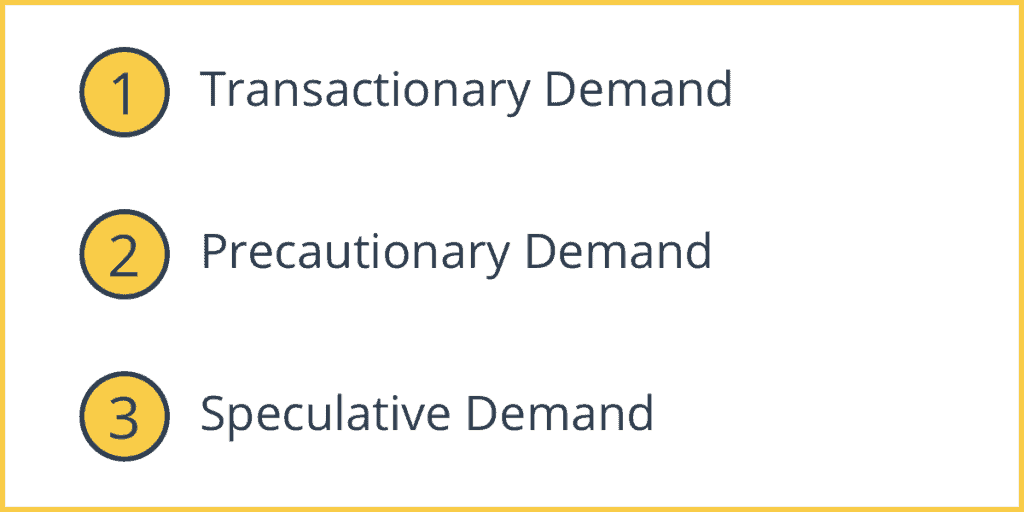
Keynes identified three primary motives driving liquidity preference:
The Transaction Motive
The transaction motive arises from the need to have cash available to facilitate everyday transactions. Individuals and businesses need money to pay bills, purchase goods and services, and cover operational expenses. The level of income significantly influences the transaction motive; higher income typically leads to a greater demand for transaction-related cash. This motive is relatively stable and predictable, closely linked to the level of economic activity.
The Precautionary Motive
The precautionary motive stems from the desire to hold cash to cover unexpected expenses or unforeseen circumstances. This acts as a financial safety net. The degree of risk aversion and uncertainty in the economy influence the strength of this motive. During periods of economic instability or uncertainty, individuals and businesses tend to hold more cash as a precaution. [See also: Economic Indicators Explained]
The Speculative Motive
The speculative motive is perhaps the most interesting and dynamic of the three. It arises from the belief that future interest rates or asset prices might change. If individuals expect interest rates to rise, they may choose to hold cash now, anticipating that bond prices will fall. They can then buy bonds at a lower price later, profiting from the change in interest rates. Conversely, if they expect interest rates to fall, they may prefer to invest in bonds immediately. This motive is highly sensitive to market sentiment and expectations.
The Relationship Between Liquidity Preference and Interest Rates
Liquidity preference plays a crucial role in determining interest rates. According to Keynes, interest rates are the price of money, just like any other commodity. The interaction between the supply of money and the demand for money (liquidity preference) determines the equilibrium interest rate. When the demand for money increases, the interest rate rises, and vice versa. This is because when demand for money is high, lenders can charge more for it.
Central banks can influence interest rates by managing the money supply. By increasing the money supply, the central bank can lower interest rates, stimulating borrowing and investment. Conversely, by decreasing the money supply, the central bank can raise interest rates, curbing inflation. Understanding liquidity preference is therefore crucial for effective monetary policy.
Factors Influencing Liquidity Preference
Several factors can influence liquidity preference, including:
- Income Levels: Higher income generally leads to a greater demand for cash for transaction purposes.
- Interest Rates: Higher interest rates can decrease the demand for cash, as individuals and businesses are incentivized to invest in interest-bearing assets.
- Economic Uncertainty: Periods of economic uncertainty or instability typically increase the demand for cash as a precaution.
- Inflation Expectations: High inflation expectations can increase the demand for cash, as individuals seek to protect their purchasing power.
- Technological Advancements: The rise of digital payment systems and mobile banking can reduce the demand for physical cash.
Implications of Liquidity Preference
Liquidity preference has significant implications for the economy:
- Monetary Policy: Understanding liquidity preference is essential for central banks to effectively manage interest rates and control inflation.
- Investment Decisions: Liquidity preference influences investment decisions, as individuals and businesses weigh the benefits of holding cash versus investing in other assets.
- Economic Stability: Fluctuations in liquidity preference can contribute to economic instability, particularly during periods of crisis.
- Asset Prices: Shifts in liquidity preference can impact asset prices, as investors adjust their portfolios based on their desire for cash.
Liquidity Preference in the Modern Economy
While Keynes developed the theory of liquidity preference in the 1930s, it remains relevant in the modern economy. The rise of digital currencies, the increasing complexity of financial markets, and the prevalence of global economic shocks have all influenced liquidity preference. For instance, during the 2008 financial crisis, there was a significant increase in liquidity preference as individuals and businesses sought the safety of cash amidst widespread uncertainty. [See also: The Impact of Financial Crises on Global Markets]
Furthermore, the actions of central banks in response to economic downturns, such as quantitative easing, directly impact liquidity preference. By injecting liquidity into the financial system, central banks aim to reduce interest rates and stimulate economic activity. However, the effectiveness of these policies depends on how individuals and businesses respond to the increased money supply and whether they choose to hold onto the cash or invest it.
Criticisms of Liquidity Preference Theory
Despite its enduring relevance, liquidity preference theory has faced criticisms. Some economists argue that it oversimplifies the factors influencing interest rates and that other variables, such as productivity and technological innovation, also play a significant role. Additionally, critics contend that the speculative motive is difficult to measure and predict, making it challenging to incorporate into economic models.
Another criticism is that liquidity preference assumes that individuals are primarily motivated by short-term considerations and fail to fully account for long-term investment horizons. However, proponents of liquidity preference argue that it provides a valuable framework for understanding the behavior of individuals and businesses in the face of uncertainty and risk.
Conclusion
Liquidity preference remains a fundamental concept in economics, providing insights into the motivations behind holding cash and its impact on interest rates and the overall economy. Understanding the transaction, precautionary, and speculative motives driving liquidity preference is crucial for policymakers, investors, and anyone seeking to grasp the dynamics of financial markets. While the theory has its limitations, it continues to offer a valuable lens through which to analyze economic behavior in an ever-changing world. As financial markets evolve and new challenges emerge, the principles of liquidity preference will undoubtedly remain relevant in shaping our understanding of economic phenomena.
