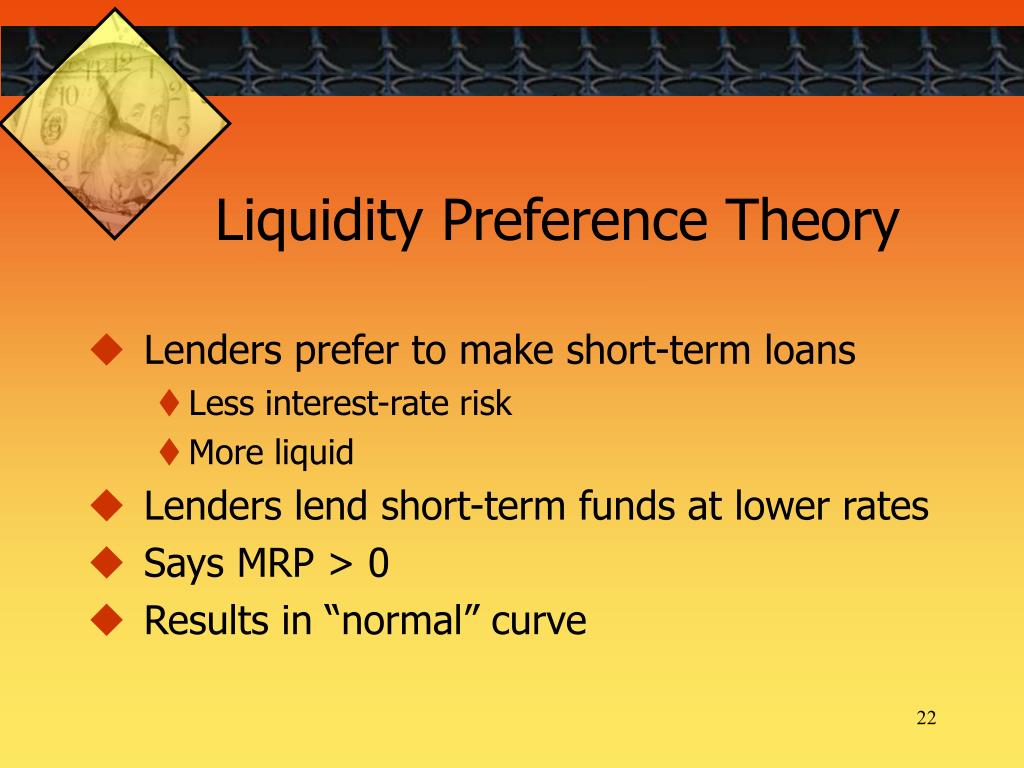
Understanding the Liquid Preference Theory: A Comprehensive Guide
The liquid preference theory, a cornerstone of Keynesian economics, offers a compelling explanation for how interest rates are determined in an economy. Proposed by John Maynard Keynes in his seminal work, “The General Theory of Employment, Interest and Money” (1936), this theory posits that interest rates are not solely determined by the supply and demand for loanable funds, but also by the psychological desire of individuals and businesses to hold their wealth in liquid form – primarily cash. Understanding the nuances of the liquid preference theory is crucial for grasping the complexities of monetary policy and its impact on economic activity. This article will delve into the core tenets of the liquid preference theory, exploring its components, implications, and criticisms. We will examine how this theory shapes our understanding of interest rate dynamics and its relevance in today’s economic landscape.
The Core Principles of Liquid Preference
At its heart, the liquid preference theory revolves around the idea that individuals have a demand for money (liquidity) driven by three primary motives:
- Transaction Motive: This is the most straightforward motive. Individuals need money to conduct everyday transactions – buying groceries, paying bills, etc. The amount of money held for transaction purposes is generally proportional to income; higher income typically leads to a higher demand for transaction balances.
- Precautionary Motive: This motive stems from the uncertainty of future events. Individuals hold money as a buffer against unexpected expenses or unforeseen opportunities. The strength of the precautionary motive is influenced by factors such as risk aversion and the perceived stability of the economic environment.
- Speculative Motive: This is perhaps the most intriguing aspect of the liquid preference theory. It suggests that individuals hold money as an asset, anticipating future changes in interest rates or asset prices. If individuals expect interest rates to rise (and bond prices to fall), they may choose to hold money now, hoping to buy bonds later at a lower price and earn a higher return. Conversely, if they expect interest rates to fall (and bond prices to rise), they may be more inclined to invest in bonds immediately.
The aggregate demand for money (liquidity preference) is the sum of these three motives. This demand is inversely related to the interest rate. Higher interest rates represent a higher opportunity cost of holding money (since money could be invested to earn a return). Therefore, as interest rates rise, the demand for money falls, and vice versa.
The Role of Money Supply
The liquid preference theory also emphasizes the role of the money supply in determining interest rates. The money supply is typically controlled by the central bank (e.g., the Federal Reserve in the United States). According to the theory, the equilibrium interest rate is determined by the intersection of the money supply curve (which is assumed to be vertical, reflecting the central bank’s control) and the aggregate demand for money (liquidity preference) curve. Any change in the money supply will shift the money supply curve and, consequently, affect the equilibrium interest rate. For instance, an increase in the money supply, all else being equal, will lead to a lower equilibrium interest rate, stimulating investment and economic activity. Conversely, a decrease in the money supply will lead to a higher equilibrium interest rate, potentially dampening economic activity.
Implications for Monetary Policy
The liquid preference theory provides a framework for understanding how monetary policy can influence interest rates and, ultimately, economic activity. By manipulating the money supply, central banks can attempt to steer interest rates towards desired levels. For example, during a recession, a central bank might increase the money supply to lower interest rates, encouraging businesses to invest and consumers to spend. This is often referred to as expansionary monetary policy. Conversely, during periods of high inflation, a central bank might decrease the money supply to raise interest rates, discouraging borrowing and spending, thereby cooling down the economy. This is known as contractionary monetary policy. However, the effectiveness of monetary policy can be influenced by various factors, including the sensitivity of the demand for money to changes in interest rates and the overall economic climate.
Criticisms and Limitations
While the liquid preference theory has been influential, it is not without its critics. Some economists argue that the theory oversimplifies the complex dynamics of interest rate determination and that other factors, such as expectations about inflation and government borrowing, also play a significant role. One common criticism is that the theory assumes a relatively stable demand for money, which may not always be the case in reality. For example, financial innovations, such as the rise of credit cards and online banking, have altered the way people manage their money, potentially reducing the demand for holding cash. Furthermore, the theory does not fully account for the role of international capital flows in influencing interest rates. In today’s globalized economy, interest rates in one country can be affected by capital movements from other countries. Despite these limitations, the liquid preference theory remains a valuable tool for understanding the factors that influence interest rates and the potential impact of monetary policy. [See also: The Role of Central Banks in Economic Stability]
The Liquidity Trap
A particularly interesting scenario related to the liquid preference theory is the concept of a liquidity trap. A liquidity trap occurs when interest rates are already very low, and further increases in the money supply fail to stimulate economic activity. In this situation, individuals and businesses may simply hoard the additional money, rather than investing or spending it, because they believe that interest rates cannot fall much further and may even rise in the future. This can render monetary policy ineffective, as the central bank is unable to lower interest rates further to boost demand. Japan experienced a prolonged period of near-zero interest rates and economic stagnation in the 1990s and 2000s, which some economists attributed to a liquidity trap. Overcoming a liquidity trap often requires a combination of monetary and fiscal policies, such as government spending on infrastructure projects, to stimulate aggregate demand.
Relevance in the Modern Economy
Despite its age, the liquid preference theory remains relevant in the modern economy. Central banks around the world continue to use monetary policy to influence interest rates and manage inflation. Understanding the factors that influence the demand for money is crucial for policymakers to make informed decisions about monetary policy. Moreover, the theory provides a framework for analyzing the potential impact of financial innovations on the effectiveness of monetary policy. As new technologies and financial products emerge, they can alter the way people manage their money, potentially affecting the demand for liquidity and the relationship between interest rates and economic activity. Therefore, a solid understanding of the liquid preference theory is essential for anyone seeking to comprehend the complexities of modern monetary economics. [See also: Inflation Targeting and Monetary Policy]
Conclusion
The liquid preference theory, while subject to certain criticisms and refinements, remains a fundamental concept in macroeconomics. Its emphasis on the psychological motives behind the demand for money provides valuable insights into the determination of interest rates and the role of monetary policy. By understanding the transaction, precautionary, and speculative motives, we can better grasp how individuals and businesses make decisions about holding money and how these decisions influence the overall economy. As we navigate an ever-changing economic landscape, the principles of the liquid preference theory continue to offer a valuable framework for analyzing the complexities of monetary policy and its impact on our lives. The liquid preference theory is not just an academic concept; it’s a lens through which we can view the intricate dance between money, interest rates, and economic activity. Further research and analysis continue to refine our understanding of this important theory, ensuring its continued relevance in the years to come. The core idea, that people’s desire to hold liquid assets influences interest rates, remains a critical component of modern macroeconomic thinking. The interplay between the money supply and liquid preference significantly shapes the economic landscape, impacting investment decisions, consumer spending, and overall economic growth. Therefore, grasping the fundamentals of the liquid preference theory is essential for anyone seeking to understand the inner workings of the economy.
