Understanding the Liquidity Preference Theory: A Comprehensive Guide
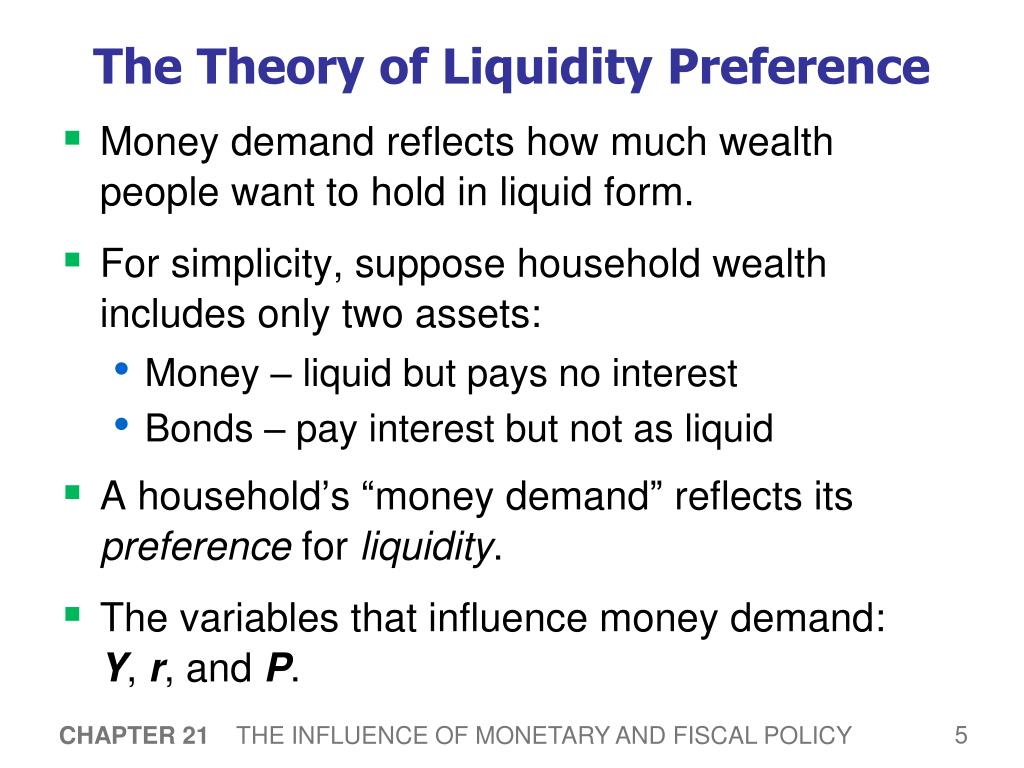
In the realm of macroeconomics, understanding the forces that drive interest rates and investment decisions is crucial. One such force is explained by the liquidity preference theory, a concept developed by the renowned economist John Maynard Keynes. This theory posits that the interest rate is determined by the supply and demand for money, with individuals and businesses preferring to hold their wealth in the most liquid form – cash. This preference, known as liquidity preference, significantly influences economic activity.
This article aims to provide a comprehensive guide to the liquidity preference theory, exploring its core principles, underlying assumptions, and implications for monetary policy and investment strategies. We will delve into the motivations behind holding money, the factors that shift the liquidity preference curve, and the relationship between money supply, interest rates, and economic output.
The Core Principles of Liquidity Preference Theory
At its heart, the liquidity preference theory suggests that individuals and businesses have a natural inclination to hold a certain amount of their wealth in cash. This is because cash offers the greatest degree of flexibility and security; it can be used immediately to meet unexpected expenses, take advantage of investment opportunities, or simply provide a sense of financial well-being. Keynes identified three primary motives for holding money:
- The Transactions Motive: This motive arises from the need to hold money to facilitate everyday transactions. Individuals need cash to pay for groceries, rent, and other necessities. Businesses need cash to pay for salaries, supplies, and other operating expenses. The amount of money held for transactions is generally proportional to the level of income or economic activity.
- The Precautionary Motive: This motive stems from the desire to hold money as a buffer against unforeseen events. Individuals may hold cash to cover unexpected medical bills, car repairs, or job losses. Businesses may hold cash to cover unexpected declines in sales, increases in costs, or other contingencies. The amount of money held for precautionary purposes depends on the degree of uncertainty and the perceived risk of unexpected events.
- The Speculative Motive: This motive is driven by the belief that interest rates may rise or fall in the future. Individuals may hold cash if they expect interest rates to rise, as they can then invest their money at a higher rate later. Businesses may hold cash if they expect interest rates to fall, as they can then borrow money at a lower rate later. The amount of money held for speculative purposes depends on expectations about future interest rates and the perceived risk of holding other assets.
The sum of these three motives constitutes the total demand for money, which is inversely related to the interest rate. As interest rates rise, the opportunity cost of holding money increases, as individuals and businesses forgo the potential returns they could earn by investing their money in interest-bearing assets. Consequently, the quantity of money demanded decreases. Conversely, as interest rates fall, the opportunity cost of holding money decreases, and the quantity of money demanded increases. The interaction of money supply and money demand (liquidity preference) determines the equilibrium interest rate in the market.
Factors Influencing Liquidity Preference
Several factors can influence the liquidity preference of individuals and businesses, causing shifts in the money demand curve. These factors include:
- Income: As income levels rise, individuals and businesses tend to hold more money for transactions and precautionary purposes. This leads to an increase in the demand for money and a shift of the liquidity preference curve to the right.
- Price Level: As the price level rises, individuals and businesses need more money to purchase the same amount of goods and services. This also leads to an increase in the demand for money and a shift of the liquidity preference curve to the right.
- Expectations: Expectations about future inflation, interest rates, and economic conditions can significantly influence liquidity preference. For example, if individuals expect inflation to rise, they may increase their demand for money to protect themselves from the erosion of purchasing power. If businesses expect a recession, they may increase their demand for money to prepare for potential declines in sales.
- Technological Advancements: Technological advancements, such as the widespread use of credit cards and online banking, can reduce the need for individuals and businesses to hold cash for transactions purposes. This can lead to a decrease in the demand for money and a shift of the liquidity preference curve to the left.
- Uncertainty: Periods of high economic or political uncertainty often lead to an increase in liquidity preference. Individuals and businesses become more risk-averse and prefer to hold more liquid assets, such as cash, to navigate potential challenges.
Liquidity Preference and Monetary Policy
The liquidity preference theory has significant implications for monetary policy. Central banks, such as the Federal Reserve in the United States, use various tools to influence the money supply and interest rates in order to achieve macroeconomic goals such as price stability and full employment. By understanding the factors that influence liquidity preference, central banks can better predict how changes in the money supply will affect interest rates and, ultimately, economic activity.
For example, if a central bank increases the money supply, the liquidity preference theory suggests that interest rates will fall. This is because the increased supply of money will exceed the demand for money at the existing interest rate, putting downward pressure on interest rates. Lower interest rates, in turn, can stimulate investment and consumption, leading to increased economic growth. However, if the demand for money is highly sensitive to changes in interest rates (i.e., the liquidity preference curve is relatively flat), the impact of changes in the money supply on interest rates may be limited.
Conversely, if a central bank decreases the money supply, the liquidity preference theory suggests that interest rates will rise. This is because the decreased supply of money will fall short of the demand for money at the existing interest rate, putting upward pressure on interest rates. Higher interest rates, in turn, can dampen investment and consumption, leading to slower economic growth. Again, the effectiveness of this policy depends on the shape of the liquidity preference curve. [See also: Understanding Monetary Policy Tools]
Liquidity Preference and Investment Strategies
The liquidity preference theory also has implications for investment strategies. Investors need to consider their own liquidity preference when making investment decisions. Some investors may prefer to hold a larger proportion of their assets in liquid form, such as cash or short-term bonds, even if it means sacrificing potential returns. This may be the case for investors who are risk-averse, have short-term financial goals, or anticipate needing access to their funds in the near future.
Other investors may be more willing to hold a smaller proportion of their assets in liquid form, preferring to invest in less liquid assets, such as stocks or real estate, in order to potentially earn higher returns. This may be the case for investors who are more risk-tolerant, have long-term financial goals, or do not anticipate needing access to their funds in the near future. Understanding the liquidity preference of different investors is crucial for financial advisors and portfolio managers in designing appropriate investment strategies.
Furthermore, understanding the overall liquidity preference in the market can help investors identify potential investment opportunities. For example, if there is a general increase in liquidity preference, leading to higher demand for cash and lower demand for other assets, this may create opportunities to purchase undervalued assets. Conversely, if there is a general decrease in liquidity preference, leading to lower demand for cash and higher demand for other assets, this may be a sign that asset prices are overvalued. [See also: Investment Risk Management]
Criticisms and Limitations of Liquidity Preference Theory
While the liquidity preference theory provides valuable insights into the determination of interest rates and the role of money in the economy, it is not without its criticisms and limitations. Some critics argue that the theory oversimplifies the complex relationship between money, interest rates, and economic activity. They point out that other factors, such as credit market conditions, government spending, and international capital flows, can also significantly influence interest rates. The liquidity preference theory, in its pure form, doesn’t fully account for these external influences.
Another criticism is that the theory assumes that individuals and businesses have a clear and consistent liquidity preference. In reality, liquidity preference can be highly volatile and influenced by a variety of psychological and behavioral factors. For example, during periods of financial panic, individuals and businesses may exhibit an extreme liquidity preference, hoarding cash and selling off other assets, regardless of interest rates.
Despite these limitations, the liquidity preference theory remains a valuable framework for understanding the forces that drive interest rates and investment decisions. It provides a useful starting point for analyzing the impact of monetary policy and for developing investment strategies. However, it is important to recognize that the theory is just one piece of the puzzle and that other factors must also be considered when making economic forecasts and investment decisions.
Conclusion
The liquidity preference theory, developed by John Maynard Keynes, offers a compelling explanation for how the supply and demand for money determine interest rates. By understanding the motivations behind holding money – transactions, precautionary, and speculative – and the factors that influence liquidity preference, we can gain valuable insights into the workings of the economy and the impact of monetary policy. While the theory has its limitations, it remains a cornerstone of macroeconomic analysis and a valuable tool for investors and policymakers alike. The concept of liquidity preference continues to be relevant in today’s complex financial landscape, reminding us of the fundamental human desire for security and flexibility in managing our financial resources. Understanding liquidity preference is key to navigating economic uncertainties and making informed financial decisions.
