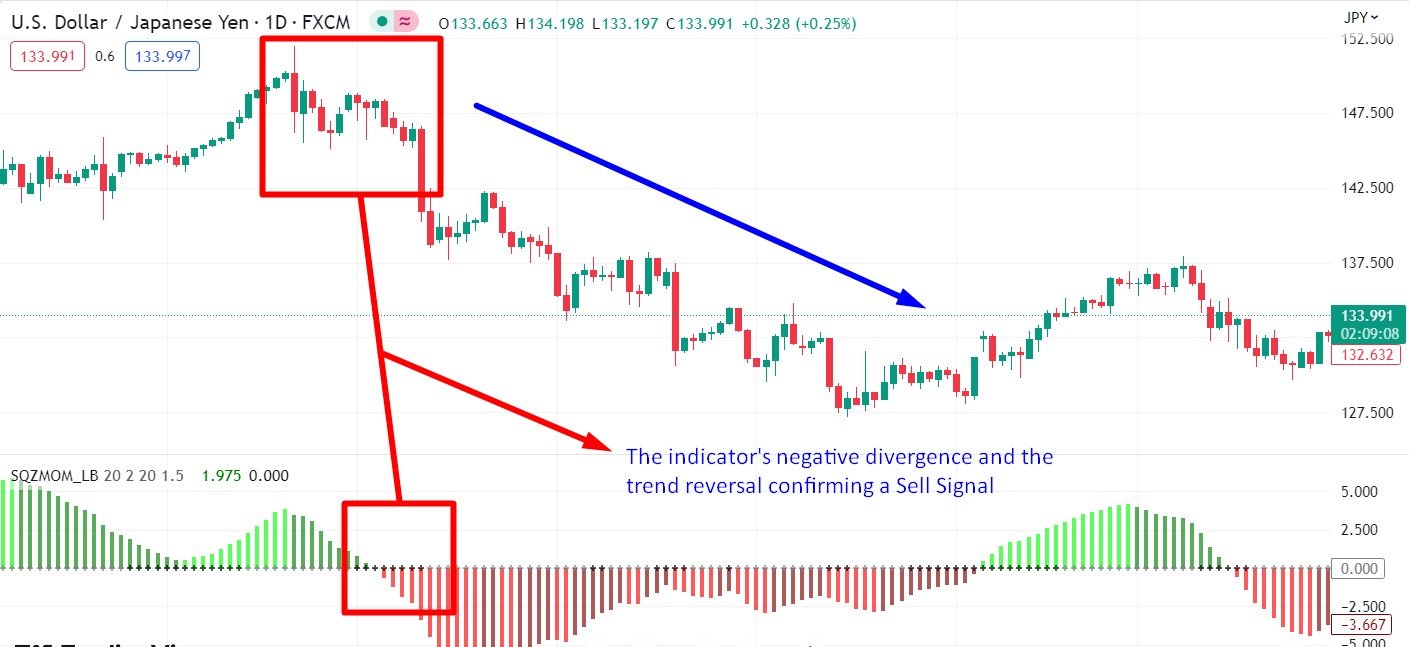
Unlocking Market Secrets: A Deep Dive into the Momentum Squeeze Indicator
In the fast-paced world of financial markets, traders and investors are constantly seeking reliable tools to identify potential trading opportunities. One such tool that has gained popularity among technical analysts is the Momentum Squeeze Indicator. This indicator aims to pinpoint periods of consolidation, followed by explosive price movements, offering a valuable edge to those who understand its nuances. This article will explore the Momentum Squeeze Indicator in detail, covering its calculation, interpretation, and practical applications in trading strategies.
Understanding the Concept of Momentum Squeeze
A momentum squeeze occurs when a market enters a period of low volatility, characterized by a tightening trading range. This consolidation phase often precedes a significant breakout, as pent-up energy is released in a surge of buying or selling pressure. The Momentum Squeeze Indicator helps traders identify these periods of contraction and anticipate potential breakouts. The indicator is designed to help determine when a market is coiling up for a big move, regardless of direction. This can be invaluable for planning entries and exits.
The Mechanics Behind the Momentum Squeeze Indicator
The Momentum Squeeze Indicator typically involves combining Bollinger Bands and Keltner Channels. These two tools work together to highlight periods when volatility is contracting.
Bollinger Bands
Bollinger Bands consist of a simple moving average (SMA) and two bands plotted above and below the SMA, representing standard deviations. These bands expand and contract with volatility, providing a visual representation of price fluctuations.
Keltner Channels
Keltner Channels, on the other hand, are based on the Average True Range (ATR). They consist of a moving average and two bands plotted above and below the moving average, representing a multiple of the ATR. Keltner Channels are also designed to capture volatility but often react differently to price movements compared to Bollinger Bands.
Identifying the Squeeze
The Momentum Squeeze Indicator identifies a squeeze when the Bollinger Bands are completely contained within the Keltner Channels. This signifies a period of extremely low volatility, where price movements are tightly compressed. This “squeeze” suggests that a significant price movement is likely to occur soon. [See also: Volatility Trading Strategies]
Calculating the Momentum Squeeze Indicator
While many trading platforms offer built-in Momentum Squeeze Indicators, understanding the underlying calculation can provide valuable insights into its behavior. The calculation typically involves the following steps:
- Calculate the Simple Moving Average (SMA) for a specified period (e.g., 20 periods).
- Calculate the Standard Deviation of the price for the same period.
- Calculate the Upper Bollinger Band: SMA + (Standard Deviation * 2)
- Calculate the Lower Bollinger Band: SMA – (Standard Deviation * 2)
- Calculate the Average True Range (ATR) for a specified period (e.g., 14 periods).
- Calculate the Upper Keltner Channel: SMA + (ATR * Multiplier)
- Calculate the Lower Keltner Channel: SMA – (ATR * Multiplier)
- Identify a squeeze when the Upper Bollinger Band is below the Upper Keltner Channel and the Lower Bollinger Band is above the Lower Keltner Channel.
Interpreting the Momentum Squeeze Indicator
The primary signal generated by the Momentum Squeeze Indicator is the presence of a squeeze itself. However, understanding the context of the squeeze and confirming it with other indicators is crucial for making informed trading decisions.
Squeeze On
When the Bollinger Bands are inside the Keltner Channels, the Momentum Squeeze Indicator signals that a squeeze is “on.” This indicates a period of consolidation and potential for a breakout.
Squeeze Off
When the Bollinger Bands break outside the Keltner Channels, the Momentum Squeeze Indicator signals that the squeeze is “off.” This suggests that the breakout has begun, and traders should prepare to enter a position in the direction of the breakout.
Directional Confirmation
The Momentum Squeeze Indicator does not provide information about the direction of the breakout. Therefore, it is essential to use other indicators or analysis techniques to confirm the potential direction. This might include analyzing price action, trend lines, or other momentum indicators like the Relative Strength Index (RSI) or Moving Average Convergence Divergence (MACD).
Practical Applications in Trading Strategies
The Momentum Squeeze Indicator can be incorporated into various trading strategies to identify potential breakout opportunities. Here are a few examples:
Breakout Trading
One of the most common applications of the Momentum Squeeze Indicator is in breakout trading. Traders can use the indicator to identify periods of consolidation and then look for confirmation signals, such as a break above resistance or below support, to enter a trade in the direction of the breakout. [See also: Breakout Trading Strategies]
Trend Following
The Momentum Squeeze Indicator can also be used in trend-following strategies. Traders can identify squeezes within an established trend and then look for breakouts in the direction of the trend to confirm the continuation of the trend.
Range Trading
While primarily used for breakout trading, the Momentum Squeeze Indicator can also be adapted for range trading. Traders can identify squeezes within a defined trading range and then look for price reversals near the boundaries of the range to enter a trade in the opposite direction.
Advantages and Limitations
Like any technical indicator, the Momentum Squeeze Indicator has its advantages and limitations. Understanding these aspects is crucial for effectively utilizing the indicator in trading strategies.
Advantages
- Early Identification of Potential Breakouts: The Momentum Squeeze Indicator can help traders identify potential breakouts before they occur, providing an early warning signal.
- Objective Signals: The indicator provides objective signals based on price and volatility, reducing the impact of subjective bias in trading decisions.
- Versatility: The Momentum Squeeze Indicator can be used in various trading strategies, including breakout trading, trend following, and range trading.
Limitations
- False Signals: The Momentum Squeeze Indicator can generate false signals, especially in choppy or sideways markets.
- Lack of Directional Information: The indicator does not provide information about the direction of the breakout, requiring traders to use other tools for confirmation.
- Lagging Indicator: The Momentum Squeeze Indicator is a lagging indicator, meaning that it is based on past price data and may not accurately predict future price movements.
Tips for Using the Momentum Squeeze Indicator Effectively
To maximize the effectiveness of the Momentum Squeeze Indicator, consider the following tips:
- Combine with Other Indicators: Use the Momentum Squeeze Indicator in conjunction with other indicators, such as RSI, MACD, or volume indicators, to confirm signals and improve accuracy.
- Analyze Price Action: Pay attention to price action around the squeeze to identify potential support and resistance levels, which can help determine the direction of the breakout.
- Consider Market Context: Take into account the overall market context, such as the prevailing trend and economic news, to filter out false signals and improve trading decisions.
- Adjust Parameters: Experiment with different parameter settings for the Bollinger Bands and Keltner Channels to optimize the indicator for specific markets and trading styles.
- Practice Risk Management: Always use proper risk management techniques, such as setting stop-loss orders and managing position size, to protect capital and minimize losses.
The Future of Momentum Squeeze Indicator
The Momentum Squeeze Indicator, while rooted in established technical analysis principles, continues to evolve with advancements in technology and data analysis. The integration of machine learning and artificial intelligence may lead to more sophisticated versions of the indicator that can adapt to changing market conditions and provide more accurate signals. As traders seek innovative tools to gain an edge, the Momentum Squeeze Indicator and its future iterations will likely remain a valuable asset in the world of technical analysis.
Conclusion
The Momentum Squeeze Indicator is a valuable tool for traders looking to identify potential breakout opportunities. By combining Bollinger Bands and Keltner Channels, the indicator highlights periods of consolidation and low volatility, signaling the potential for a significant price movement. While the Momentum Squeeze Indicator has its limitations, it can be effectively used in conjunction with other indicators and analysis techniques to improve trading decisions. By understanding the calculation, interpretation, and practical applications of the Momentum Squeeze Indicator, traders can unlock market secrets and gain a competitive edge in the financial markets. Remember that effective trading involves continuous learning, adaptation, and disciplined risk management. The Momentum Squeeze Indicator is just one piece of the puzzle, and its successful implementation requires a holistic approach to market analysis and trading strategy.
