What is a Bearer Bond? Unveiling the Risks and Rewards
In the complex world of finance, certain instruments carry a mystique, often associated with tales of international intrigue and hidden wealth. One such instrument is the bearer bond. Understanding what is a bearer bond is crucial for anyone involved in investment, law enforcement, or simply curious about the darker corners of the financial landscape. This article will delve into the intricacies of bearer bonds, examining their characteristics, history, associated risks, and current status in the global financial system.
Defining the Bearer Bond
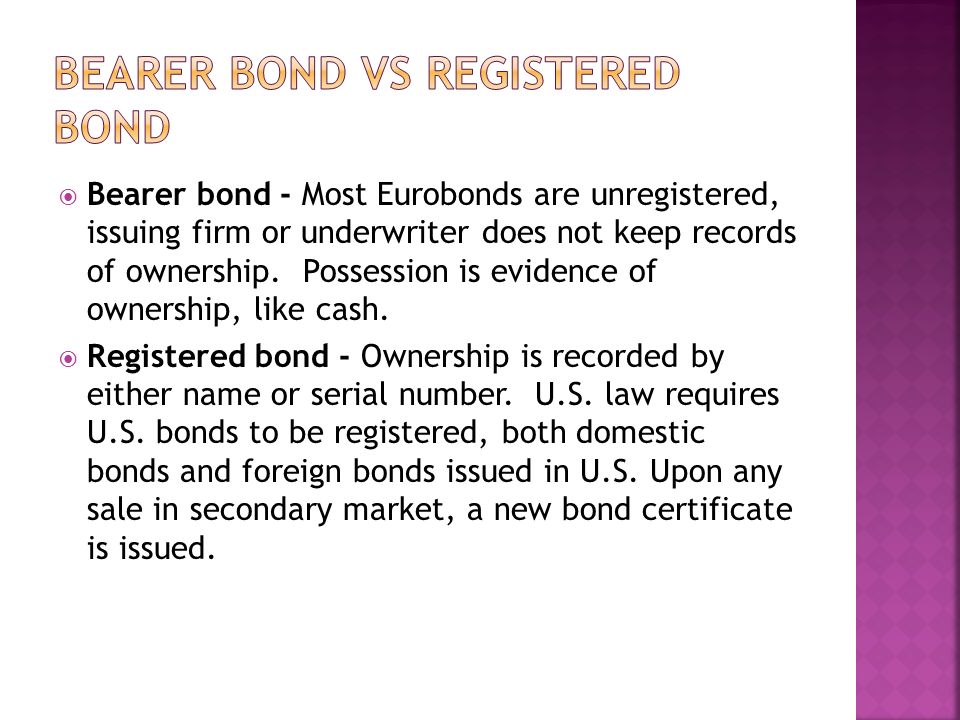
A bearer bond is a debt security that is unregistered. This means that unlike registered bonds, there’s no record of the owner’s name kept by the issuer. Ownership is determined solely by possession of the physical bond certificate. Whoever holds the bearer bond is presumed to be the owner, and that individual is entitled to receive interest payments and the principal amount upon maturity. Think of it like cash – whoever possesses it owns it.
This characteristic of anonymity is what historically made bearer bonds attractive to those seeking to avoid taxes, hide assets, or engage in illicit activities. The lack of a paper trail made it difficult for authorities to trace the ownership and movement of these bonds.
A Brief History
Bearer bonds have a long and storied history, dating back to the 19th century. They were initially created as a way to facilitate international trade and investment, allowing for the easy transfer of wealth across borders without the need for complex registration procedures. In a world before sophisticated electronic tracking, bearer bonds offered a practical solution for moving capital.
However, the very features that made them convenient also made them susceptible to abuse. Throughout the 20th century, bearer bonds became increasingly associated with money laundering, tax evasion, and other financial crimes. Their anonymity allowed individuals and organizations to conceal their assets from governments and law enforcement agencies.
How Bearer Bonds Work
The mechanics of a bearer bond are relatively simple. The issuer, typically a corporation or government, prints physical certificates representing the bond. These certificates include details such as the face value, interest rate (coupon rate), maturity date, and payment dates. The certificates also include coupons that the holder clips and presents to a paying agent to receive interest payments. At maturity, the holder presents the bond certificate to receive the principal amount.
The key difference between a bearer bond and a registered bond lies in the registration process. Registered bonds require the issuer to maintain a record of the bondholder’s name and address. Interest payments are typically made electronically or by check to the registered owner. In contrast, bearer bonds require no such registration. The holder simply presents the coupons or the bond certificate to receive payment.
The Allure and the Risks
The primary attraction of bearer bonds is their anonymity. This feature appeals to individuals and entities who wish to keep their financial affairs private. However, this anonymity also makes them attractive to those involved in illegal activities.
Advantages (for some)
- Anonymity: No record of ownership is kept by the issuer.
- Ease of Transfer: Ownership can be transferred simply by physically handing over the bond.
- Potentially Lower Taxes: In jurisdictions with lax tax enforcement, bearer bonds could be used to evade taxes.
Disadvantages
- High Risk of Loss or Theft: Since ownership is determined by possession, a lost or stolen bearer bond is virtually impossible to recover.
- Limited Legal Recourse: If a bearer bond is lost or stolen, the owner has very little legal recourse.
- Scrutiny from Authorities: Holding or transacting in bearer bonds can attract unwanted attention from law enforcement and regulatory agencies.
- Limited Investment Options: Due to regulatory restrictions, bearer bonds are no longer widely available to investors.
The Decline of Bearer Bonds
In response to growing concerns about money laundering and tax evasion, many countries have taken steps to restrict or eliminate bearer bonds. The United States, for example, effectively banned the issuance of bearer bonds in 1982. Other countries have followed suit, either prohibiting their issuance altogether or imposing strict regulations on their use. [See also: Tax Evasion Strategies and Detection]
The increased global cooperation in combating financial crime has also contributed to the decline of bearer bonds. International agreements such as the Financial Action Task Force (FATF) recommendations have encouraged countries to implement measures to prevent money laundering and terrorist financing, including restrictions on anonymous financial instruments like bearer bonds.
Current Status and Regulatory Landscape
While bearer bonds are no longer as prevalent as they once were, they still exist in some jurisdictions. However, their use is generally limited, and they are subject to increased scrutiny from regulators and law enforcement agencies. Many financial institutions refuse to handle bearer bonds due to the associated risks and compliance requirements.
The regulatory landscape surrounding bearer bonds is constantly evolving. Governments are continually updating their laws and regulations to address emerging threats and close loopholes that could be exploited by criminals. As a result, the future of bearer bonds remains uncertain.
The Role of Bearer Bonds in Financial Crime
The anonymity offered by bearer bonds has made them a favorite tool for criminals seeking to launder money, evade taxes, and finance illicit activities. By using bearer bonds, criminals can conceal the source and ownership of their funds, making it difficult for authorities to trace the money back to its original source. [See also: Understanding Money Laundering Techniques]
Bearer bonds have been used in a variety of financial crimes, including drug trafficking, arms dealing, and terrorism financing. In some cases, bearer bonds have been used to bribe government officials or to fund political campaigns. The lack of transparency associated with bearer bonds makes them an ideal vehicle for corrupt activities.
Alternatives to Bearer Bonds
For individuals and entities seeking privacy in their financial affairs, there are alternatives to bearer bonds that do not carry the same risks and regulatory burdens. These alternatives include:
- Nominee Accounts: These accounts allow individuals to hold assets in the name of a nominee, providing a layer of privacy.
- Offshore Companies: These companies can be used to hold assets and conduct business in jurisdictions with favorable tax laws and privacy regulations.
- Trusts: Trusts can be used to manage assets and provide for beneficiaries while maintaining a degree of privacy.
It is important to note that while these alternatives may offer some degree of privacy, they are also subject to regulatory scrutiny and may not be suitable for everyone. It is essential to seek professional advice before using any of these strategies.
The Future of Bearer Bonds
The future of bearer bonds appears bleak. As governments continue to crack down on financial crime and increase transparency in the financial system, the demand for bearer bonds is likely to decline further. While they may not disappear entirely, their role in the global financial system is expected to diminish over time.
The rise of digital currencies and blockchain technology could also have an impact on the future of bearer bonds. While these technologies offer new opportunities for financial innovation, they also pose new challenges for regulators and law enforcement agencies. It remains to be seen how these technologies will affect the use of anonymous financial instruments like bearer bonds.
Conclusion
Bearer bonds represent a fascinating and complex chapter in the history of finance. While they once served a legitimate purpose in facilitating international trade and investment, their anonymity also made them susceptible to abuse. As a result, bearer bonds have become increasingly associated with financial crime and have been subject to growing regulatory scrutiny. Understanding what is a bearer bond, its history, and its associated risks is essential for anyone involved in the financial system. While their prevalence has diminished, the lessons learned from the era of the bearer bond continue to shape the ongoing efforts to combat financial crime and promote transparency in the global financial system. The story of the bearer bond serves as a cautionary tale about the delicate balance between privacy and accountability in the world of finance. The legacy of the bearer bond will undoubtedly continue to influence the development of financial regulations and the fight against financial crime for years to come. Knowing what is a bearer bond is crucial in understanding financial history and current regulations. The use of bearer bonds continues to be a topic of discussion in financial circles. Even though the prominence of the bearer bond has decreased, its impact on financial systems is undeniable. Discussions surrounding bearer bonds often involve topics of regulation and security. Due to their anonymous nature, bearer bonds are often associated with financial crimes. Understanding what is a bearer bond is essential for financial professionals. The anonymity of bearer bonds is both their appeal and their downfall. Historically, the bearer bond played a significant role in international finance. The restrictions placed on bearer bonds reflect a global effort to combat financial crime. Today, the use of bearer bonds is heavily regulated due to their potential for misuse.
