Why Is Almost Everything Made in China? Unpacking Global Manufacturing
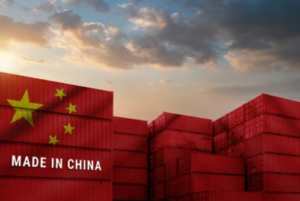
Ever look at the label on your clothes, electronics, or household goods and see “Made in China”? It’s a ubiquitous phrase in today’s global economy, leading many to wonder: Why is almost everything made in China? The answer is multifaceted, involving a complex interplay of economic policies, infrastructure development, labor costs, and global supply chains. This article delves into the reasons behind China’s dominance in manufacturing, exploring the historical context, current landscape, and potential future shifts.
The Rise of China as a Manufacturing Powerhouse
China’s ascent to becoming the world’s factory wasn’t an overnight phenomenon. It was a gradual process that began with economic reforms in the late 1970s under Deng Xiaoping. These reforms shifted China from a centrally planned economy to a market-oriented one, opening the country to foreign investment and trade. This marked the beginning of a significant transformation, attracting businesses worldwide seeking to reduce production costs and increase profitability. This is a primary reason why is almost everything made in China.
Economic Reforms and Open Door Policy
The introduction of Special Economic Zones (SEZs) played a crucial role. These zones offered tax incentives, relaxed regulations, and access to infrastructure, attracting foreign companies looking to establish manufacturing facilities. The “Open Door Policy” facilitated the inflow of foreign capital, technology, and managerial expertise, further accelerating China’s industrial growth. The low labor costs combined with these incentives made it incredibly attractive for companies to manufacture in China.
Infrastructure Development
The Chinese government invested heavily in infrastructure development, building extensive networks of highways, railways, ports, and airports. This robust infrastructure facilitated the efficient movement of goods, making it easier and cheaper to transport raw materials and finished products. This logistical advantage is a key factor in understanding why is almost everything made in China. Without it, even low labor costs wouldn’t be enough to dominate global manufacturing.
The Cost Advantage: Labor and Beyond
One of the most cited reasons for China’s manufacturing dominance is its lower labor costs. For decades, China offered a vast pool of relatively inexpensive labor, making it significantly cheaper to produce goods there compared to developed countries. While labor costs have risen in recent years, they still remain competitive in many sectors. However, it’s not just about cheap labor; it’s also about the scale and efficiency of the Chinese workforce.
Economies of Scale
China’s massive population provides a large labor force, enabling companies to achieve economies of scale. This means that the cost per unit decreases as production volume increases. Factories in China can produce goods in quantities that would be difficult or impossible to match elsewhere, further reducing costs. This ability to scale production quickly and efficiently is a significant reason why is almost everything made in China.
Developed Supply Chains
Over the years, China has developed sophisticated and efficient supply chains. A complex network of suppliers, manufacturers, and distributors has emerged, allowing companies to source components and materials quickly and at competitive prices. This integrated supply chain ecosystem is a major advantage for manufacturers operating in China. The close proximity of suppliers reduces lead times and transportation costs, contributing to overall efficiency. The intricate web of interconnected businesses is part of why is almost everything made in China.
The Role of Government Policies
Government policies have played a crucial role in shaping China’s manufacturing landscape. In addition to the economic reforms and infrastructure investments mentioned earlier, the government has also implemented policies to support specific industries and promote technological innovation. These policies have helped Chinese companies to upgrade their manufacturing capabilities and compete in higher-value sectors.
Industrial Policy
The Chinese government has actively promoted certain industries through targeted policies, such as subsidies, tax breaks, and preferential access to credit. These policies have helped Chinese companies to gain a competitive edge in strategic sectors, such as electronics, renewable energy, and electric vehicles. This strategic focus has contributed to the diversification of Chinese manufacturing and its ability to produce a wide range of goods. This is also crucial to understanding why is almost everything made in China.
Intellectual Property Concerns
While China has made progress in strengthening intellectual property protection, concerns remain about the enforcement of IP rights. Some companies have expressed concerns about the potential for their technologies to be copied or stolen in China. However, the Chinese government has taken steps to address these concerns, including increasing penalties for IP infringement and strengthening enforcement mechanisms. This is an ongoing issue that businesses consider when deciding why is almost everything made in China. [See also: Protecting Your Intellectual Property in China]
Challenges and Future Trends
Despite its dominance in manufacturing, China faces several challenges. Rising labor costs, increasing environmental regulations, and trade tensions with other countries are all factors that could potentially impact China’s manufacturing landscape in the future. As labor costs rise, some companies are exploring alternative manufacturing locations in Southeast Asia and other regions. However, China’s well-established infrastructure, skilled workforce, and comprehensive supply chains mean that it is likely to remain a major manufacturing hub for the foreseeable future.
The Rise of Automation
To address rising labor costs, Chinese manufacturers are increasingly investing in automation and robotics. This allows them to improve productivity, reduce costs, and maintain competitiveness. The adoption of advanced manufacturing technologies is transforming China’s manufacturing sector and enabling it to produce higher-value goods. This shift towards automation is vital to understanding the future of why is almost everything made in China.
Geopolitical Factors
Geopolitical tensions, particularly trade disputes with the United States, have also created uncertainty for manufacturers operating in China. Some companies are diversifying their supply chains to reduce their reliance on China. However, the scale and complexity of China’s manufacturing ecosystem make it difficult to completely decouple from the country. The globalized nature of supply chains means that even if production shifts to other countries, China is likely to remain a key player in the global manufacturing landscape. Because of all these factors, it is not easy to simply move production out of China, which is a big part of why is almost everything made in China.
Conclusion: China’s Enduring Manufacturing Power
In conclusion, the question of why is almost everything made in China has a complex answer rooted in historical economic reforms, strategic government policies, massive infrastructure investments, and the development of extensive supply chains. While challenges such as rising labor costs and geopolitical tensions exist, China’s manufacturing dominance is likely to persist for the foreseeable future. The country’s ability to adapt to changing market conditions, embrace automation, and upgrade its manufacturing capabilities will be crucial in maintaining its position as the world’s factory. Understanding the underlying factors that have contributed to China’s manufacturing success is essential for businesses and policymakers alike. [See also: The Future of Global Manufacturing] The pervasive presence of “Made in China” labels serves as a constant reminder of the country’s significant role in the global economy. The reasons listed above show why is almost everything made in China, and it is a complex issue with many layers. Without the perfect combination of factors, no other country could have risen to such prominence.
