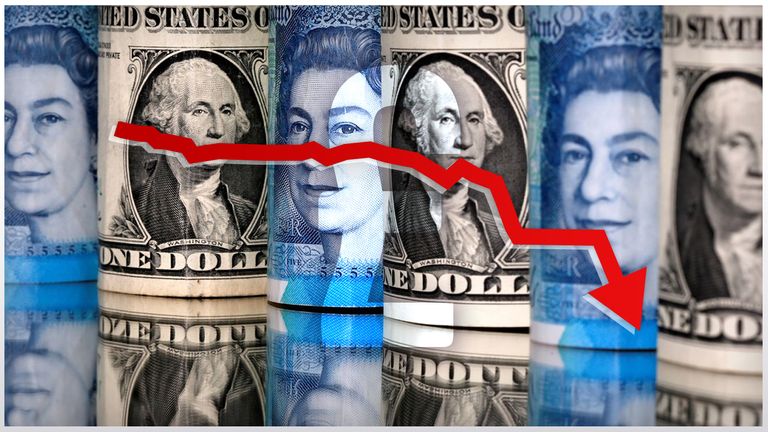
Why is the UK Pound Falling? Understanding the GBP’s Recent Weakness
The recent weakness of the UK pound (GBP) has been a major topic of discussion in financial circles and beyond. A significant drop in the value of the pound against other major currencies, particularly the US dollar, has sparked concerns about the UK’s economic outlook. Understanding why the UK pound is falling requires a deep dive into various interconnected factors, ranging from domestic economic policies to global economic pressures.
Economic Factors Contributing to the Pound’s Decline
Several key economic indicators and policies are playing a significant role in the pound’s current predicament.
Inflation Woes and the Cost of Living Crisis
The UK is grappling with persistently high inflation rates, which have outpaced those of many other developed economies. This elevated inflation erodes purchasing power and puts downward pressure on the pound. The Bank of England (BoE) is tasked with controlling inflation, but its efforts have so far yielded limited success. Rising energy prices, supply chain disruptions, and the ongoing war in Ukraine have all contributed to the inflationary pressures.
Bank of England’s Monetary Policy
The Bank of England’s response to inflation, primarily through raising interest rates, has been a central factor. While higher interest rates typically attract foreign investment and strengthen a currency, the BoE’s approach has been perceived by some as too slow or insufficient to curb inflation effectively. The pace and magnitude of interest rate hikes relative to other central banks, such as the US Federal Reserve, influence the relative attractiveness of the pound. The Fed’s more aggressive stance on rate hikes has bolstered the dollar, further weakening why the UK pound is falling.
Government Fiscal Policy and Debt Concerns
Government fiscal policy, particularly borrowing and spending decisions, also impacts the pound’s value. Large-scale government borrowing to fund various initiatives can increase the national debt and raise concerns about the UK’s long-term fiscal sustainability. These concerns can deter foreign investors and weaken the pound. The market’s reaction to government budget announcements and policy changes significantly influences investor sentiment.
Brexit’s Lingering Effects
The long-term economic consequences of Brexit continue to weigh on the UK economy and the pound. Brexit has disrupted trade relationships, created new regulatory hurdles, and led to labor shortages in certain sectors. These challenges have negatively impacted economic growth and investor confidence, contributing to why the UK pound is falling. The uncertainty surrounding the UK’s future relationship with the European Union (EU) continues to cast a shadow over the economy.
Trade Imbalances and Supply Chain Disruptions
Brexit has altered the UK’s trade patterns, leading to increased trade barriers with its largest trading partner, the EU. This has resulted in trade imbalances and supply chain disruptions, impacting the UK’s competitiveness and export performance. The increased costs and complexities associated with trading with the EU have added to inflationary pressures and weakened the pound.
Labor Market Challenges
Brexit has also contributed to labor shortages in various sectors, as many EU workers have left the UK. This has put upward pressure on wages, adding to inflationary pressures and impacting productivity. The shortage of skilled labor has also hampered economic growth and made the UK less attractive to foreign investment. Addressing these labor market challenges is crucial for stabilizing the economy and supporting the pound.
Global Economic Factors
The UK economy and the pound are also influenced by global economic trends and events.
Global Economic Slowdown
A global economic slowdown can negatively impact the UK economy and the pound. Reduced global demand for UK goods and services can hurt exports and economic growth. The UK’s reliance on international trade makes it vulnerable to global economic shocks. A weakening global economy can also lead to increased risk aversion, causing investors to flock to safer assets, such as the US dollar, further exacerbating why the UK pound is falling.
Geopolitical Risks and Uncertainty
Geopolitical risks, such as the war in Ukraine, can also negatively impact the pound. Increased uncertainty and volatility in global markets can lead to risk aversion and a flight to safety, benefiting currencies like the US dollar at the expense of the pound. Geopolitical tensions can also disrupt supply chains and increase energy prices, adding to inflationary pressures in the UK.
Strength of the US Dollar
The strength of the US dollar is a significant factor influencing the value of the pound. The dollar’s status as a global reserve currency means that it often appreciates during times of economic uncertainty or risk aversion. The US Federal Reserve’s aggressive interest rate hikes have further strengthened the dollar, making it more attractive to investors and putting downward pressure on other currencies, including the pound. This relative strength of the dollar is a major component of why the UK pound is falling.
Market Sentiment and Investor Confidence
Market sentiment and investor confidence play a crucial role in determining the value of the pound. Negative news and economic data can erode investor confidence and lead to a sell-off of the pound. Conversely, positive news and economic data can boost investor confidence and strengthen the pound. Market sentiment can be volatile and influenced by a wide range of factors, including political developments, economic forecasts, and global events.
Speculative Trading
Speculative trading in the foreign exchange (forex) market can also influence the value of the pound. Large-scale speculative bets against the pound can exacerbate its decline, particularly during times of economic uncertainty. While speculative trading can provide liquidity to the market, it can also contribute to volatility and instability. Understanding the dynamics of speculative trading is important for assessing the pound’s movements.
Credit Rating Agencies
Credit rating agencies, such as Moody’s, Standard & Poor’s, and Fitch, assess the creditworthiness of countries and issue ratings that reflect their ability to repay their debts. Downgrades in the UK’s credit rating can negatively impact investor confidence and weaken the pound. Credit rating agencies consider a range of factors, including the UK’s economic performance, fiscal policies, and political stability. Maintaining a strong credit rating is crucial for attracting foreign investment and supporting the pound.
Potential Solutions and Future Outlook
Addressing the factors contributing to the pound’s decline requires a multifaceted approach involving both monetary and fiscal policies. The Bank of England needs to strike a balance between controlling inflation and supporting economic growth. The government needs to implement fiscal policies that promote sustainable economic growth and reduce the national debt. Addressing the challenges posed by Brexit and improving the UK’s competitiveness are also crucial for stabilizing the economy and supporting the pound. [See also: UK Economic Recovery Strategies] The future outlook for the pound depends on the effectiveness of these policies and the evolution of the global economic environment.
Strengthening Economic Fundamentals
Strengthening the UK’s economic fundamentals is essential for restoring confidence in the pound. This includes improving productivity, increasing investment, and promoting innovation. Investing in education, infrastructure, and research and development can enhance the UK’s long-term growth potential and make it more attractive to foreign investors. A strong and resilient economy is the foundation for a stable and valuable currency.
Attracting Foreign Investment
Attracting foreign investment is crucial for supporting the pound and boosting economic growth. Creating a business-friendly environment, reducing regulatory burdens, and offering tax incentives can make the UK more attractive to foreign investors. Promoting the UK as a stable and reliable investment destination is also important. Foreign investment can provide capital, create jobs, and stimulate economic activity.
Managing Inflation Expectations
Effectively managing inflation expectations is crucial for stabilizing the pound and preventing a wage-price spiral. Clear communication from the Bank of England about its monetary policy objectives and its commitment to controlling inflation can help to anchor inflation expectations. Credible and consistent monetary policy is essential for maintaining price stability and supporting the pound. The question of why the UK pound is falling can be answered by observing the steps taken to curb inflation.
Conclusion
Understanding why the UK pound is falling requires considering a complex interplay of domestic and global factors. High inflation, the Bank of England’s monetary policy, government fiscal policy, the lingering effects of Brexit, global economic slowdown, geopolitical risks, and market sentiment all contribute to the pound’s weakness. Addressing these challenges requires a comprehensive and coordinated approach involving both monetary and fiscal policies. Strengthening the UK’s economic fundamentals, attracting foreign investment, and managing inflation expectations are crucial for restoring confidence in the pound and ensuring its long-term stability. The underlying reasons for why the UK pound is falling are multifaceted and deeply intertwined with the health of the UK and global economies.
